The world of collectors can be vast. From coins, patches, miniature objects to motorcycles and vintage cars… Banknotes are also an object that attracts collectors. According to experts, some uncirculated $2 bills can be worth up to $20,000. Although the $2 bill often goes unnoticed in everyday transactions, some examples can reach astronomical values. The value of banknotes can depend on different factors, such as the serial number, the time they were printed, their condition, and ultimately, the story they tell.
“A serial number 1 for a 1976 $2 bill would be worth $20,000 or more”
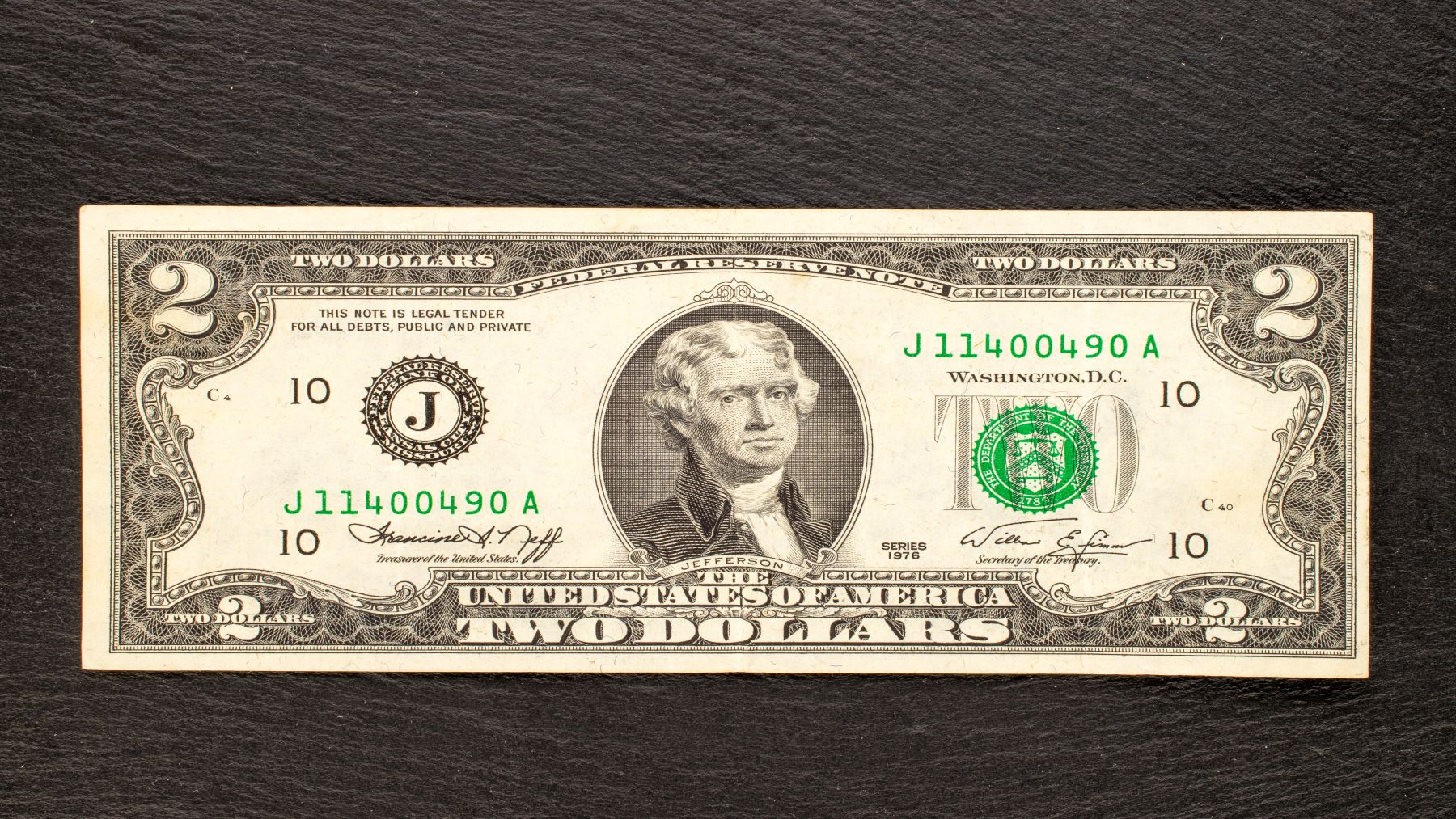
Let’s start by talking about the serial number. This is a kind of code that appears printed on the sides of the front of $2 bills. This number is something that can increase the value of these bills. “A serial number 1 for a 1976 $2 bill would be worth $20,000 or more,” Dustin Johnston, vice president of Heritage Auctions, told MarketWatch. Generally, lower serial numbers tend to increase the value of the piece.
Increase value: the image of the signing of the Declaration of Independence
Then there are the bills featuring Jefferson. Those issued before 1976 feature the Monticello estate, while later ones include the image of the signing of the Declaration of Independence. This small difference can raise the value of a bill from $2 to $4,500. The jump in value makes it worth checking the bills we have at home.
Important factors: rarity, the condition/grade of the coin or banknote, and market conditions
According to expert portals on these topics, the value of a coin or banknote essentially determines the catalog value based on three main factors: rarity, the condition/grade of the coin or banknote, and market conditions, i.e., the demand for the item. The latter can significantly tip the balance. The combination of these three factors determines whether a coin or banknote is worth more or less.
Trying to sell a crumpled banknote to a collector isn’t the same as trying to sell one that’s well cared for or even classified as a collectible
A fairly important factor that determines the value of a banknote, or any object that might end up in a collector’s gallery, is its condition. Trying to sell a crumpled banknote to a collector isn’t the same as trying to sell one that’s well cared for or even classified as a collectible and encapsulated for preservation. Therefore, if a banknote has the characteristics to increase its value, it’s essential that it be in good condition.
Mint-condition examples from 1862 can fetch between $500 and $2,800
The year of issue is also a factor to consider. Older issues tend to raise the price of banknotes. Mint-condition examples from 1862 can fetch between $500 and $2,800, while some uncirculated notes from 1995 are valued at up to $500. As we can see, once again, the condition of the objects is crucial.
A 1953 note with a red seal and star fetched $1,200
There are also some banknotes that feature an asterisk at the end of the serial number. These notes are known as “star notes” and are especially attractive to collectors and auction houses. A 1953 note with a red seal and star fetched $1,200 in online auctions.
Banknotes issued between 1862 and 1917 with blue, brown, or red stamps can be worth more than $1,000
And referring specifically to the color of the stamp, this is also a relevant feature for those interested. Banknotes issued between 1862 and 1917 with blue, brown, or red stamps can be worth more than $1,000. And in the case of the red stamp mentioned above, it’s considered a printing error, which makes them even more valuable. As we can see, the rarer, older, and in better condition the bill is, the greater its value.