
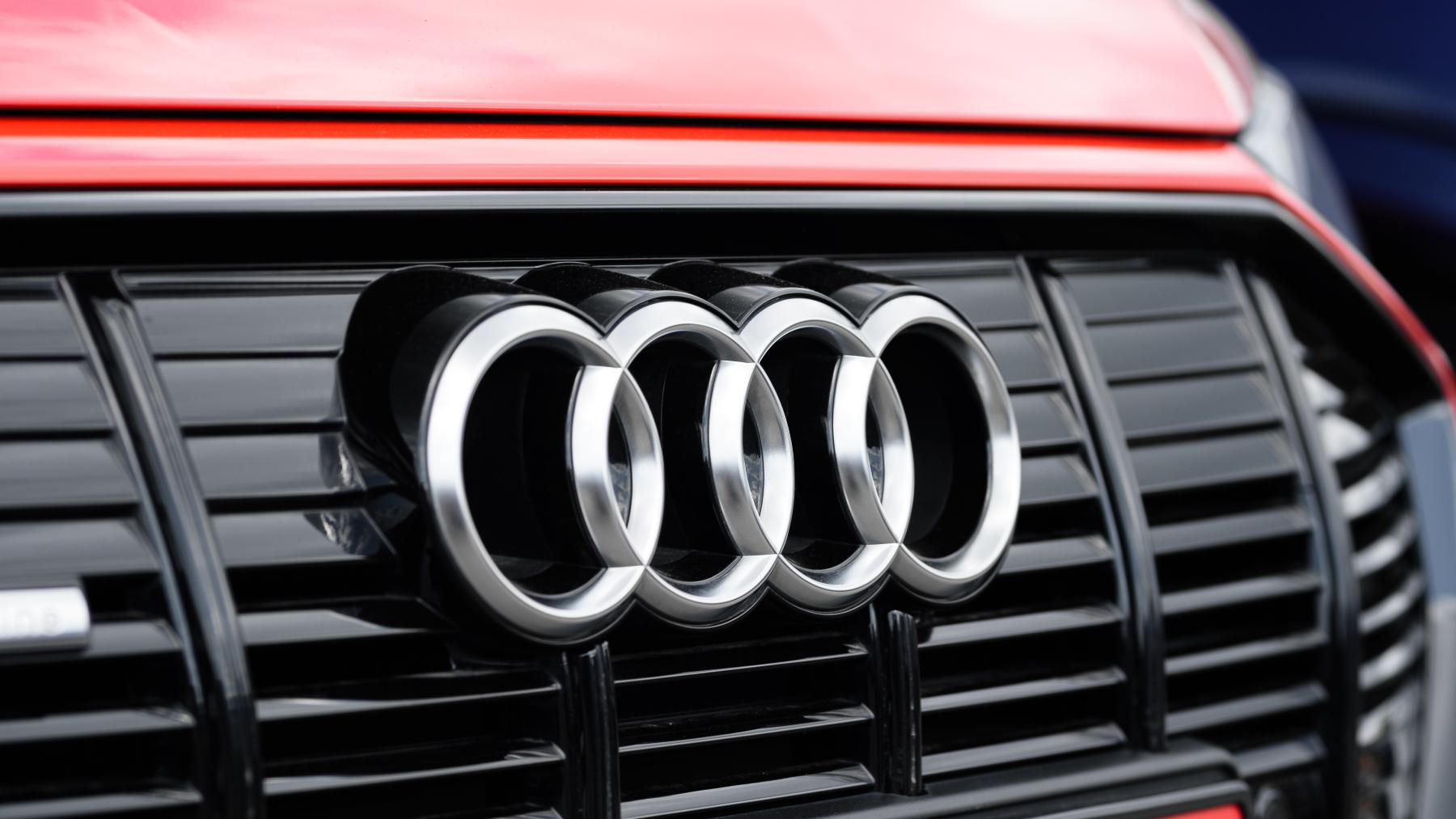
After US President Donald Trump imposed taxes on auto imports last week, tens of thousands of cars built abroad are reportedly being held in US ports. According to Reuters, Audi, a subsidiary of Volkswagen, retaliated to the 25% levies by removing vehicles that had been imported into the US since April 2 from sale. Audi informed dealers of the import freeze, according to a representative cited by the source, as several businesses rushed to determine how the taxes would impact them.
Audi suspends U.S. deliveries following 25% tariff announcement
Audi is one of the primary targets of Trump’s trade ire because it manufactures all of its cars overseas, mostly in Europe. However, the G5 is manufactured in Mexico, which was one of the countries that Trump targeted with his initial tariff announcements. According to Reuters, Audi’s US stockpile consisted of 37,000 vehicles, which would cover sales for around two months. One of the most well-known of Trump’s charges, which were unveiled last Thursday, is the 25% tariff on auto imports. The United Auto Workers union has officially endorsed Trump’s decision, as have many of its members.
On Monday, however, around 900 UAW members will begin to pay the price for those levies. That’s the number of hourly workers at five US Stellantis plants who will be let go for two or three weeks since the tariffs have temporarily stopped them from making stampings and powertrains for manufacturers in Canada and Mexico. After abandoning ambitions to offer electric vehicles exclusively starting in 2032, Audi is already replacing its aging lineup as part of a generational model shift.
Rather, the automaker will increase the number of hybrid vehicles it offers; in late 2024, it confirmed that 20 “new or updated” models would be available by early 2026, at least in Australia. With the Audi Q6 e-tron and Audi A5 previously unveiled for local showrooms, it is anticipated that this would feature a new-generation Audi Q5 SUV; however, this has not been formally confirmed.
What do other automakers like Audi plan to do?
BMW, on the other hand, has maintained the flow of its vehicles entering dealerships, albeit with minor modifications. The largest BMW facility in the world, located in Spartanburg, South Carolina, has long been a key component of BMW’s U.S. strategy. Since they make up a large portion of BMW’s U.S. sales, SUVs manufactured in Spartanburg, such as the X3, X4, X5, X6, X7, and XM, are now exempt from most of the new tariffs. The fact that these American-made cars are exempt from import taxes like those from Europe or Mexico offers BMW a significant edge. Because of this, BMW can keep the prices of these well-liked models comparatively steady, which helps to retain dealer and customer satisfaction.
However, not all BMW models are made in Spartanburg; all sedans and coupes, including the 2 Series, 3 Series, 4 Series, 5 Series, and 7 Series, still import their electric variants. Only a roughly 4% price increase for the 2 Series Coupe and M2 Coupe has been mentioned by BMW thus far. Information on the entire extent of price hikes is still confidential. BMW’s strategy seems to be a strategic balancing act, whereby it absorbs a portion of the costs to keep core models’ prices competitive while passing on a portion of the tariff burden to customers for other models.
Not just Audi and its German competitors are affected by the auto tariff crisis; the entire US luxury car industry is. Similarly, Mercedes-Benz, another German behemoth with manufacturing in the United States, is using its SUVs made in the United States to weather the storm. However, even for these firms, the wider ramifications are still intimidating. Higher import costs for automakers’ automobiles and parts might eventually reduce overall sales volumes, reduce profit margins, and change how these companies conduct business in the United States.




