
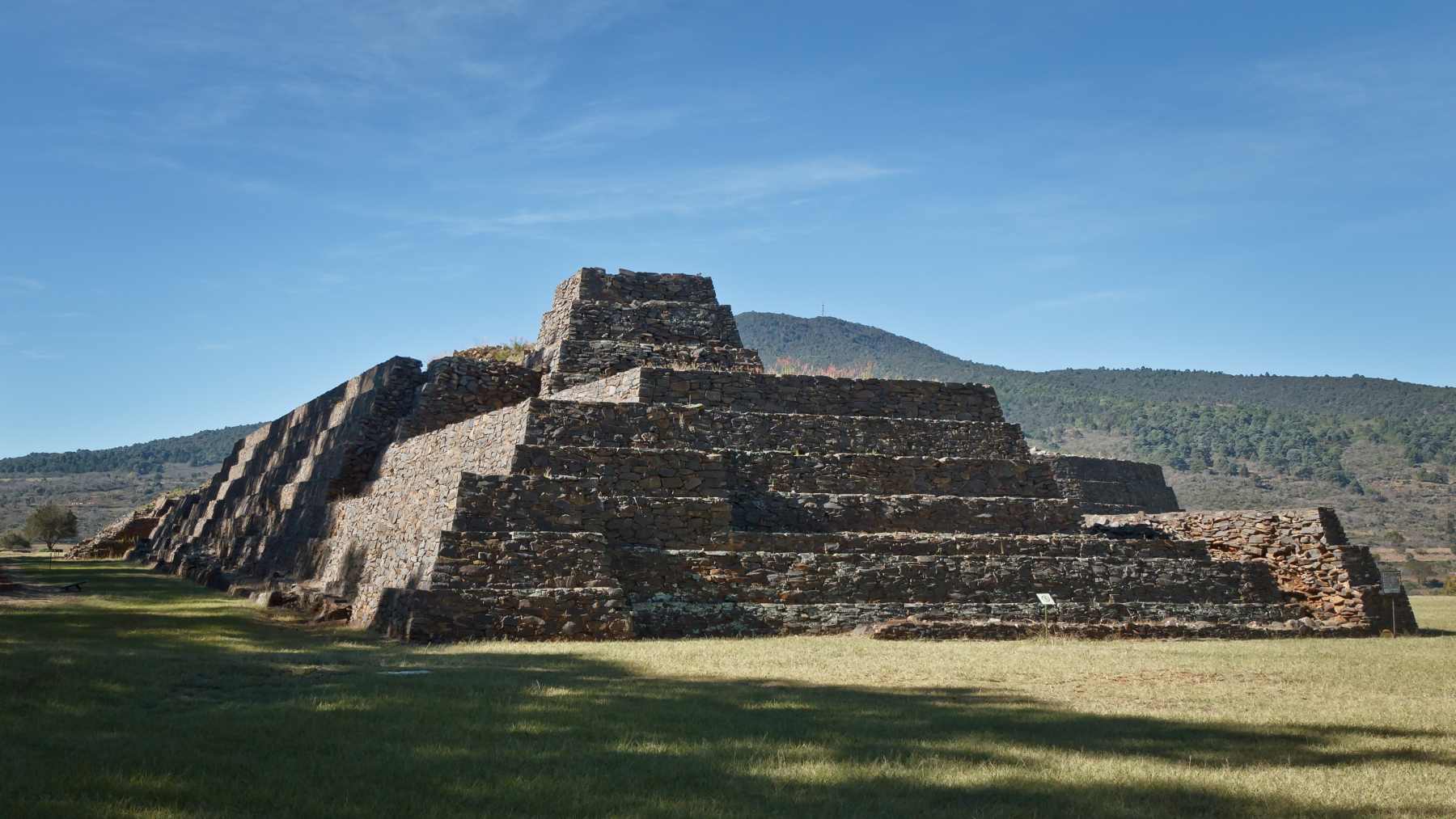
Due to recent extreme weather events, thousands of historic places could be in danger as the sea level rises. In 2024, a stone pyramid in Mexico collapsed due to an increasingly unstable global environment, providing a striking example of this occurrence. On July 29, a 15-meter-square monument in Michoacán collapsed due to heavy rain, causing its south side to collapse into a pile of rubble. The Ihuatzio archaeological site houses a well-preserved pyramid, tower, castle, and tombs, along with another pyramid, tower, and some tombs from the Michoacán Kingdom civilization.
Historic pyramid in Mexico crumbles after unprecedented weather events
Native people who spoke Nahuatl were the first to live there 1,100 years ago. The P’urhépechas people, the only empire the Aztecs were unable to subjugate, later made it their capital. Even now, the culture is thriving. Although only one pyramid was damaged, staff from Mexico’s National Institute of Anthropology and History (INAH) reported that at least six of the pyramid’s “stepped bodies,” including the outer wall, core, and retaining wall, are in poor condition. They blamed the tragedy on the severe weather that preceded it.
In July, the hottest month in the northern hemisphere, much of Mexico experienced heavy rain and thunderstorms. This followed the greatest drought the country had seen in 30 years, during which time there was so little rain that numerous lakes dried up entirely. According to an INAH statement, the region’s historically high temperatures and the ensuing drought created fissures that allowed water to seep into the pre-Hispanic building’s interior. After that, collapse was practically a given. The building’s structural rehabilitation is currently the main priority for officials to preserve Mexican culture.
Archaeologists are responsible for researching how people behaved in the past, yet they are unavoidably influenced by what people are doing now. Due to climate change brought on by humans, extreme weather and increasing sea levels are becoming a major annoyance for significant locations of ancient cultures. Moreover, archaeologists have discovered that as climate change speeds up, historic cave paintings in Oceania are fading. For example, a study conducted this year on the materials used in cultural heritage buildings in Mexico and Europe discovered that these structures are vulnerable to damage when precipitation levels rise significantly.
Some might see the collapse of the pyramid as a bad omen
According to Tariakuiri Alvarez, a living member of the P’urhépecha tribe, if the Ihuatzio Pyramid had collapsed, it would have meant bad luck for the ancestors. A similar episode happened in Mexico before the arrival of foreign conquerors, according to Alvarez’s Facebook post, and it was brought on by the gods’ wrath. The collapse of Utah’s Double Arch, which occurred shortly before the collapse of the pyramid in Mexico, is likely due to erosion and water level changes. Heritage sites, such as these, are valuable locations that people want to keep for years to come. It is not only unpleasant for immortals to see them fall apart from a climate that has been significantly changed by human activity.
A mysterious underwater pyramid recently found reshapes history
Everything we believed to be true about the ancient world could be altered by a buried “pyramid” close to Taiwan. Since its discovery in 1986, the Yonaguni Monument, a mysterious object 82 feet below sea level near Japan’s Ryukyu Islands, has captivated and amazed scientists. Many people assume that this enormous building, which is around 90 feet tall and has sharply slanted steps, was created by humans because it looks to be built completely of stone.
However, stone testing indicates the pyramid is over 10,000 years old, meaning if a civilization built it by hand, it happened before this area flooded over 12,000 years ago. That would put it thousands of years older than the majority of other ancient constructions, such as Stonehenge and the Egyptian pyramids. As agriculture advanced 12,000 years ago, experts now think that ancient humans’ capacity to build massive constructions like temples and pyramids developed concurrently. But, like the Atlantean stories, if a highly developed civilization had already begun constructing enormous step pyramids long before this period, it might alter history forever and uncover another extinct human group.




