
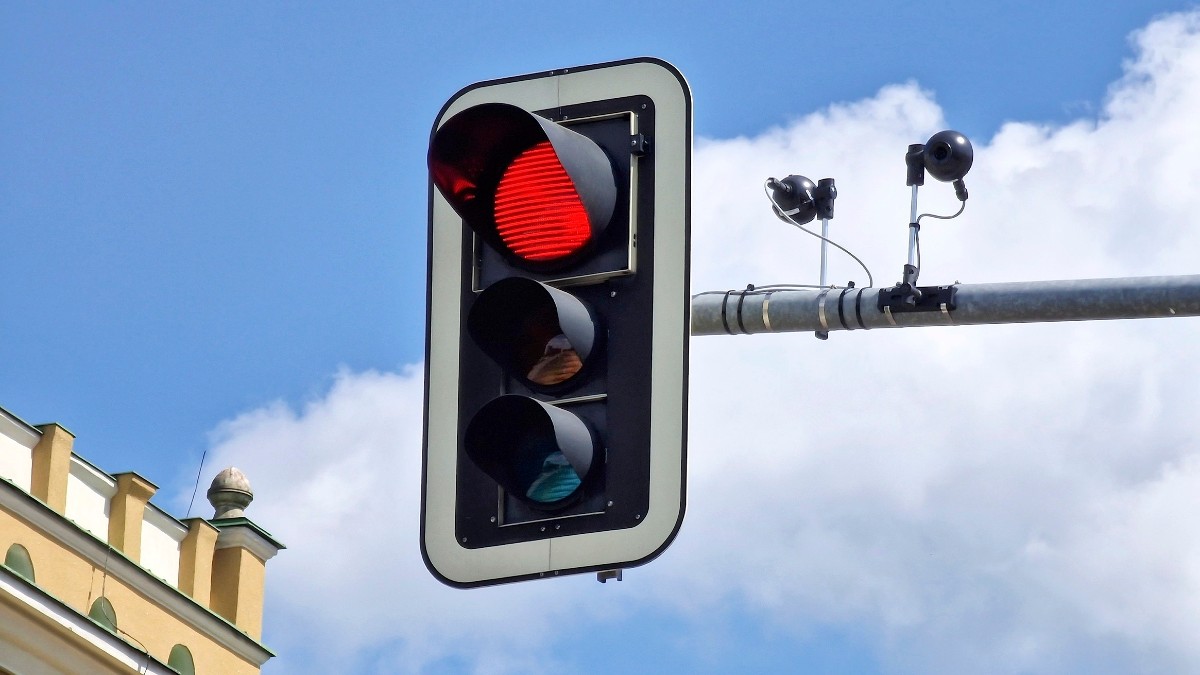
There are new US cameras taking pictures on American roads that have raised some questions regarding personal privacy. For instance, a car in Alabama captured images of cars it passed on a residential road using its license plate reading cameras on December 4, last year. One image shows a red “Trump” campaign banner in front of someone’s garage. An inflatable snowman, a holly wreath, and a banner mentioning Israel are visible in the backdrop. In a different picture, a Steelworkers for Harris-Walz sign is seen stuck in the grass in front of a house on a different day and taken by a different car.
Will the new US cameras using artificial intelligence spy on citizens?
An image of a construction worker standing next to another Harris sign shows his face unblurred. Additional images display bumper stickers of Trump and Biden, including “Fuck Biden,” on the rear of vehicles and trucks all around the United States. A partially shredded bumper sticker endorsing the Obama- Biden combo is seen in one image, which was taken in November 2023. These pictures were produced by AI-powered US cameras installed on cars and trucks.
Originally intended to take pictures of license plates, these US cameras are now also taking pictures of people wearing text-adorned T-shirts, cars with pro-abortion bumper stickers, and political lawn signs outside private residences, all while documenting the exact locations of these observations. WIRED recently investigated acquired data that demonstrates how a technology designed for traffic policing has developed into a system that can monitor speech protected by the US Constitution. All of the comprehensive photos appeared in search results generated by DRN Data’s systems, a Motorola Solutions-owned license plate recognition (LPR) business.
Private investigators, repossession agents, and insurance firms can use the LPR system; police officers can access the same LPR data through a linked Motorola company named Vigilant. But according to files provided to WIRED by artist Julia Weist, whose project involves documenting restricted datasets, people who have access to the LPR system can search for common names or phrases, like politicians’, and be presented with images that contain the search term, even if it is not visible on license plates. Recently, a search for Delaware car license plates that contained the word “Trump” produced over 150 pictures of people’s houses and bumper stickers. The date, time, and precise location of the photo capture are included in every search result.
People’s political views and homes could be recorded with these new US cameras
In addition to demonstrating the extensive reach of LPR technology—which has gathered billions of license plate photos—the study demonstrates how people’s residences and political opinions may be entered into enormous databases that can be searched. According to Jay Stanley, a senior policy analyst at the American Civil Liberties Union, it truly shows how widespread surveillance is in America’s peaceful streets. License plates are only one aspect of this surveillance; there are many other potentially highly revealing details about individuals, as well. License plate recognition systems take photos of vehicles and utilize optical character recognition (OCR) technology to recognize and extract text from the license plates. Motorola-owned DRN provides a variety of license plate recognition US cameras, including fixed cameras for detecting make and model, quick-deploy cameras for monitoring vehicles on premises, and mobile cameras for dashboards or vehicle monitoring.
These US cameras can collect photographs of vehicles traveling at speeds of up to 150 mph, as well as monitor properties and take images while driving. DRN has accumulated over 15 billion “vehicle sightings” in the United States over more than ten years, and according to its promotional materials, it receives over 250 million sightings every month. Police can access photographs in DRN’s commercial database through its Vigilant system, but police-captured images are not returned to the larger database. However, given the rise in political violence and polarization in society, some individuals are worried about how the search tools might be abused.




