
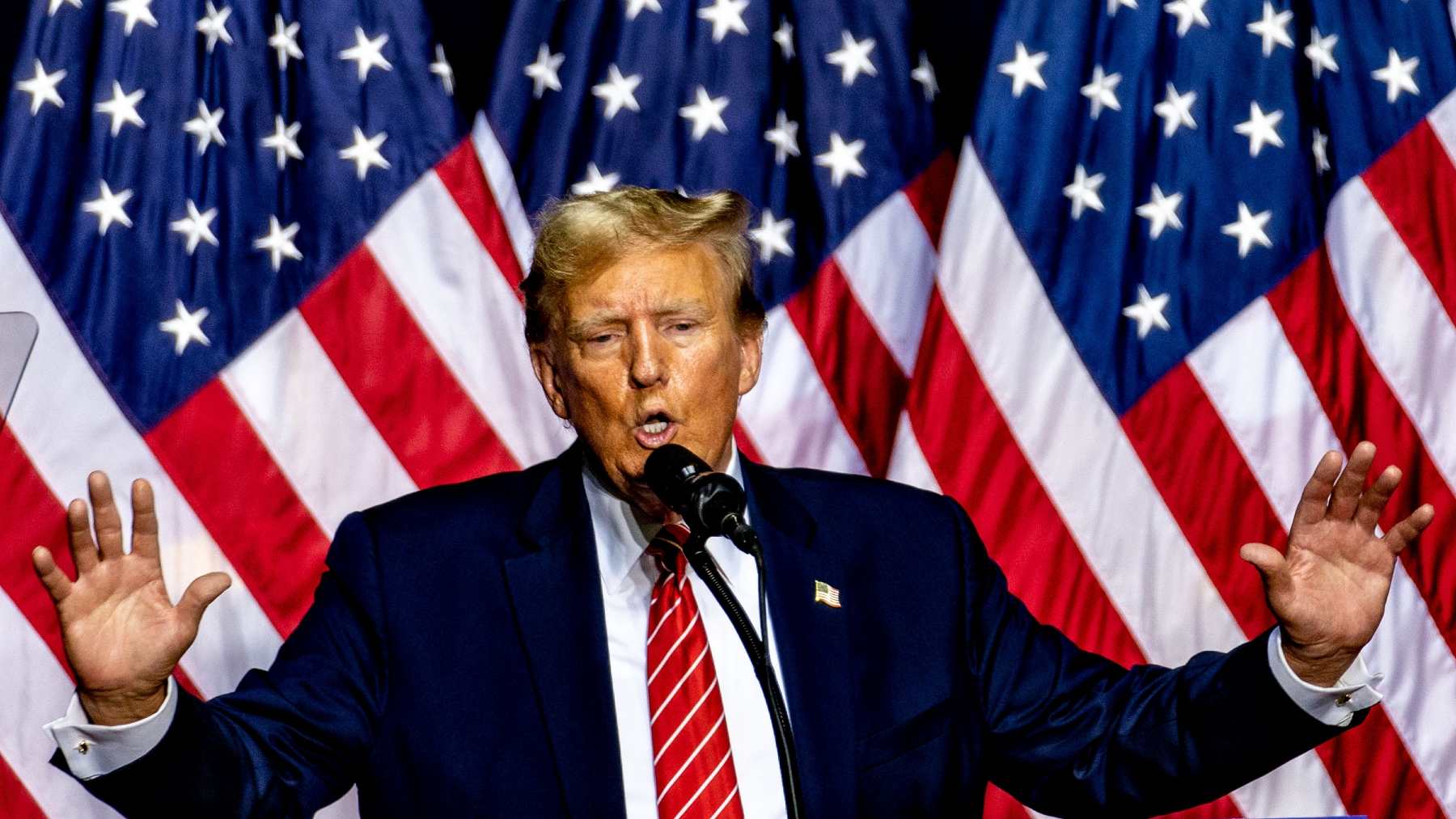
In an apparent effort to soften his tough stance on Beijing following market volatility, President Donald Trump said he intends to be “very nice” to China during any trade negotiations and that tariffs will be reduced if the two countries reach a deal. Trump announced in Washington on Tuesday that they would be greatly reduced, but not to zero, in response to Treasury Secretary Scott Bessent’s earlier statement that the impasse was untenable. We’re going to be very nice, and they’re going to be very nice, and we’ll see what happens,” Trump said.
The Trump administration appears to be reevaluating high tariffs on Chinese imports
Trump stated that he didn’t think it was necessary to play hardball with Chinese President Xi Jinping and that he would avoid bringing up the politically delicate topic of COVID-19 during talks. A webpage recently provided by the White House that suggested the virus originated in a Chinese laboratory infuriated the nation’s ambassadors. In a separate story, the Wall Street Journal detailed a strategy that would lower those duties and is being considered by White House officials. According to the Journal, officials are examining a tiered proposal that would soften levies over five years, reducing them by 35% for things not deemed a national security danger and up to 100% for those that do pose a security danger.
An overall duty on China would be between 50% and 65%, according to one White House official who spoke to the newspaper. According to a White House official, Trump has no plans to unilaterally reduce tariffs, but he might do so in tandem with talks with China that the administration is hoping to get off the ground. Foreign Ministry spokesperson Guo Jiakun stated in a Beijing news briefing that trade battles have no winners and that negotiations are open. China wants the two sides to hash out the details of a deal before the presidents speak, despite Trump’s repeated attempts to call Xi.
This is how the Trumps’ new measures will hit the stock market
In an attempt to allay US fears, Chinese Hong Kong equities ended the day 2.1% higher, and the offshore yuan increased 0.2% against the dollar. Trump’s remarks come as US equities and Treasuries have been suffering since he announced a 90-day reprieve for most countries after enacting hefty tariffs on April 2. Trump has maintained the 145% tariffs he imposed on Chinese imports this year, except for computers and other common consumer electronics. Alicia Garcia Herrero, chief Asia Pacific economist at Natixis, stated that Trump is in a panic because of the crumbling markets and the persistently high US Treasury yields. In these situations, China doesn’t have to provide anything significant.
Even at lower levels, there is no public evidence that negotiations between the world’s top economies are underway, and Xi has yet to speak with Trump since his US counterpart came to office. On the contrary, Beijing has been stepping up its outreach to other nations, even cautioning them against making trade agreements with the US that would harm Beijing’s needs. In a meeting with President Ilham Aliyev of Azerbaijan on Wednesday, Xi reaffirmed that tariff wars are detrimental to the rights and interests of all nations. China’s approach to the U.S. is not only to defend its interests, but also to uphold international norms and the multilateral trading system, Chinese Foreign Minister Wang Yi emphasized.
Chinese Premier Li Qiang sent a letter this week to Shigeru Ishiba, urging him to coordinate a response to Trump’s tariffs. China has expressed disapproval of Trump’s cabinet’s comments about “Chinese peasants” and has demanded a change in rhetoric from the Trump administration, including curbing disparaging remarks by his cabinet members. Bessent told a closed-door investor meeting that the world’s two largest economies must de-escalate quickly, and that the US does not intend to divorce from China. He also restated his conviction that China has suppressed its consumer economy and favored manufacturing over the US, noting that any agreement would require a trade rebalancing that would allow the US to expand manufacturing.




