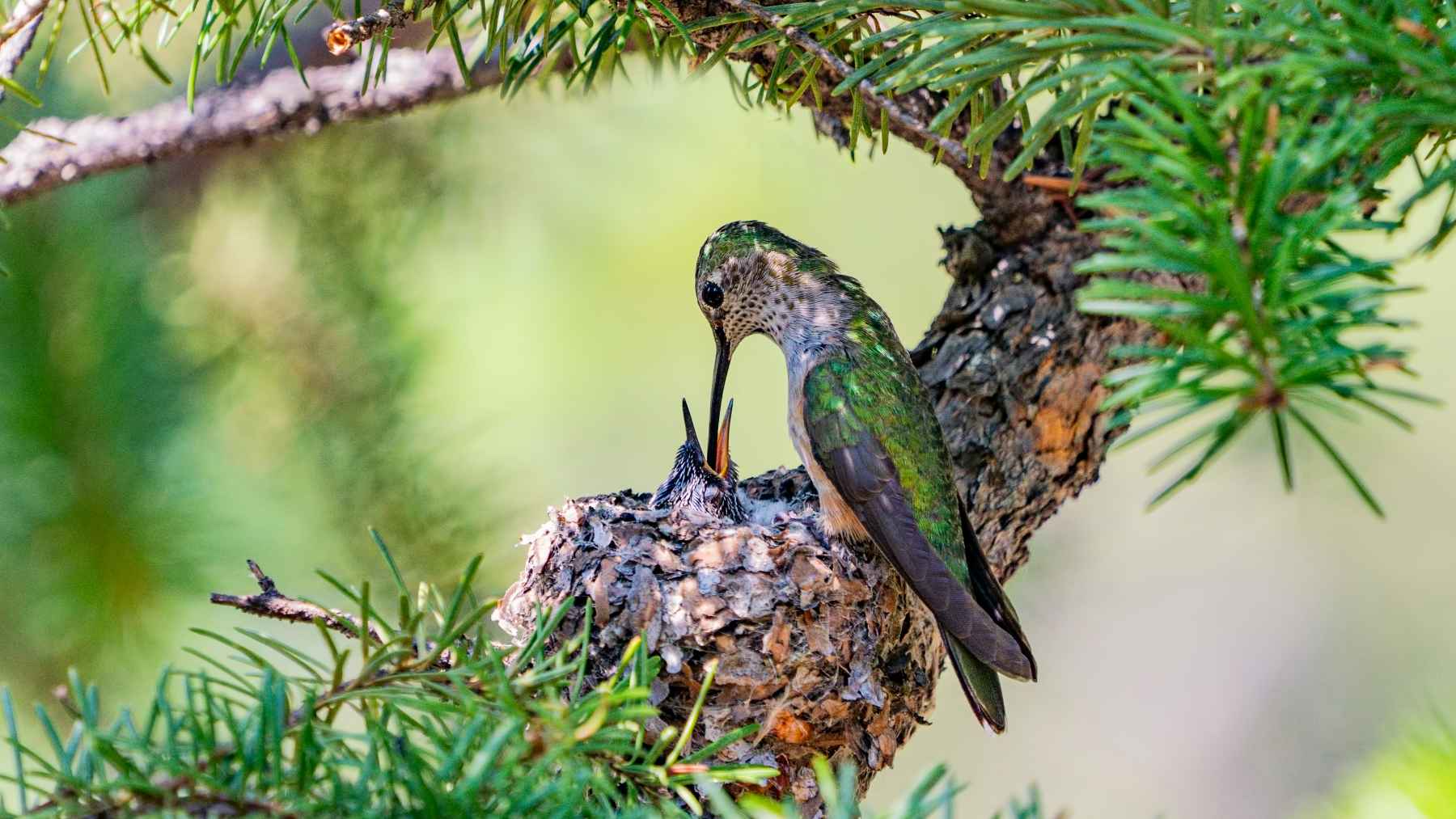
If you find a gorgeous surprise in your backyard, such as a hummingbird’s nest, don’t touch it. Do not make this mistake! Here’s why this intelligent bird chose your home as a haven to introduce new life. Not only do we witness beautiful plants blooming in the spring, but we also notice more hummingbirds and other pollinators because it is their breeding season, and the abundance of flowers supplies the nectar required to feed their young.
If you ever found a Hummingbird’s nest in your home, this is what it means based on an ancient belief
There are over 300 kinds of hummingbirds, and while their breeding practices vary, most females create little nests out of spiderwebs, moss, and plant fibers to keep these small birds warm once their eggs hatch. Each clutch typically consists of two white eggs, which the female incubates for about 14 to 19 days. Once the hummingbirds hatch, they spend around three weeks in the nest before learning to fly on their own. For this reason, you should feel fortunate if you discover a nest at home since it indicates that the bird views your house or the area around it as a secure haven where it may find food for its offspring after they hatch.
Hummingbirds nest anywhere that can support their weight and that of their young. This means that almost any location is suitable: the top of a tree, the surface of a garden decoration, a roof, or a pipe, for example. In many cultures, having this bird nesting at home is interpreted as a sign of good luck, as this bird is the messenger of loved ones who have passed away. Furthermore, it is believed that it carries positive energy that can cleanse the environment in which it lives. But this is only a widespread belief.
What should people do if a hummingbird makes a nest in their houses?
If you come upon a nest, don’t touch it or move it because any alteration could endanger the younger birds. It is preferable to leave it as you found it; even if you suspect it will fall, do not interfere with it. Moreover, avoid letting your pets near the nest site if you have any, especially cats, which are more inquisitive. You can keep your pets away and avoid a catastrophe by installing physical barriers or keeping an eye on them. Additionally, since chemicals and pesticides might kill these birds, stay away from using them close to the nest.
One way to avoid disturbing the mother and her young is to keep the area clear of loud noises. There is nothing like seeing a hummingbird nest in your house. The birth of these amazing birds can be observed with little attention to detail and consideration for their personal space. If you want to know why esotericism is a threat to these birds, remain put and watch this video.
Sighting a hummingbird may be easier in one of these states
Hummingbirds have completed their spring migration season and are now on their journey to the northernmost parts of the United States. These birds, which are distinguished by their long, slender beaks and incredibly quick wings, migrate north as early as February to late spring after spending the winter in Central America or Mexico. The rufous bird was spotted on Hinchinbrook Island, Alaska, on April 20, while the ruby-throated was spotted in Lyman, Maine, on April 23, according to crowdsourced sightings compiled by Hummingbird Central.
According to the National Audubon Society, hummingbirds must visit 1,000-2,000 flowers every day and eat every 10-15 minutes because of their small body size, inability to fly, and enormous flight range. Flowers, perches, insects, and water are essential, according to the National Audubon Society, if you want to increase your chances of spotting this bird in your garden. This is what experts recommends:
- Flowers: Fill your yard with natural plants that bloom. Nectar-rich natural plants like honeysuckle, bee balm, and hummingbird sage, as well as red or orange tubular blossoms, attract hummingbirds.
- Perches: Provide them with an open, somewhat covered area to relax.
- Insects: Tiny insects provide hummers with protein as well. To attract fruit flies, hang overripe fruit close to a hummingbird feeder, grow insect-pollinated plants in addition to hummingbird-pollinated plants, and stay away from insecticides in the yard.
- Bathtime: Hummingbirds enjoy taking baths; thus, providing them with clean, fresh water to do so might help draw them in. Think about a drip fountain or a misting gadget.