
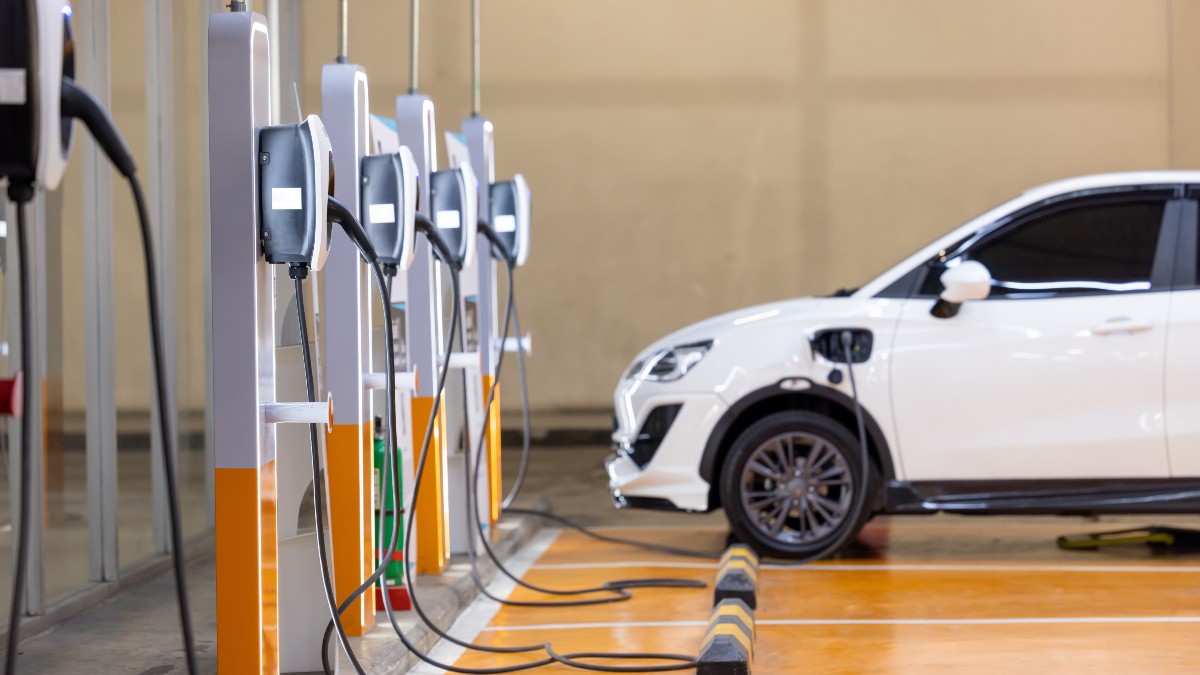
A ground-breaking automobile battery that can be charged in ten minutes and run a vehicle for hundreds of miles before needing to be plugged in was created in China. According to an International Energy Agency (IEA) assessment, China has made “remarkable” strides in chemistry that have enabled the country to create new batteries with far higher energy capacities than those of current technologies. The IEA highlighted electric vehicle batteries that can go 250 miles between charges. 600 miles can be covered by newer models that have been announced since the report was published.
A new battery discovered in China can be fully charged in just 10 minutes
Nonetheless, the organization expressed concern over China’s growing hegemony over the supply of essential components required for battery manufacturing. Global net zero rollouts could be hampered by severe weather, trade conflicts, or geopolitics due to the nation’s sway over supply chains. The Chinese battery manufacturer CATL has created a fast-charging “Shenxing” battery that can provide 400km of range from a ten-minute charge, according to the IEA’s Global Critical Minerals Outlook. According to the IEA, the battery will be used in electric cars later this year.
According to the IEA’s Global Critical Minerals Outlook, the Chinese battery maker CATL has developed a fast-charging “Shenxing” battery that can go 400 kilometers on a single charge in ten minutes. The IEA predicts that later this year, the battery will be utilized in electric vehicles. Vehicles powered by the new Chinese batteries would, therefore require refueling far less frequently and at a significantly lower cost than the majority of existing EVs. Based on the paper’s results, China’s battery chemistry advancements have put it well ahead of its Western competitors. It stated that the revival of the lithium iron phosphate (LFP) cathode chemistry has been one of the most notable advancements in the worldwide battery industry over the past five years.
Drivers, who have long lamented EVs’ “range anxiety,” are likely to applaud the development. However, many Western countries that are worried about Beijing’s hold on the green energy market will be alarmed by the IEA report’s warning that China owns a large portion of the worldwide market for the minerals needed to make batteries. Additionally, it is important to note that the IEA report also analyzed the worldwide supply, demand, and applications of minerals such as lithium, cobalt, nickel, graphite, and copper—all of which are becoming more and more essential for the production of low-carbon energy.
Although the IEA stated that China dominates the market, supplies of the majority of these metals are growing. A number of minerals are necessary for EV batteries. For instance, anodes usually contain graphite and silicon compounds, whereas cathodes frequently contain nickel, lithium, manganese, cobalt, and iron compounds. China now controls the world’s supply of all these minerals, according to the IEA. It stated that in 2030, China will supply more than 90% of battery-grade graphite and 77% of refined rare earths. It further stated that the current top three producers account for about 70–75 percent of the anticipated supply growth for refined lithium, nickel, cobalt, and rare earth elements between now and 2030. Nearly 95% of the growth in battery-quality synthetic and spherical graphite comes from China.
China’s global dominancy in the EV battery industry
China’s enormous domestic market and the subsidies it provides to consumers to purchase EVs are the reasons behind its worldwide supremacy in this industry, the report stated. It was discovered that last year, Chinese consumers purchased 60% of all EVs sold worldwide. China’s success was largely due to the introduction of new technologies that allowed EVs to have much longer ranges and faster charging times without requiring a considerable increase in battery size. This has assisted in overcoming the “range anxiety” that has long prevented drivers in Europe from making the switch to electric cars.




