
Did you know that 1,400 millions of years ago, days on Earth only lasted for 18 hours? Crazy, right? According to researchers, the Earth is experiencing increasingly longer days, namely 1.8 milliseconds every century. This has been due to the slowing of our planet’s rotation, which responds, according to scientists, to the force of attraction that the Moon exerts on us. On the other hand, an outbreak of cyanobacteria caused the Great Oxidation Event, which resulted in a significant increase in the amount of oxygen. Would this mean that we will have more beach hours?
Slowing down of Earth rotation
The location of the Moon has changed over eons. It is getting a little further away from planet Earth but, how does it affect its rotation? Well, we can’t forget the force of gravitational attraction that it exerts on our planet, which is responsible for us turning slower and slower.
The location of the Moon has changed over eons. It is getting a little further away from planet Earth but, how does it affect its rotation? Well, we can’t forget the force of gravitational attraction that it exerts on our planet, which is responsible for us turning slower and slower. Obviously, humans are not able to appreciate this slowing down, but the truth is that 70 million years ago, days were half an hour shorter. For better or worse, we have gained 1.8 milliseconds.
Great Oxidation Event (GOE)
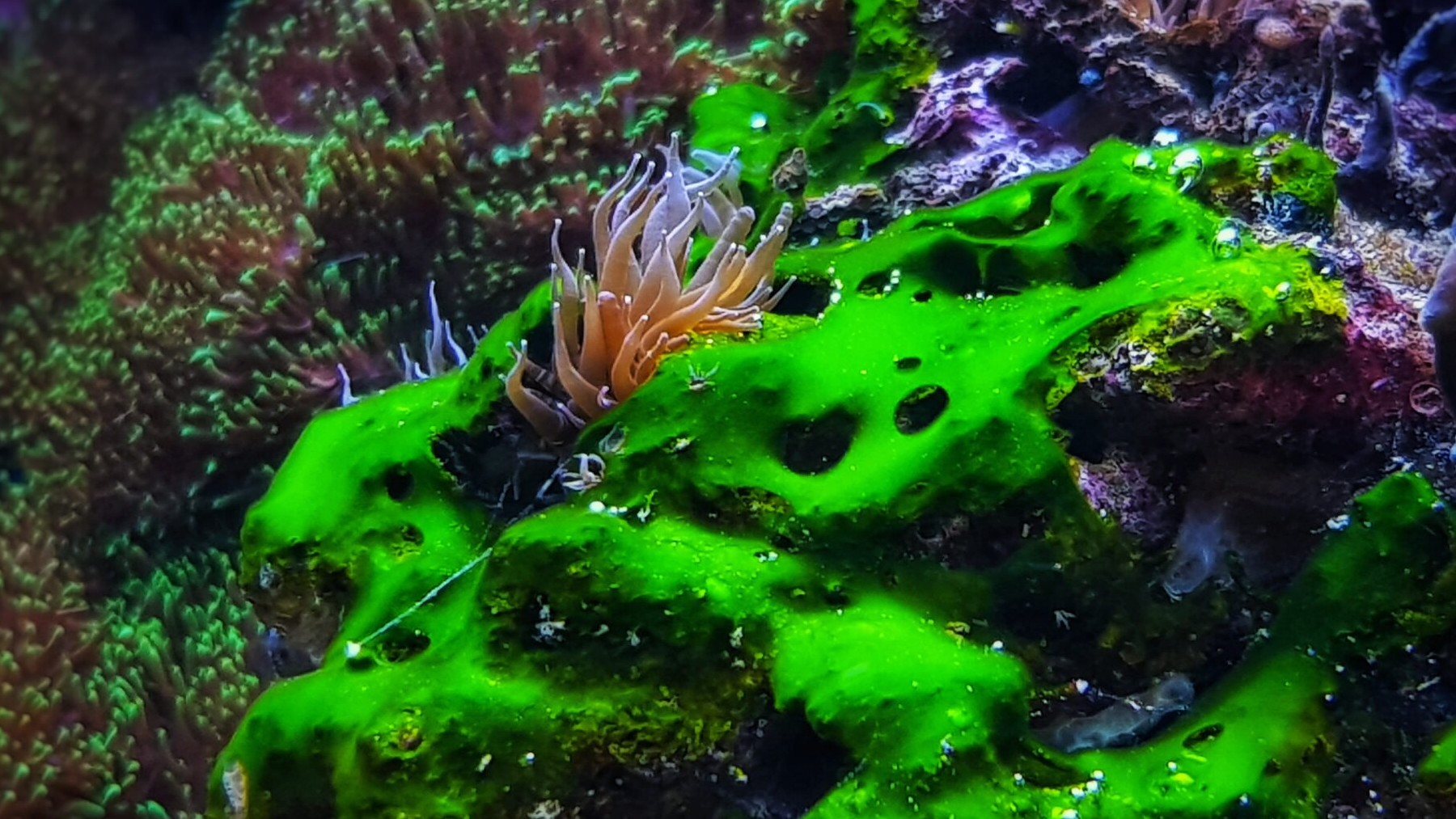
The other reason attributed to the increase in the duration of days is the event that occurred at the beginning of the Paleozoic era, between approximately 2,400 million years ago, the Great Oxidation Event (GOE), when a cyanobacteria (some blue and green algae that we all ran away from on the beach) outbreak occurred, which increased the oxygen level on Earth to very high levels thanks to their photosynthesis process.
How do they relate?
According to a 2021 study, Gregory Dick of the University of Michigan explains that the length of days (Earth’s rotational speed), may have defined the pattern of oxygenation on Earth. Researchers have studied the microbial mats in Lake Huron, in the Middle Island Sinkhole, where they have found mats that reproduce the characteristics of cyanobacteria, responsible for the GOE.
It has been possible to see how the colorful algae compete with the white microbes that go up to the surface to metabolize, while they make their photosynthesis. White microbes have a night shift, while algae have a day shift. The problem is that cyanobacteria are sleepers and do not start working until several hours of sunshine have passed, according to Judith Klatt´s chief microbiologist from the Max Planck Marine Biology Institute in Germany. What does this mean? It means that the time they have to oxygenate the atmosphere is quite limited, which called the attention of the oceanographer Brian Arbic from Michingan´s University.
The experiment
A team of scientists carried out experiments in the laboratory and in the natural environment of these microbes to test their hypothesis. They determined that in a proportional way, a day of 24h has the same hours of sun as one of 12. But the heart of the problem was not there, but in molecular diffusion. Regardless of the hours of sunshine, this process has its own rhythm.
Earth rotation and hours of sunshine
Thus, it was shown that the length of days is related to the oxygenation of the Earth. In addition, the Neoproterozoic Oxygenation Event was also discovered, which is also responsible for the increase in terrestrial oxygen since about 800 million years ago. The relationship between the amount of oxygen that terrestrial microbes can release is directly related to the length of days on the planet.
Learn more about our planet here!




