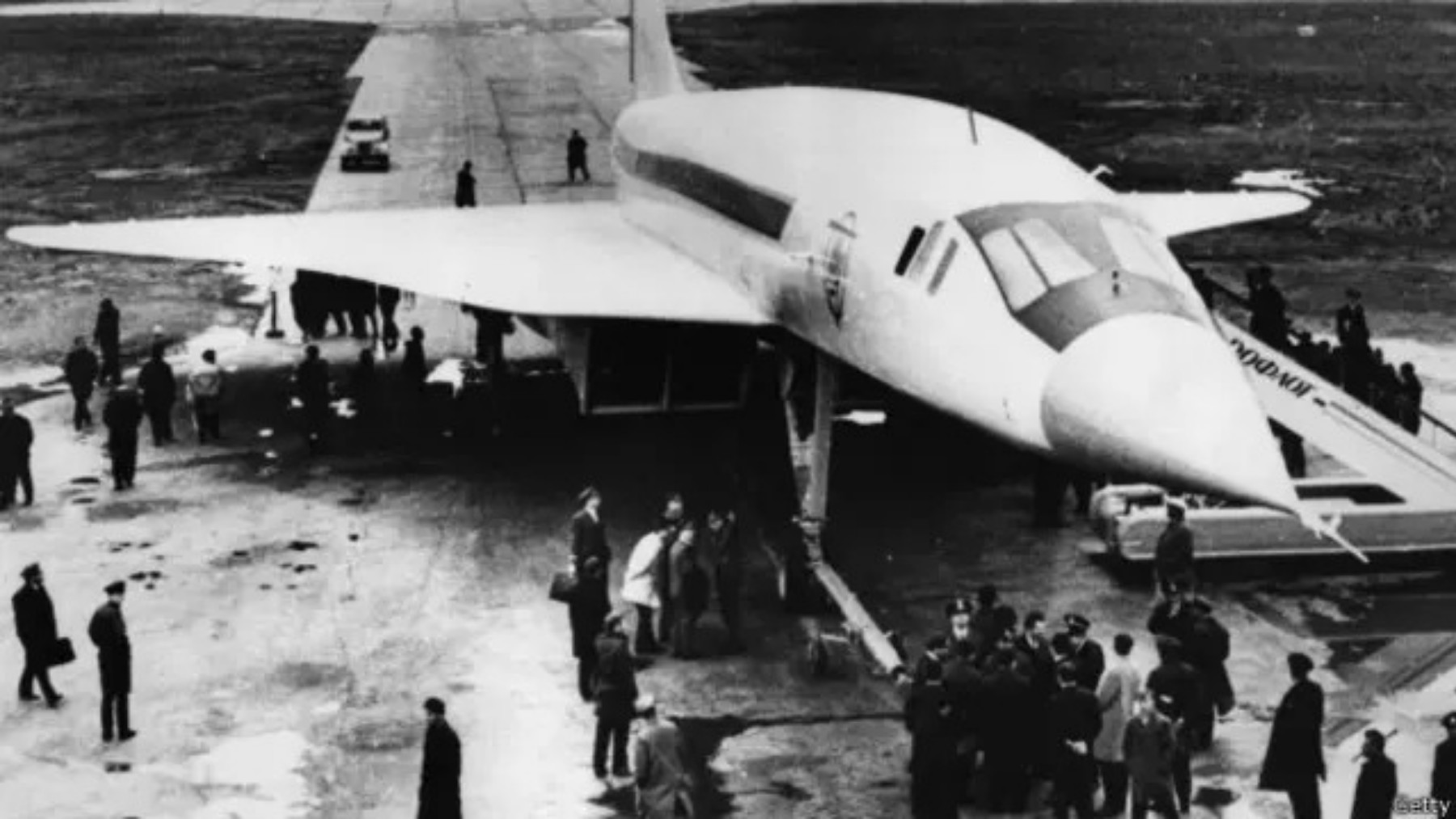
China aims to recover a hypersonic project of the 70s, specifically from the Cold War – a milestone in the military history of the United States. In the arms race, China aims to strengthen its military technology to stay ahead. To position itself in air defense, it has tried to put the use of hypersonic aircraft back into operation with the current technological innovation. Despite the positive results of their tests, the use of these aircraft has limitations that affect its reliability.
Cold war
Between 1947 and 1991 the so-called Cold War took place. This ideological political conflict was divided into several phases, facing the United States and the then Soviet Union (now Russia). Specifically, between the years 1948 and 1968, there was the golden age of aviation, with never seen before technological advances.
Supersonic aircraft made in China
The world seems to be in a constant race in different ways. Renewable energies, electric cars, technological advances, energy sources other than the known, among others. In the case of China, there are many open fronts and investigations underway in many different sectors.However, the case before us today is about their latest research and results on the operation, feasibility and effectiveness of supersonic engines that they have decided to retrieve from the memory of American history to bring them to life in 2025.
If we look back and go back to the month of December, we can retrieve news where it was reported about a 50 millisecond kerosene detonation test that was carried out by a team from the Chinese Academy of Sciences, which was named as “curiosity of laboratory”, implying that there was no greater interest, although no one believed it. Too suspicious, wasn´t it?
The experiment
The technology proposed by the US military 70 years ago has once again been the focus of debate, after a team of researchers backed by the Chinese government announced that after several tests, has achieved the efficiency of a hypersonic engine powered by fuel. It is now that all doubts are cleared up with the new test carried out by the Government of China. A four-hole central fuel injector sprayed RP-3 kerosene in a supersonic air stream together with a 20 degree wedge inside the combustion chamber of the experimental engine, resulting in a detonation. The engine had a considerable thrust force after detonation, as numerical simulations coincided with pressure peaks of 272 kPa.
Researcher Yang Yang who leads the research team stated that “The combustion zone remained stable within the effective test window of 2.2 seconds”. These results show, according to the researchers, that the oblique detonation engine technique with internal injection and liquid fuel is feasible.
Effectiveness vs limitations
Not all reports are positive in relation to this study and its practical test. It appears that the Chinese researchers have discovered a number of limitations which they consider critical to the project’s further progress. One of them was that the fuel only penetrated 39% of the 90 mm high flow channel, leaving the outer regions impoverished. However, some solutions have been proposed by the team such as extending the length of the channels or redesigning the injector. . Until these improvements are carried out and tested with valid results, their development cannot be continued.
It is undeniable and overwhelming the speed that our society has reached and the advances and research in different sectors. To a greater or lesser extent, each day there is something new to learn, a new study to analyse or technological advances to be set in motion. It is great to expand our knowledge in all possible ambits thanks to the different researches carried out by professionals, but sometimes it is too much information to process and half goes along the way.
Other interesting technological advances made in China.