
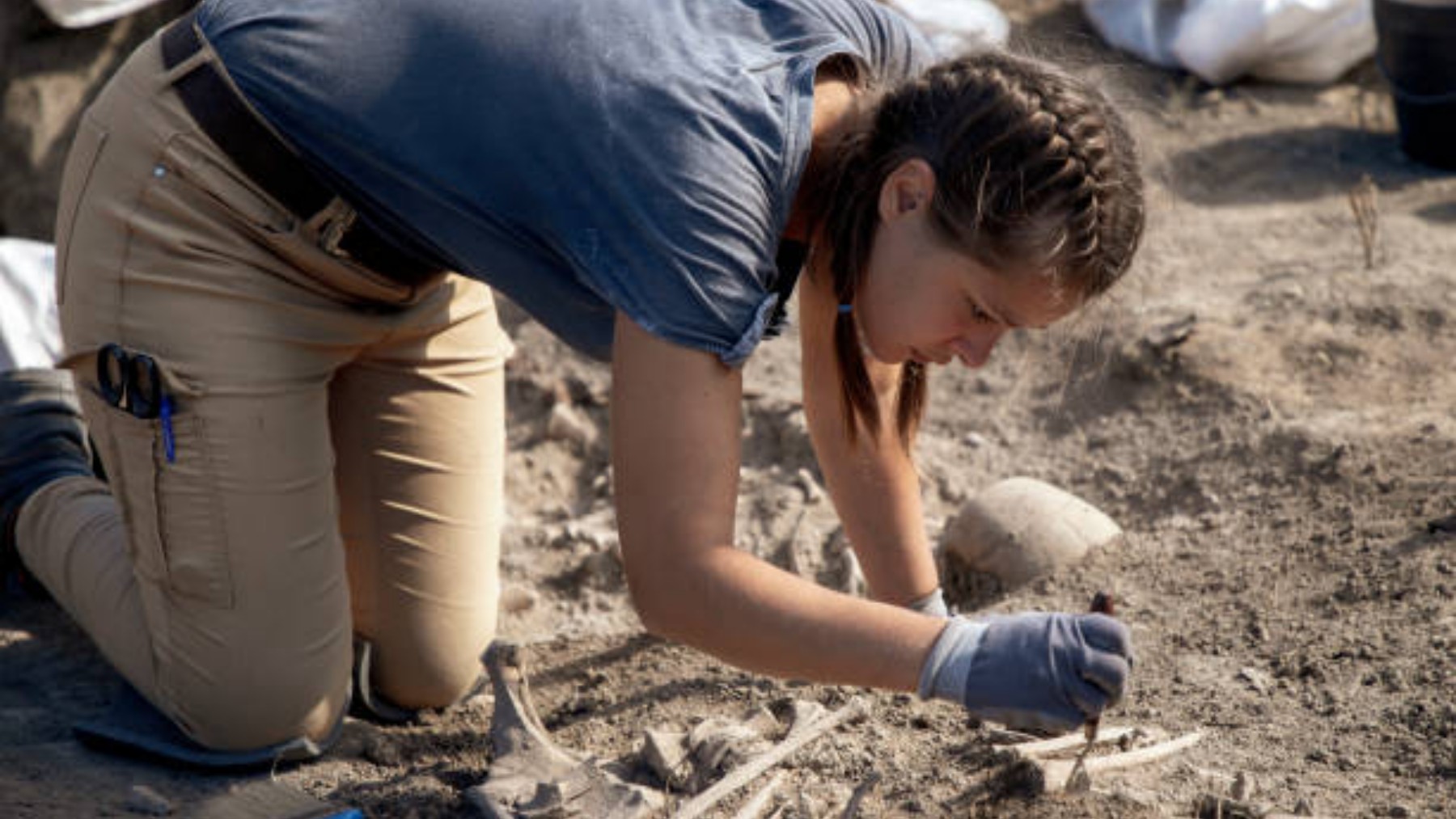
A great archaeological mystery from 2,000 years ago has finally been solved. In 2016, the bones of two babies buried face to face were found in Croatia. After much research, it has been possible to conclude that they died after delivery, probably from some disease transmitted by the mother during pregnancy or through breastfeeding. Children’s burials are not common discoveries, but this is certainly not the first. The characteristic of Roman babies has been their disposition face to face, which could reflect something beyond.
Face to face buried babies
In 2016, while excavations were carried out to build a parking lot in the city of Trogir, Croatia, the skeletal remains of two babies from the Roman era who had been buried face to face were found. Her condition indicated that the mother was more than likely suffering from malnutrition, which could have affected the babies. Two babies in the same grave suggest that they were loved and desired, according to archeologists.
Unusual double burial
After years of research, archaeologists have reached the conclusions of this case and they have been published in the Journal of Archaeological Science; two twin babies, boy and girl, were found buried face to face in excavations in Croatia. According to Anna Osterholtz, bioarchaeologist at Mississippi State University and the author of this study, it is not the first double burial in Roman times found in Croatia, but the only one (to date) located in the community cemetery of the Roman town of Tragurium (now called Trogir), “[…] it seems to have been set aside for individuals who died very young”.
What happened to them?
It is believed that between the end of the 1st and 2nd century CE the burial took place. The researchers describe in the article that the fact that they were buried together suggests that they died at the same time, estimating the life span between birth and two months. There are multiple theories of what happened to these babies and it is difficult not to consider them all. The ones who have gained more weight are the hypotheses of lack of vitamin D or even lead poisoning.
Through the reconstruction of the baby’s bones, it was possible to see the lack of nutrients and malnourishment in both them and the mother. The researchers explain that a baby under 6 months has the ability to obtain all of its necessary nutrients through breastfeeding and placenta. However, a lack of vitamin C and D is pointed out, since signs of scurvy and rickets were found. The also wrote that the mother could have been “so nutritionally stressed that she was unable to transmit sufficient nutrients to the developing fetuses”.
Lead poisoning
Thanks to previous research, over the years it has been possible to link lead poisoning with a high rate of infant mortality and abortion, which could answer what happened to these babies. Lead was a toxic metal used extensively in Rome. The pipes, toys, even the sapa intended to sweeten wine were made with lead. Thus, the population was intoxicated without even realizing it. The researchers came up with a finding of vital importance when they said “Lead exposure on the part of the mother is transmitted through the placenta to the fetus and later through breast milk to the infant which may start to display pathological changes”.
Loved babies
Today, although there are quite feasible hypotheses, it is still not known for sure what happened to the babies of the Roman era. What is known, according to experts, is that given the way they were at the time of their finding, their posture indicates love and care.
Want to find out where else have researchers found skeletal remains?




