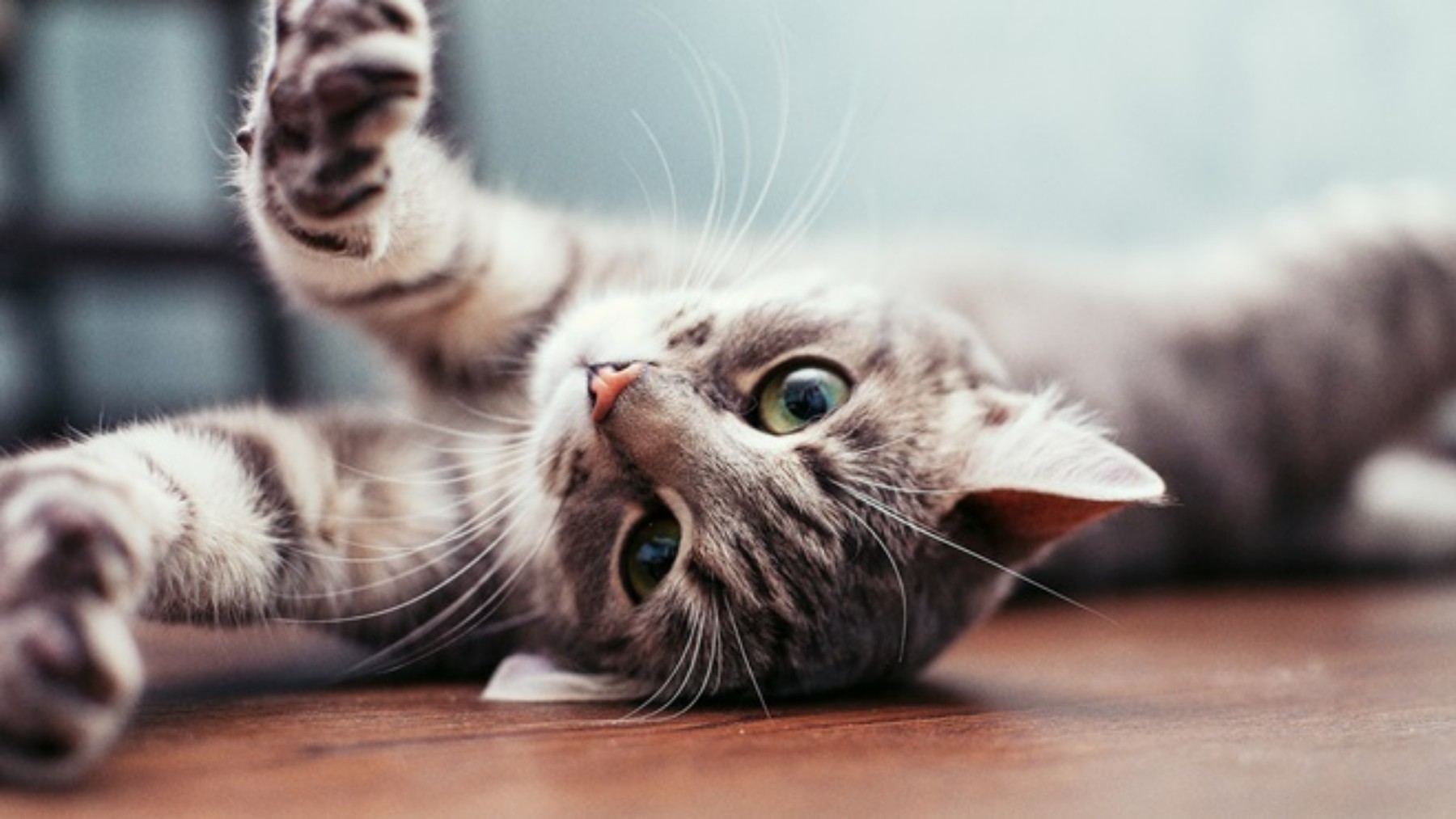
A scientific study carried out by a team of researchers from the Tokyo University of Agriculture, has tried to explain the animal behavior of cats, testing to see if they could recognize their owners faces or not. Human recognition is possible in cats thanks to smell, since the feline memory stores them when they are familiar or known. However, if it spends more time sniffing an object or a person, it is because it´s are completely unfamiliar with it.
Does my cat know who I am?
The answer to that question is if. If your cat had to find you among a crowd of people, it could. But how? Although there are already studies that demonstrate the great intelligence of this species, there are still many characteristics yet to be discovered by us. Only 54% of the cats can identify you solely by seeing your face, but what happens so that 100% are able to identify us? The PLOS One portal (highly recommended scientific articles portal), published a recent study by the University of Agriculture in Tokyo, which explains that the key factor for cats to recognize us is the smell.
Considered as unfriendly, selfless and shy, cats are showing with their results in the studies that are carried out, that this statement is not true. It has been discovered that they are able to understand and store information like the name we give them, the method of communication with their owners and, unlike dogs, they would choose us over a plate of food. In addition, this olfactory ability is not limited only to their owners, but also used with their own kind, to recognize those who are familiar and form their social circle, known and safe.
The tests
To test this theory and draw conclusions, researchers led by Yutaro Miyairi conducted the following experiment. They collected samples from specific areas of the human body (armpits, ears and even between the fingers). Some of them belonged to their owners, others to strangers. The really interesting thing occurred afterwards. A sample of 30 cats was given a sample of each to smell, including an empty tube. The results confirmed the theory: the samples belonging to their owners and the empty test pieces are smelled in much less time than that of the unknown, which took longer. Why?
It was deduced that, being a known smell, the cat identifies it and recovers it from its memory, understanding that it is a familiar being. However, the sample of the unknown had to be taken longer to identify and compare with some smell from his memory. Obviously, the empty sample does not produce any stimulus.
The sense of smell
This ability to recognize familiar beings had already been studied in cat litters with their mothers or by introducing cats from different social circles.According to the study, cats use their nostrils distinctively; the right nostril for unfamiliar odors and the left for familiar odors. Like the brain of dogs, the new information is managed by the right hemisphere, while the familiar is managed by the left.
The sense of smell is what connects them with the world around them. It is their tool to identify their surroundings. When they are cleaned and rubbed, they exchange odors between members of the same social circle, helping cohesion of the same and thus being able to identify odors that may pose a threat.
In the same way that it helps them to identify threats, smells give them peace of mind and a sense of belonging. For example, by recognizing the smell of its owners, a cat can feel peace and security.
For all this, if you ever feel that your cat rejects you, it’s probably because your usual body odor has changed, either because you’ve been away from home for a while, or because you’re wearing new clothes.
Did you think that your cat would be angry with you when you went on vacation and leave it in the care of a family member? You can rest assured, that does not happen.
Discover the recent discovery of a never seen before cat color!