Every month of the year, the Supplemental Nutrition Assistance Program (SNAP), formerly known as Food Stamps, assists the most vulnerable households in the United States. Since public assistance programs are one of the primary sources of income for low-income individuals, it is crucial to determine their qualifying status annually by looking at cost-of-living adjustments (COLA). Numerous factors influence each family’s income and spending, and millions of people have been impacted by inflation in recent months.
The SNAP program has confirmed the maximum income limits for a family of 3
There have been rumors of program adjustments since Donald Trump returned to office. It is crucial to remember that the USDA Food and Nutrition Service (USDA) has not yet made any announcements on adjustments and that the 2025-adjusted maximum allotments, deductions, and eligibility requirements for SNAP are unchanged. All 48 states, the District of Columbia, Hawaii, Alaska, Guam, and the Virgin Islands experienced increases in these allotments. For instance, the USDA website states that the location and number of elements in each family determine the maximum resource allocation.
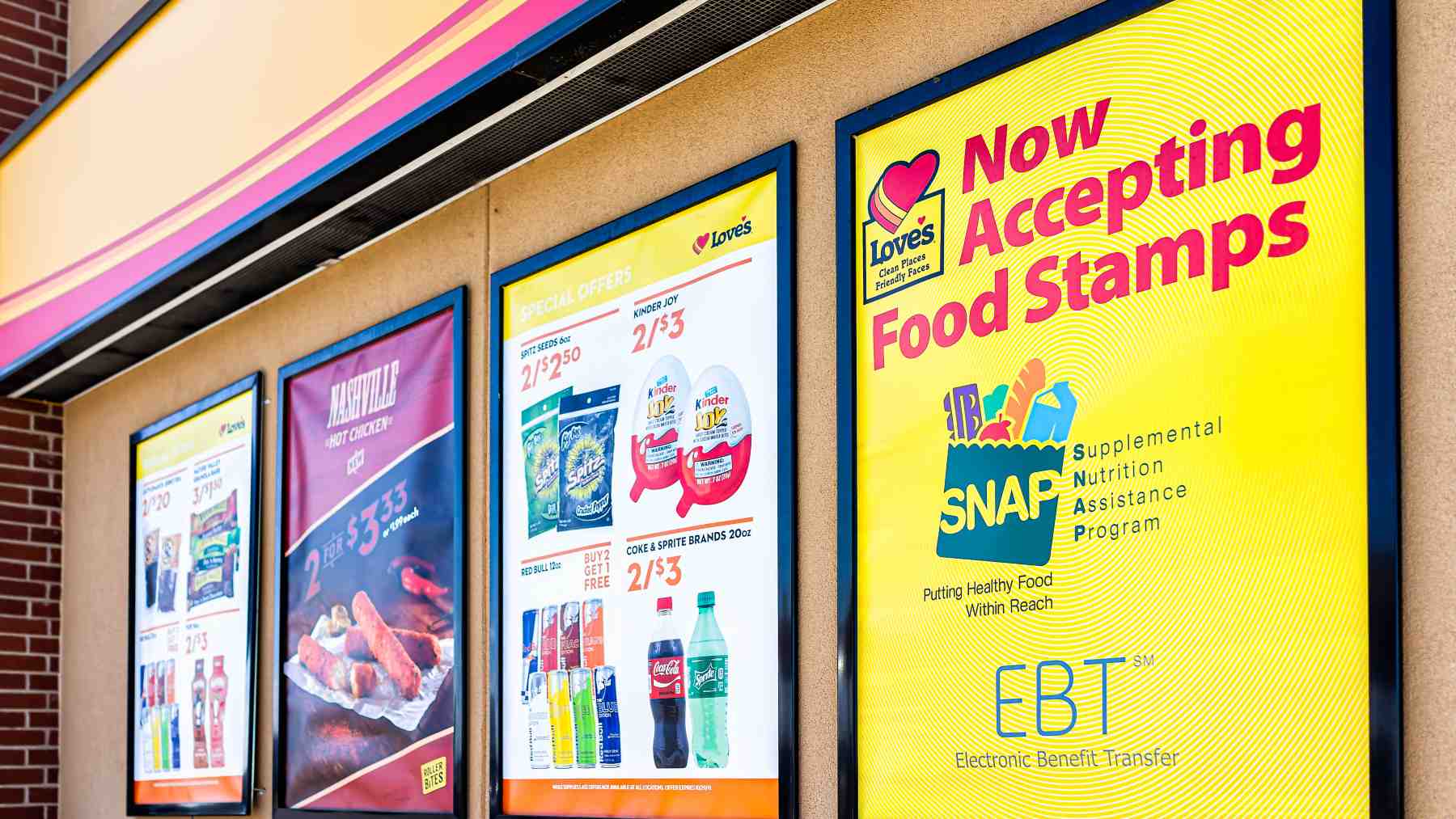
Similar to this, every state has a different SNAP benefit payment schedule. These benefits are paid out using Electronic Benefits Transfer (EBT) cards, which act similarly to debit or credit cards. Net income, which is calculated as of last October and will remain in place until September 2025, is the basis for this eligibility. Moreover, based on statistics on the USDA website, a family of three will receive a maximum amount of $768 across the 48 states and the District of Columbia. The SNAP benefit distributions for American households are as follows, along with the number of members:
- Household size 1: $292
- Household size 2: $536
- Household size 3: $768
- Household size 4: $975
- Household size 5: $1,158
- Household size 6: $1,390
- Household size 7: $1,536
- Household size 8: $1,756
- For each additional person: $220
These could be the impacts of the potential SNAP benefit cuts from Trump
During his first term, President Trump attempted to reduce or restrict the Supplemental Nutrition Assistance Program (SNAP), resulting in food shortages for more than 42.6 million Americans. As conservative Republican leaders in Congress and the White House lay out their legislative agenda, they see safety net programs as prime candidates for budget cuts, even though more than one in every eight households currently struggles to receive enough food. This could pose even bigger risks of rising food prices. As a result of past attacks on SNAP-receiving households, this column identifies possible threats for 2025 and on.
House Republicans are debating how to cut government spending in a budget resolution that is required to begin the reconciliation process, and households that receive SNAP—which gives low-income families benefits to buy groceries—will probably be the target of numerous attacks now that Trump is back in office and Republicans control both chambers of Congress. Bipartisan support would not be required under this procedure to pass the final legislative package. According to reports, policy changes that would restrict SNAP’s use, take it away from jobless individuals, and cap maximum benefits arbitrarily are already being considered as possible sources of funding cuts to support a costly extension of the 2017 tax bill that would disproportionately benefit the wealthy.
In other legislative debates, SNAP cuts might be a major factor, even if they are not part of a tax package. Indeed, before the official inauguration of the new administration, Trump and Elon Musk, the head of the newly established Department of Government Efficiency, created resistance to a spending measure that was scheduled to be approved by Congress in December 2024 and contained ongoing support for returning stolen Medicaid benefits. According to the most recent budget plan from the Republican Study Committee, Congress may also think about making SNAP a block grant and requiring states to pay a portion of the benefits. During economic downturns, when families are frequently most in need of this support, such modifications would drastically restrict access.