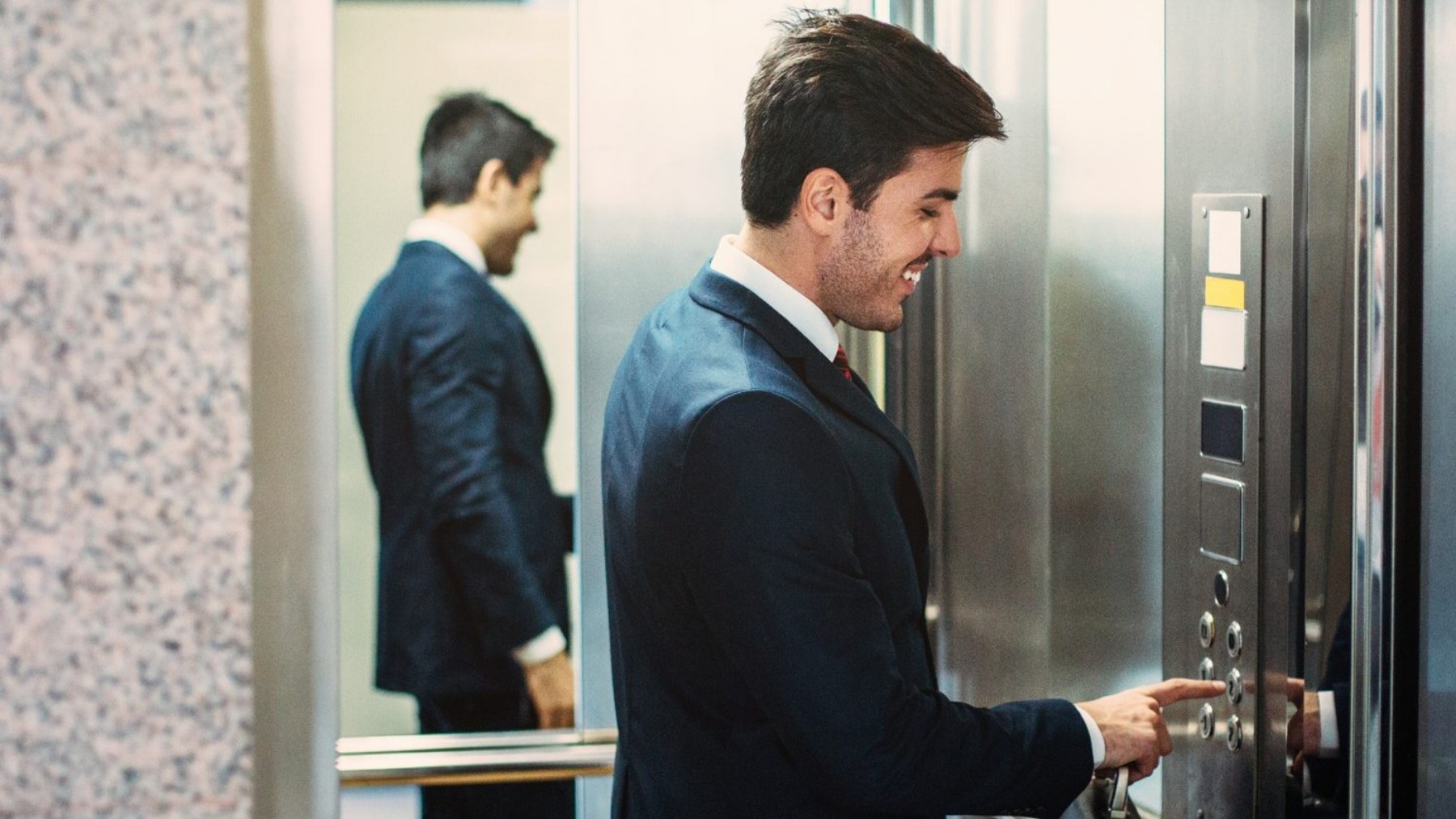
Civil engineering has evolved over the years. Vertical transportation has gone from the first mechanisms of weights and pulleys to the modern elevators we have today. Without a doubt, elevators, although hated by some people, have been a significant advance. They are becoming more and more modern and it is less and less common to find one without a mirror. Have you ever wondered why? Psychology has the answer. Incorporating interior design into elevators by introducing a mirror has a logical explanation. Many people feel claustrophobic in their cramped spaces. That’s why putting a mirror helps the perspective to reflect a more spacious and less cramped space.
Elevators
The first records of the presence of elevators in our lives date back to 236 BC. Although it is not even known for certain, it is believed that it was Archimedes who designed a model that worked with ropes wound around a drum. It was not until 1823 that 20 people could be lifted to a height of 37 meters. It was thanks to the design of Burton and Hormer. In the 19th century, thanks to Elisha Otis, it was possible to avoid the uncontrolled fall of the cabin. It is from that moment when the elevator really emerges as we know it today.
They have undergone many advances. Both from the point of view of design and operation, as well as design. Hydraulic drive, gearless motor traction systems and predictive control have been incorporated. In terms of design, they have become part of the aesthetic setting of the building in which they are located. We can find from designs with panoramic views, to small rooms of just 2 square meters.
Mirrors in elevators
Elevator mirrors are very useful for last minute touch-ups, for those photos we see on social networks or simply for aesthetics. But that is not their main function. Many people avoid going up elevators, and others who do have a really hard time. Being enclosed in such a small space can generate anxiety and claustrophobia in many people. And that is the main purpose of a mirror. By reflecting the cabin, it gives a feeling of spaciousness and roominess, making it appear larger. Having that perception that the room is larger, the feeling of being cramped is reduced. That is why its presence is not so much to do with design, but to ensure the welfare of those people who have a hard time when riding in an elevator.
Other uses
Apart from the optical illusion, the mirrors have more functions, such as accessibility. It is a visual aid for people in wheelchairs, as it allows them to have a visual of the space they have. When entering or exiting, the mirror helps them to see what is around them so that they do not have to make turns when they barely have space. Its design function is unavoidable. Different types of mirrors, sizes or finishes along with good lighting, are a perfect combination to give a touch of elegance to an elevator. As mentioned at the beginning, a mirror serves as entertainment when traveling. Comb your hair, take a picture or avoid looking at the other person. Whatever it is, a mirror can make the trip a little more pleasant or less uncomfortable.
Installation
It is not a matter of putting up a mirror in the same way we put it up at home. Professionals have to follow rigorous safety standards. The materials used are usually laminated or tempered glass, very resistant to avoid breakage. There must be a frame to prevent vibrations and protect the edges. It is important that they are regularly maintained to guarantee their function. They are not just an ornament, but a tool to enhance the experience, offer greater security and peace of mind, facilitate inclusion and why not, offer some entertainment.
Find out other curious aspects about the mirrors in our lives!