
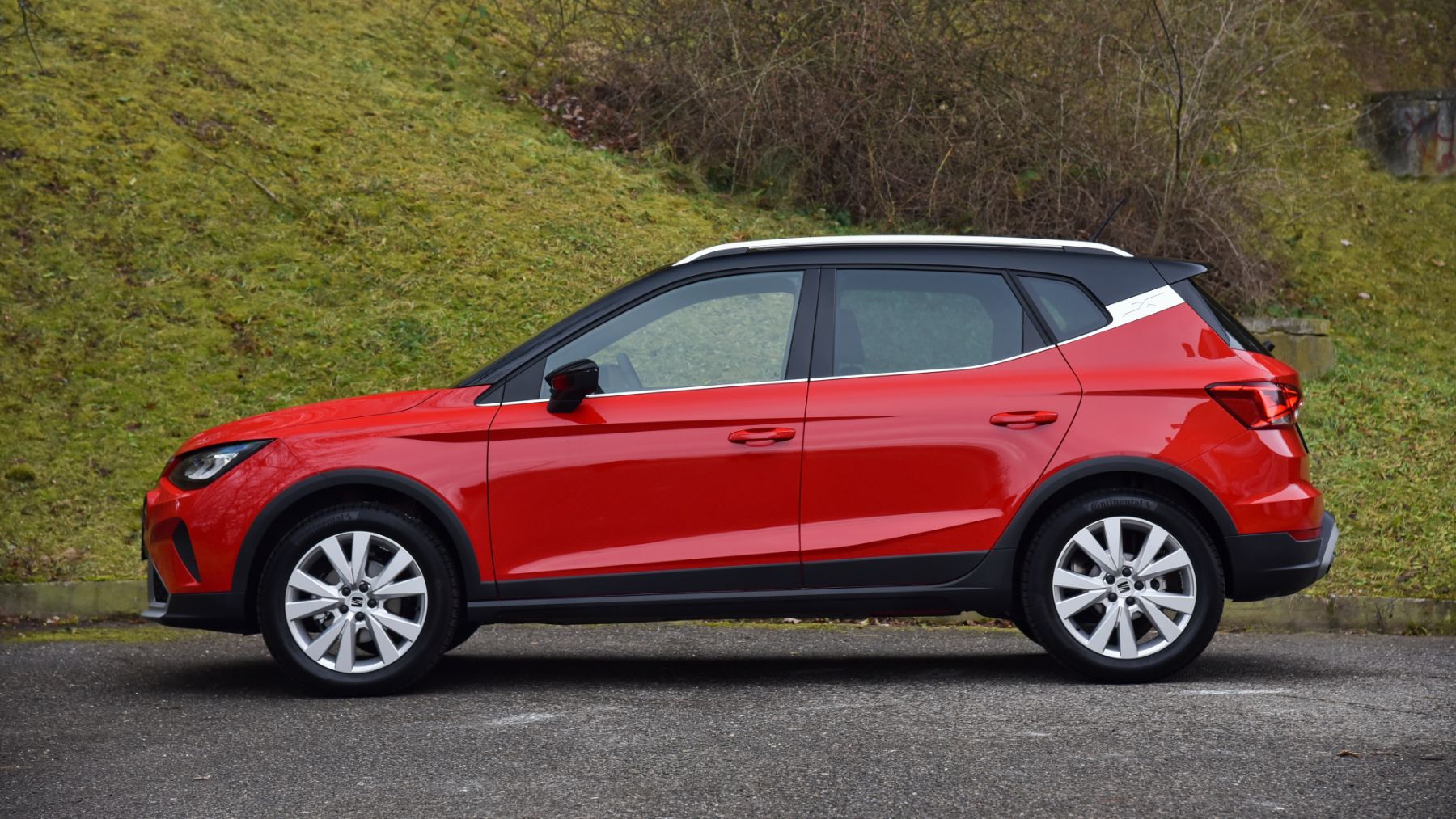
The new SEAT Arona will incorporate rice husks into its production. The automotive world is gearing up in the race toward sustainable mobility and the circular economy. SEAT, part of the Volkswagen Group, has made its new urban SUV the first production vehicle to integrate parts made from Oryzite, a polymer derived from rice by-products. The Innovation Days have clearly yielded green results for the future of SEAT SUVs.
The rice husks will be inside de SEAT Arona
Where will these parts be located? In the trunk of the SEAT Arona. This is a project launched in 2020 as a pilot test within the framework of Innovation Days. After years of research and work carried out by SEAT and the companies Oryzite and SIGIT, the results are now being revealed.
The car uses 60 grams of the product from the Ebro Delta
Oryzite is a bioplastic that contains 15% rice husks. “Every SEAT Arona that rolls off the production line now uses 60 grams of rice husks, which translates into the annual utilization of up to 5 tons of this byproduct, originating from the rice paddies of the Ebro Delta, a biosphere reserve,” explains Gerard Suriol, Interior Development at the SEAT S.A. Technical Center. This represents a significant reduction in part weight (–5.8%) and production costs (–2%). The medium-term goal is to expand the use of this type of material to more components and models.
Before it was 100% polypropylene with fiberglass
Rice is one of the most consumed foods on planet Earth, and now, this natural source will be part of the trunk of a car. This fact will open up the range of possibilities and different ways to leverage the circular economy to achieve a more sustainable life. What is clear is that what was previously 100% polypropylene with fiberglass now also incorporates 15% of this renewable material, Oryzite.
This sustainable material is currently used in the double trunk floor and the rear passenger compartment floor. It’s important to note that its inclusion does not affect the safety or design of the SEAT Arona. It also reduces dependence on conventional plastics, promoting, as mentioned above, a circular and local economy.
SEAT Arona is one of the best-selling models in Spain
There’s no doubting SEAT’s power and strength in innovation. The results can be seen in car sales. This is the case with the SEAT Arona, one of the best-selling models since its launch, selling nearly 400,000 units. The comfort of Martorell’s most famous urban SUV is a sign of efficiency for consumers.
According to Gerard, Interior Development at the SEAT S.A. Technical Center, “Every SEAT Arona that comes off the production line now uses 60 grams of rice husk, which translates into the annual utilization of up to 5 tons of this byproduct from the rice paddies of the Ebro Delta, a biosphere reserve.” This action not only prevents waste but also contributes to cleaner production, reducing the carbon footprint associated with the use of conventional plastics.
This is important for the global and local motoring industry
SEAT’s best-selling SUV in Spain paves an essential path toward renewable energy. All within the framework of motorsports, where the carbon footprint is one of the main constraints. “We have successfully incorporated this renewable material and thus promoted the circular economy, while reducing the use of petroleum-derived products,” says Suriol. This is good news for SEAT and for technological and renewable advancement in the world’s leading means of transport.
Not only for the motoring industry in general, but for the local motoring industry. This is going to open up about innovation in an area that should be bet more.




