
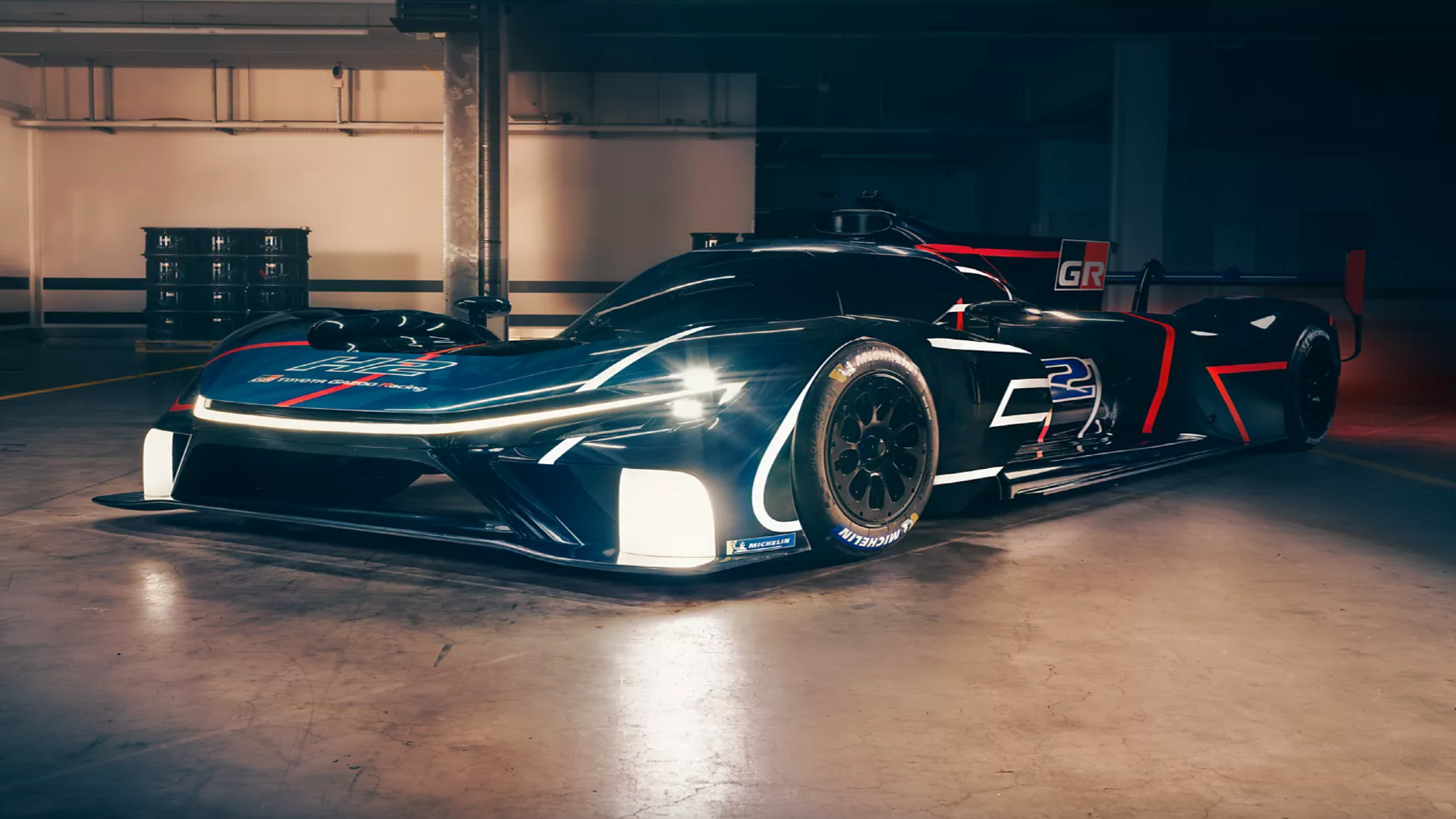
Toyota Gazoo Racing is moving ahead and unveiling the new GR H2 Racing Concept at Le Mans. It’s a liquid hydrogen-powered vehicle that aims to turn the world of motorsports upside down. Japan is leapfrogging other major motorsports venues by launching a clean-energy engine of the future for racing cars.
The big news is that Toyota has launched with liquid hydrogen
The GR H2 Racing Concept made its debut at the Circuit de la Sarthe during the 93rd edition of the 24 Hours of Le Mans, held on June 14. This prototype is based on the GR010 HYBRID Hypercar, currently competing in the FIA World Endurance Championship. The big news is that Toyota has launched with liquid hydrogen, not just hydrogen. That is, a material that is weightless and doesn’t pollute in the way that normal fuels used in competitions like Formula 1 do.
The lighter a car is, the faster it will be
What’s more, it’s done so using a racing car and testing it on a track (not to mention on one of the most legendary circuits in the history of motorsports). The main objective of car racing is to be the fastest, and one of the pillars of speed is weight: the lighter a car is, the faster it will be. In this case, the protagonist is the engine, which determines speed based on, among other factors, weight. Hydrogen enters the scene because it is very light and offers clean energy. Therefore, it’s a big step for Toyota.
Must be to compete sustainably, but being competitive is essential
Along these lines, the idea of integrating fun, speed, adrenaline, and zero emissions into a car is a major challenge. With the arrival of Formula E, attempts have been made to compare both extremes, but Toyota has gone further. Instead of being blinded by electric power, it has opted for something even more revolutionary. To achieve this, the goal must be to compete sustainably, but being competitive is essential. Furthermore, it requires collaboration with sponsors and collaborators, both internal and external. It’s an arduous process involving many parties.
What is clear is that the motorsport giant has opened the door to endless options for the future
The GR H2 Racing Concept could truly be the world’s first liquid hydrogen racing car, capable of competing at the level required by a race like Le Mans. The main idea is that a version of this prototype could be built for Le Mans 2027. It remains to be seen whether Toyota’s competitors will accept the challenge and try to present their own versions for that year. What is clear is that the motorsport giant has opened the door to endless options for the future of motorsport. It’s not just Le Mans; F1, IndyCar, NASCAR, and more are all involved.
We can see how Japan is betting everything it has on combining hydrogen and oxygen in a single engine. Liquid hydrogen, as we mentioned before, is more practical because it’s neither dense nor heavy; it’s lighter, making it ideal for the fuel tanks used in racing cars.
Therefore, light fuel = fast charging, which means an improvement over electric cars. One of the drawbacks of electric cars is their excessively long charging time, especially in high-performance competition. Japan has clearly taken the lead in the race to develop competitive cars that use more sustainable energy, thereby alleviating the pollution currently generated by motorsports.




