
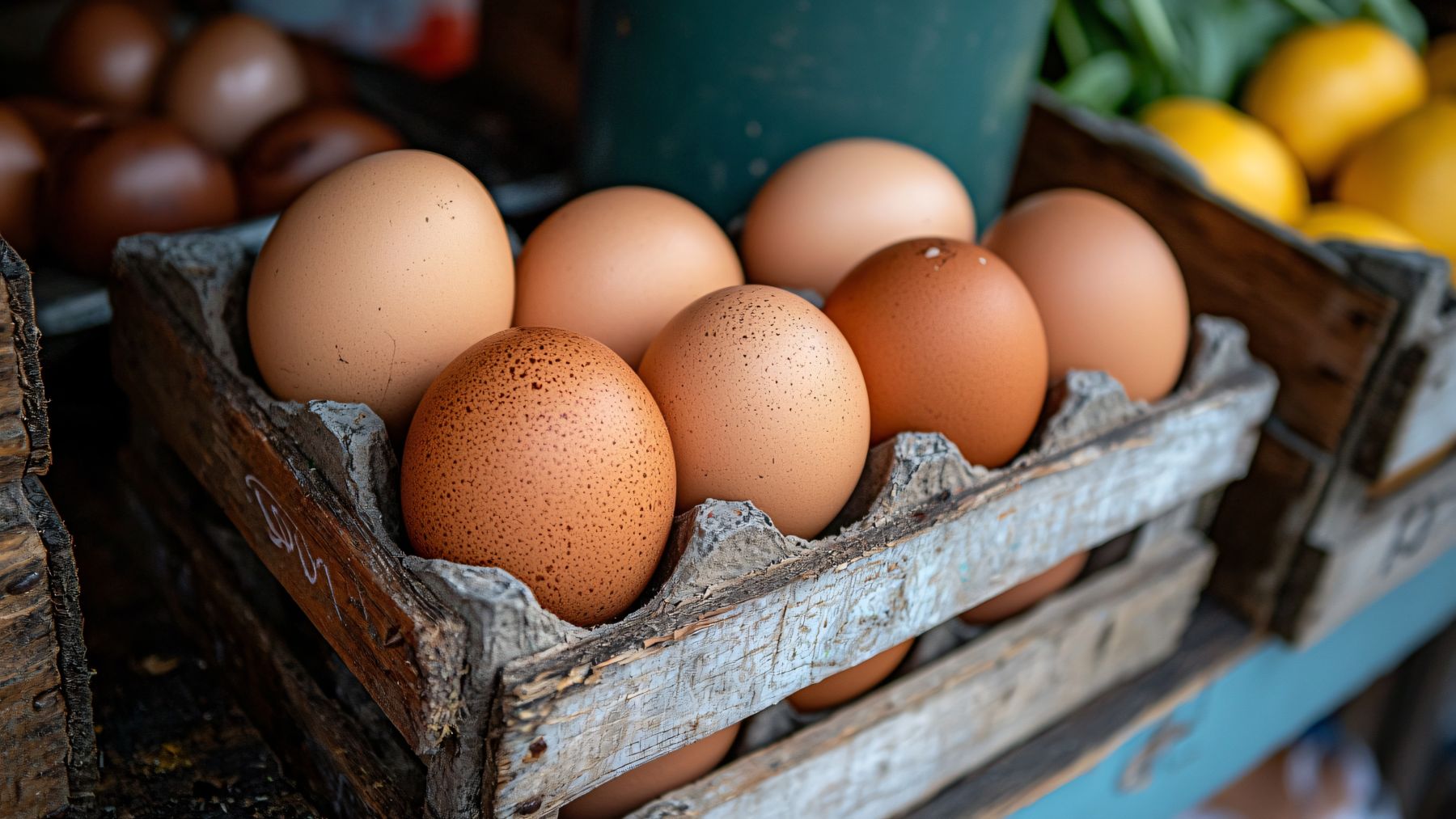
Eggs are a staple food in most homes around the world. For this reason, knowing how to store them correctly is essential to avoid headaches. According to experts, the most important thing is that the eggs do not experience sudden temperature changes, which is why they do not recommend storing them in the door. Ideally, a constant temperature of 4°C (39°F) should be maintained. Also, check the expiration date and pay attention to the labeling, which, according to the British Egg Industry Council (BEIC), is essential to prevent salmonella.
Storage times in the refrigerator and at room temperature are not the same
The first thing to keep in mind is that eggs should be consumed within their best-before date, meaning no later than the expiration date and no later than 28 days. It’s also important to note that storage times in the refrigerator and at room temperature are not the same. For this reason, the shelf life of an egg in perfect condition will be affected by where it’s stored.
Perhaps it’s true that because it’s a food people are used to eating, they may pay less attention to how it should be stored, but that doesn’t eliminate the risk of consuming spoiled eggs. Eggs are very sensitive to temperature changes, shocks, and even odors. One misstep significantly increases the risk of salmonella infection, even if the eggs appear to be in good condition.
Don’t wash eggs, as the shell acts as a protection
Experts offer a number of tips for storing this food in the best possible way. For example, don’t wash eggs, as the shell acts as a protection, and washing it could allow bacteria to enter. As mentioned before, it’s important to check the best-before date and, if storing them in the refrigerator, remove them just before using them. When cooking eggs, it’s important to thoroughly cook both the white and the yolk to avoid contamination.
If you decide to store eggs in the refrigerator, it’s recommended not to do so in the refrigerator door. Most refrigerators come with an egg tray in the door, specifically for storing this food. However, experts advise storing them inside, on the refrigerator’s interior shelves. As mentioned before, it’s important that the eggs don’t experience significant temperature fluctuations, and the door is constantly open and subject to temperature fluctuations.
Among the vitamins, they are notable for their D and A
Eggs are a highly nutritious food, with a moderate energy content of 84 kcal per medium-sized egg. Among the vitamins, they are notable for their D and A vitamins, as well as several B vitamins (B12, B2 or riboflavin, B3 or niacin, and folate). Egg white contains proteins such as ovalbumin (which accounts for 54% of the egg white’s proteins), and the yolk contains granule proteins such as lipovitellin, LDL lipoproteins, and phosphovitin. Among the minerals, eggs are a good source of phosphorus (thanks to their high phospholipid content), iodine, and selenium.
According to the FAO (Food and Agriculture Organization of the United Nations), it is used as a reference due to its balanced proportion of all essential amino acids. Eating eggs is a good choice if you want to maintain protein levels in the body, so following experts’ instructions for storing and consuming them is a priority, especially in summer, when high temperatures cause food to spoil more quickly.




