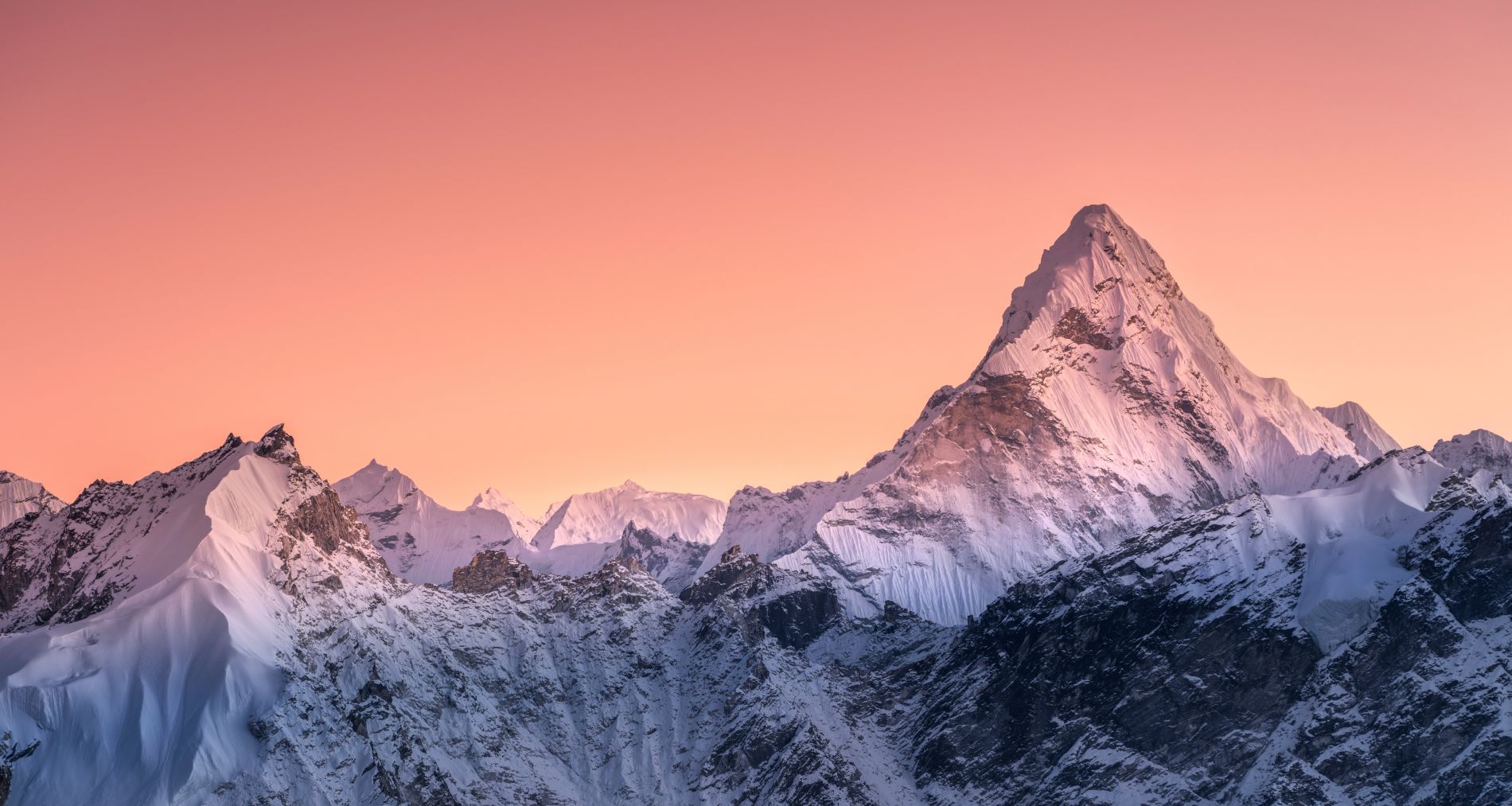
A recent discovery is worrying the Asian continent. The Indian tectonic plate is breaking apart. A new theory suggests that the Indian tectonic plate could be splitting in two as it slides beneath the Eurasian plate, tearing Tibet apart in the process.
A team of researchers from institutions in the United States and China have described a disintegration of the Indian continental plate as it moves along the basement of the Eurasian tectonic plate above it, splitting India in two. The Tibet was born from a geological collision that began about 60 million years ago. Since then, the Indian tectonic plate has been pushing against the Eurasian plate, triggering earthquakes, raising mountains, and shaping the relief of Central Asia.
The upper crust of the Indian plate is pulling away from its base
India may be drifting horizontally as it moves toward Eurasia, separating into two layers, each about 100 kilometers thick. The upper crust of the Indian plate is pulling away from its base. This process is called delamination. But what’s most surprising is that, at the transition between the detached portion and the intact portion, a kind of vertical subsurface tear forms: a ‘slab tear.’
Scientists don’t really know what’s going on beneath Tibet. And it’s only natural that they don’t. The Himalayas grow because two continental tectonic plates, the Indian and the Eurasian, collide beneath this colossal mountain range. But when two equally dense continental plates collide (as is the case beneath the Himalayas), it’s not so easy to predict which plate will end up beneath the other. So scientists aren’t really sure what exactly is going on in Tibet.
The research analyzed seismic waves, earthquake data, and even gases emerging from hot springs in Tibet
Scientifically, what’s happening can be explained as follows: To gain a clearer picture of what’s happening beneath Tibet, researchers studied seismic waves traveling through the crust in the region where the two plates collide. The research analyzed seismic waves, earthquake data, and even gases emerging from hot springs in Tibet. The pattern of gases was revealing: in certain regions, gases typical of the Earth’s mantle appear where only traces of crust should exist. This indicates that the mantle is emerging through increasingly large cracks.
And as suspected, yes, this deep rift could be contributing to earthquakes and seismic movements in the region. Just above the area where the tear was identified lies a fault known as the Cona-Sangri Fault, where the Earth’s crust is being stretched. And, from what scientists know, it appears Europe is also on the verge of triggering earthquakes. These fractures could be the driving force behind future earthquakes, although there are still many unknowns to be revealed, and further studies will be needed to be certain.
Scientists even suggest that the Himalayas, and therefore Tibet itself, could eventually split
Obviously, there are no visible cracks on the surface yet, but the consequences of this rupture could be significant. As we have been reporting, scientists even suggest that the Himalayas, and therefore Tibet itself, could eventually split into two large tectonic masses along an axis following the fracture line.
Most of the time, we tend to focus only on the reality around us: the roads, the forests, even the sea. But what happens underground, in the center of the Earth, is immense and incredibly incredible. That’s why research into this subject is so important.