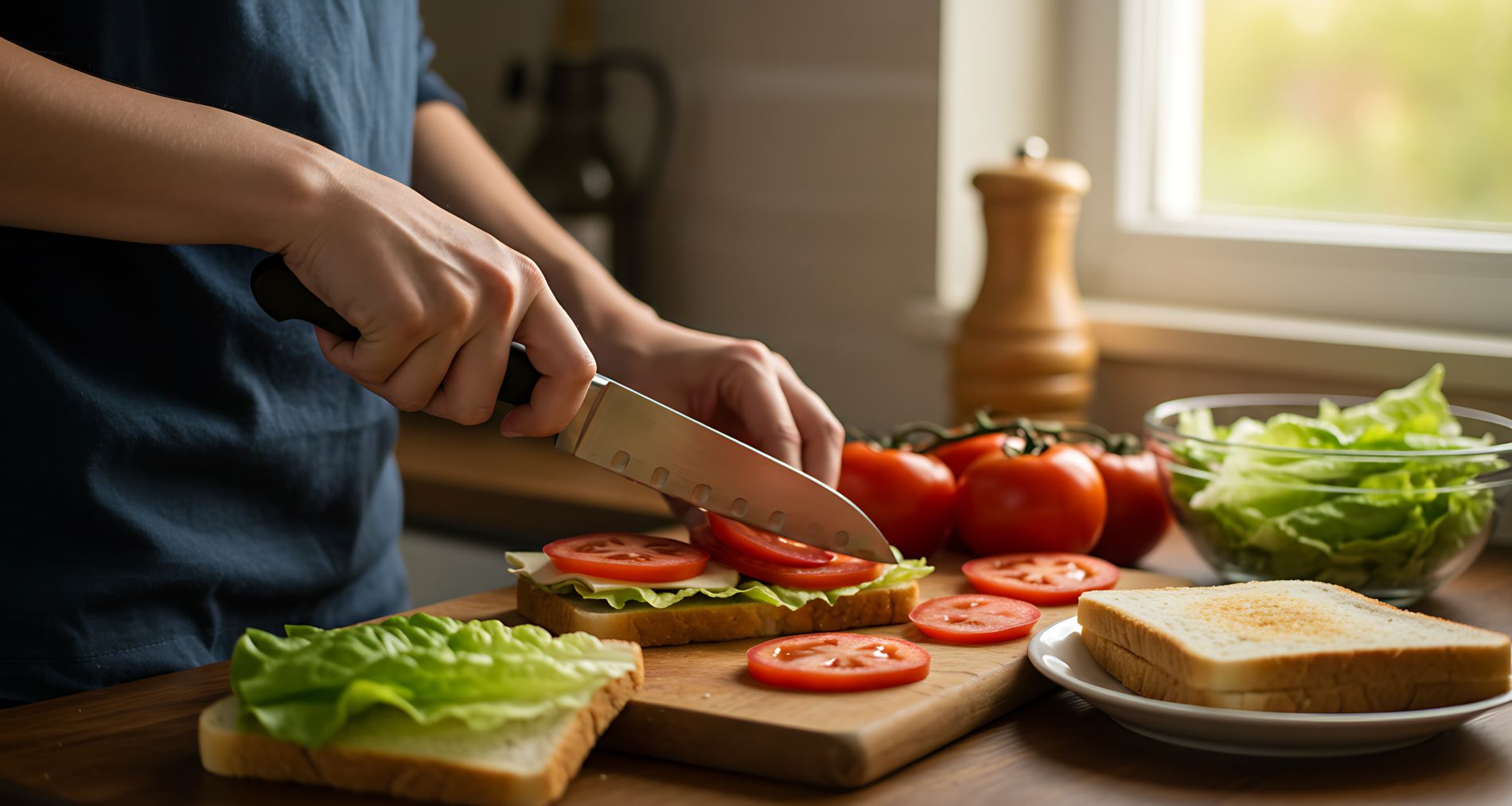
Knives are an essential utensil in kitchens around the world. Whether you’re slicing chicken, cutting meat into thin slices, or chopping vegetables for a salad, knives are essential. As is keeping them sharp. Because something worse than not having a knife in the kitchen is having a dull one. So these five tips will make life easier for every cook.
Advises: After using a knife, clean it by hand with warm water and a little soap
First, it’s essential to wash them by hand, not in the dishwasher. After using a knife, clean it by hand with warm water and a little soap. It’s best to avoid putting it in the dishwasher, as the intense heat and harsh detergents can dull the edge and damage the handle, especially if it’s made of wood.
The blade must be dried immediately. Humidity is one of the biggest enemies of knives. Even if they’re made of stainless steel, leaving them wet can cause stains or even rust. It’s recommended to use a cotton or microfiber cloth and dry them, paying attention to the area where the blade meets the handle, which tends to retain more water.
No, not all boards are suitable if you want to extend the life of your utensil
Use the right cutting board. And no, not all boards are suitable if you want to extend the life of your utensil. Cutting directly on marble, granite, glass, or ceramic plates dulls the edge faster than you might think. Instead, opt for a wooden or plastic board. Wood is softer and protects the blade better, although it requires a little more care.
A sharp knife not only makes cutting easier, it’s also safer
Although it may sound redundant, knives should be sharpened frequently. A sharp knife not only makes cutting easier, it’s also safer. Use a home sharpener to keep the edge in tip-top shape.
Last but not least, how we store them. Leaving knives loose in a drawer causes them to knock against each other and dull their sharpness. Also, if they’re left haphazardly in a drawer, when you rush to find what you were looking for, you can hurt yourself with the knives. The ideal solution is to use a magnetic knife bar, a protective sheath, or a knife block.
How do you know if your knife is sharp?
If the blade slides without penetrating easily when you cut an onion, it’s time to sharpen it. You don’t need to do this every week, but you should do it regularly, depending on use. You can also ask the oldest person in the house; they’ll surely know the exact day the knife needs sharpening.
In any case, the important thing is to be careful when using a knife, without underestimating the great responsibility involved in handling an object of this category. And secondly, to be responsible when handling this object. Knives, especially large or recently sharpened ones, should not be within reach of children. This is tremendously important, as household accidents do exist and may be more common than we think.