
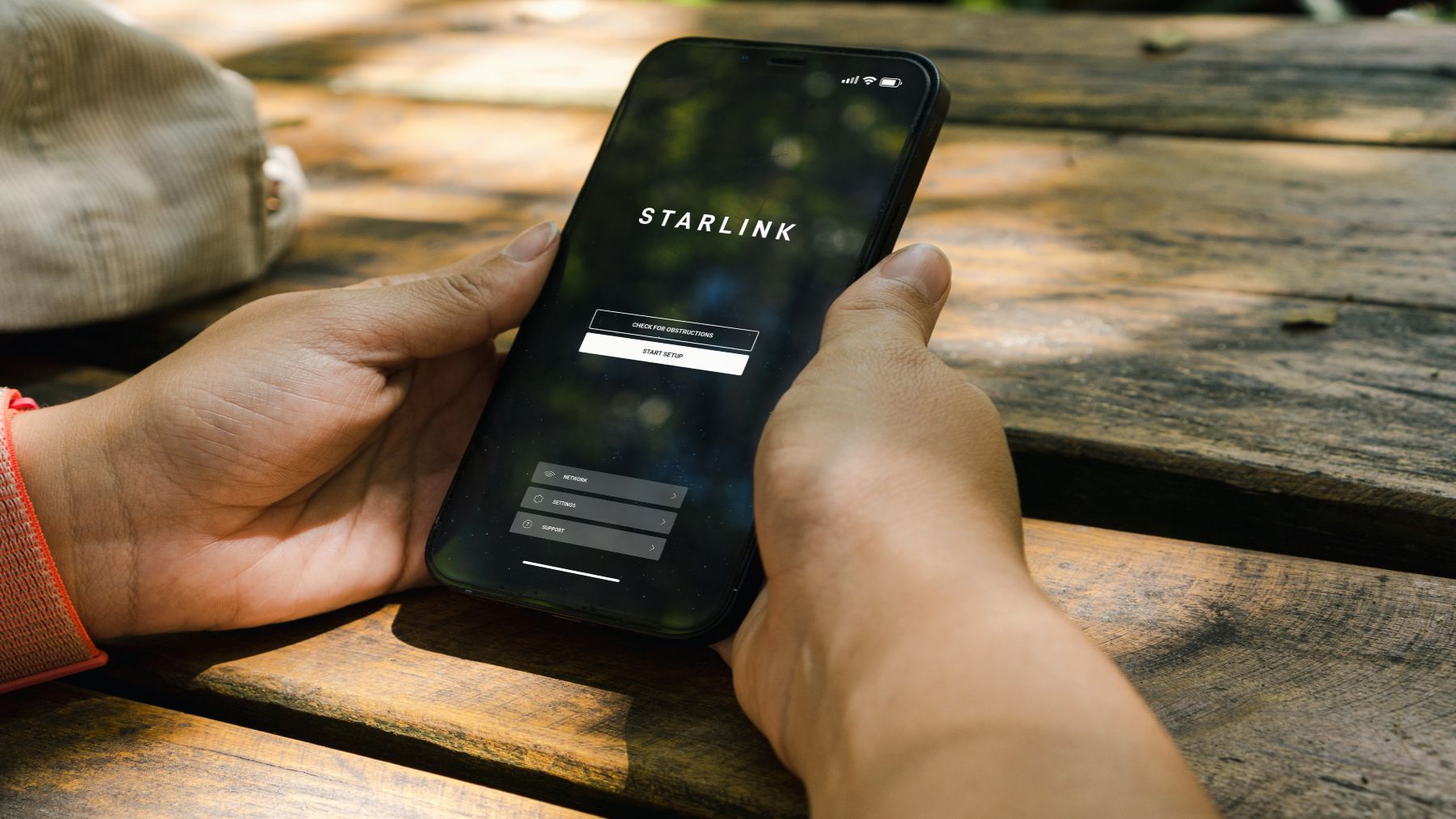
Technology is advancing a mile a minute. Literally. T-Mobile announced this month that its T-Satellite service has exited beta and is available to users in most outdoor areas of the US. This means direct satellite connectivity will be available to mobile devices, representing a groundbreaking initiative that could transform the telecommunications industry.
T-Mobile and Starlink have joined forces to launch an innovative service that enables direct mobile connectivity
T-Mobile, one of the leading telecommunications operators in the United States, has joined forces with Starlink, the satellite internet service from SpaceX, owned by billionaire Elon Musk. The two companies have joined forces to launch an innovative service that enables direct mobile connectivity via low-orbit satellites.
This technology is limited to text messaging and location information
For now, this technology is limited to text messaging and location information. It is known to be compatible with about 60 smartphone models, most of which are sold by Samsung, Motorola, or Google. The main goal is to eliminate traditional cellular coverage “dead zones,” where signals from land-based towers cannot reach, and to offer internet and communication service in remote areas without the need for additional terrestrial infrastructure. More services will eventually become available; for now, communication is limited.
A commercial mobile operator is offering a hybrid terrestrial and satellite network to smartphones
At least one analyst has already tested T-Mobile’s satellite service and says it worked perfectly on a Samsung Galaxy S25 Ultra when moving in and out of cell tower coverage, and that it didn’t require a clear view of the sky, even working indoors. The launch of this technology represents a paradigm shift in global connectivity.
For the first time, a commercial mobile operator is offering a hybrid terrestrial and satellite network that connects directly to standard smartphones, without the need for additional equipment such as satellite dishes or dedicated devices. Apple previously popularized satellite messaging with the Emergency SOS feature it debuted with the iPhone 14 in 2022. This feature uses special hardware to connect to a constellation of orbiting repeaters operated by Globalstar, while T-Mobile’s service would work with any smartphone that complies with version 17 of the 3GPP standards.
Compatible devices included
According to T-Mobile, most 5G devices launched in the last four years work with T-Satellite, without the need for additional satellite hardware.
Apple: iPhone 14, 15, 16, and later.
Samsung: Galaxy A14 through A54, Galaxy S21 through S25 series, and foldable Galaxy Z Flip and Fold 3 through Z Flip and Fold 7.
Google: Pixel 9 and 9 Pro.
Motorola: Razr 2024, Razr Plus 2024, Moto Edge, and Moto G Power 5G (2024) and their 2025 successors.
“We are already in the narrowband era of satellite-based devices, with services launching last year”
On the other hand, in terms of timing, knowing when this technology could be a reality for society, experts say: “In terms of timeline, we are already in the narrowband era of satellite-based devices, with services launching last year, but around 2027 is when we could expect to see the first wave of satellite-based broadband connectivity,” said Luke Pearce, principal analyst at Research Biz CCS Insight.
“By 2030, we foresee the arrival of direct-to-device satellite broadband services”
Therefore, we will have to wait a few years to see this technology become a reality for people who truly need the service in remote parts of the world. “By 2030, we foresee the arrival of direct-to-device satellite broadband services. This will mark the point at which high-speed satellite data links can reach smartphones, laptops, and vehicles,” Pearce said.




