
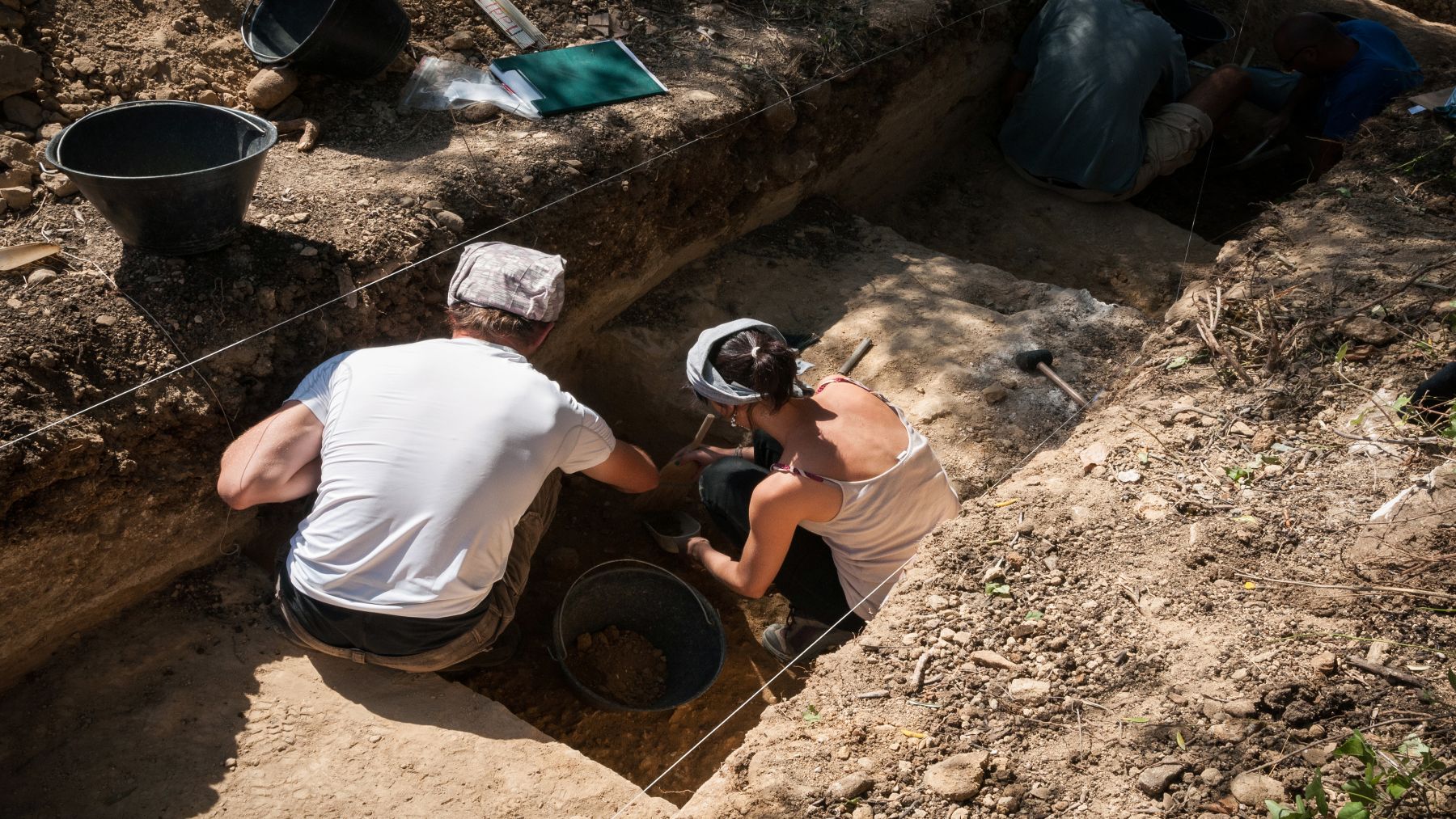
Scientific advances have led to the discovery of evidence of child cannibalism more than 800,000 years ago in Atapuerca, specifically at the Gran Dolina site in the Atapuerca mountain range (Burgos). This conclusion was reached after taphonomic analysis of a new collection of human fossils, including the vertebra of a child between 2 and 5 years old.
The fossils analyzed show a systematic pattern of defleshing, fracturing, and bone marrow extraction
The results have confirmed that cannibalism was part of the behavior of early European hominids. The remains analyzed by experts revealed that both human remains and the remains of animals such as deer and horses were mixed together, all treated in the same way, without distinction or any type of burial. Regarding the remains of children, the infant vertebra, which was found alongside a group of human remains, showed cut marks made to separate the head from the body, according to the researchers.
The discovery of cannibalism in this region of the planet has been debated for more than three decades. This new discovery updates and expands the data collected since 1994 in level TD6 of Gran Dolina, where the remains of at least eleven individuals, almost all of them children, had already been recovered. Now, with developed techniques and improved knowledge, the fossils analyzed show a systematic pattern of defleshing, fracturing, and bone marrow extraction.
Why was there child cannibalism in the Paleolithic and what does it mean?
The results tell us that the bones show cut marks, percussion impacts, and human tooth marks. Most of the victims were children and adolescents. Experts suggest that this preference could reflect a selective strategy, a consequence of high infant mortality. The age profile is more reminiscent of catastrophic mortality than intentional dietary selection. These findings invite reflection on the relationship between violence, food, and culture in the Paleolithic.
Two main waves of cannibalism have been documented, separated by hundreds of years
On the other hand, in the case of TD6, evidence of child cannibalism over time suggests an adaptive economic strategy, although it could also reflect violent conflict between human groups, something like an intergroup conflict for predatory purposes. Furthermore, two main waves of cannibalism have been documented, separated by hundreds of years. What is clear is that this type of “feeding” was a well-established behavior among certain hominid groups. Cannibalism was a relatively common practice among Paleolithic hominids.
CSIC has documented an event of human cannibalism that occurred 5,700 years ago
In addition to this discovery, the CSIC recently published a new finding. A research team led by IPHES-CERCA and scientists from the Spanish National Research Council (CSIC) has documented an event of human cannibalism that occurred 5,700 years ago in the El Mirador cave.
“The data points to systematic consumption, without visible evidence of rituals or ceremonies, probably related to conflicts between neighboring groups”
“The remains correspond to at least eleven individuals (including children, adolescents and adults) who were skinned, fleshed, disarticulated, fractured, cooked and consumed, according to the evidence identified in the bones,” according to the official information, which adds: “The data points to systematic consumption, without visible evidence of rituals or ceremonies, probably related to conflicts between neighboring groups or between local groups and newcomers.”
These findings now demonstrate that these practices already existed in the late Neolithic. “El Mirador makes this site a key site for understanding prehistoric human cannibalism and its connection to death, as well as a possible ritual or cultural interpretation of the human body within the worldview of those groups,” says Dr. Palmira Saladié, leader of this research and a researcher at IPHES-CERCA and the Rovira i Virgili University.




