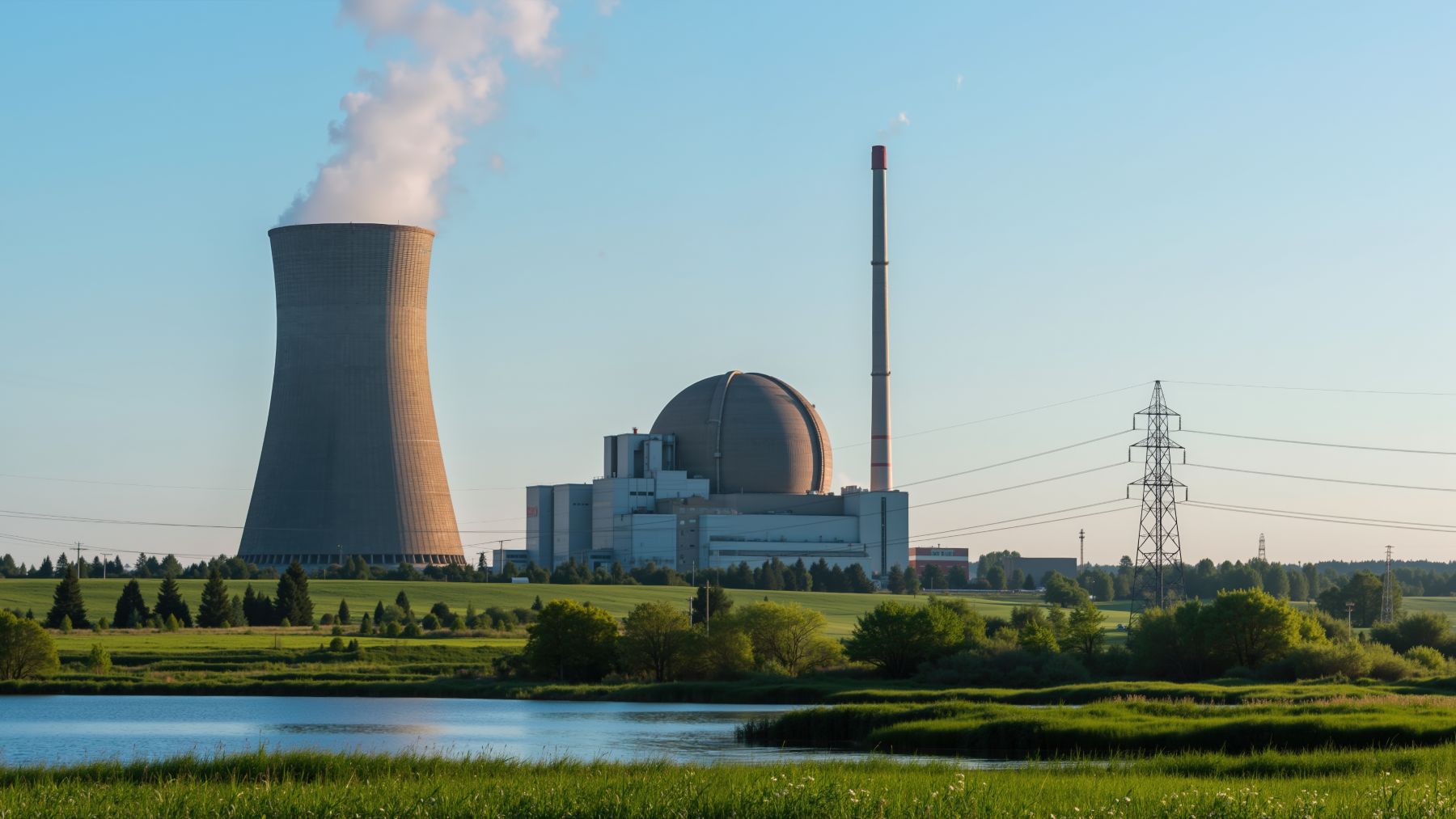
According to the latest reports, a new breakthrough could be crucial on the path toward greener nuclear energy. Thorium, a radioactive metal more abundant than uranium, is emerging as a promising alternative for nuclear power generation. Scientists have developed a new type of nuclear unit that could change this prospect by harnessing the use of thorium and its isotopes, which avoid conventional nuclear waste.
Thorium-based fuel generates a short-lived residue that decays in fifteen days or more, not eons
In addition to the nuclear energy, there are different opinions: “Nuclear energy is a sustainable energy source, as it has sufficient ubiquitous resources for many centuries, with low environmental impact (zero direct CO2 emissions) and at moderate costs,” explains Julio Vergara, former vice president of the Board of Directors of the Chilean Nuclear Energy Commission (CChEN) and professor of Civil Engineering at the Pontifical Catholic University of Chile.
Thorium-based fuel, unlike traditional uranium-based fuel, generates a short-lived residue that decays in fifteen days or more, not eons. Almost all the thorium extracted can be used in reactors, making them more efficient and generating less radioactive waste. Furthermore, this novel fuel operates with passive safety devices and at low pressure. The risk of nuclear proliferation is reduced due to the characteristics of the isotopes generated in the thorium cycle. This established uranium-based isotope is still known for creating dangerous isotopes that have caused catastrophes in the past, recognized by world powers.
Thorium is also a radioactive element, but it is actually cleaner and safer than uranium
This breakthrough was the result of intensive research conducted by leading international physicists, primarily in South Korea, Sweden, and Canada, and was achieved by improving fuel cycles, not through unconventional research. Thorium is also a radioactive element, but it is actually cleaner and safer than uranium. It is used in industry as a catalyst for chemical reactions and has potential as a nuclear fuel. This element would contribute to making nuclear energy even cleaner if it can be introduced as a replacement for uranium.
Although countries such as India, China, and the United States have initiated research and experimental projects
The widespread adoption of thorium currently faces barriers such as high extraction costs and a lack of expertise in processing. Although countries such as India, China, and the United States have initiated research and experimental projects, thorium-based technology is still under development. Nations around the world are seeking to reduce emissions by turning to intermittent solar and wind sources. This means that these countries are continually modifying their decisions, confirming their commitment to the changes necessary for more rational energy consumption.
Its implementation requires significant investments in research and reactor optimization to make its large-scale use viable
Those in favor and those who don’t know that there are still social, political, and economic obstacles to overcome before its implementation. Its implementation requires significant investments in research and reactor optimization to make its large-scale use viable, which could mark a milestone in the transition to cleaner and safer energy sources. Furthermore, nuclear regulation is notoriously slow, and green power plants will suffer.
Institutions such as the International Atomic Energy Agency (IAEA) continue to research its best applications
However, this does not diminish its positive application in cleaner energy, and a global decision on this could spur the resurgence of nuclear energy, or it could simply be ignored. Despite these obstacles, thorium remains a promising option in the field of nuclear energy. Institutions such as the International Atomic Energy Agency (IAEA) continue to research its applications. These studies focus on how to overcome technical barriers and reduce costs.