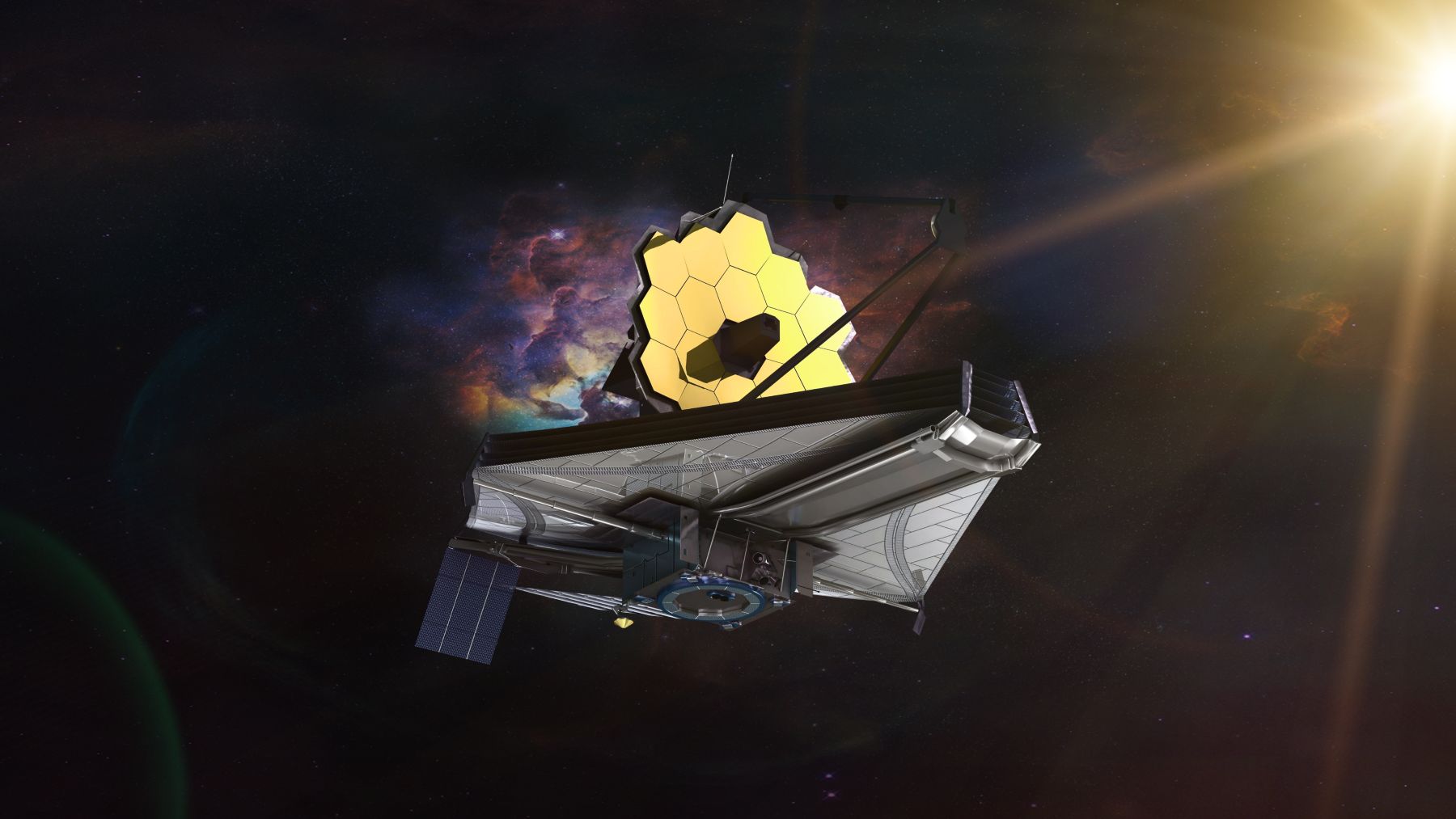
The James Webb Telescope (NASA, ESA, CSA) has been one of the largest investments in recent years. It studies all phases of the history of the universe, “from the first flashes of light after the Big Bang to the formation of solar systems capable of supporting life on planets like Earth,” explains the NASA website. The telescope has provided us with never-before-seen images, identified early galaxies, and explored cosmic phenomena such as supernovae.
The JWST has changed our view of the universe in ways never before experienced
The James Webb Space Telescope (JWST) launched on December 25, 2021. It took scientists another five months to get everything ready to begin work, and since then, the telescope has changed our view of the universe in ways never before experienced.
Early and distant galaxies: galaxies began as small clouds of gas, dust
On the one hand, the discovery of data on early and distant galaxies. In 2024, the James Webb Telescope provided valuable new data on the galaxy GN-z11, previously known as one of the most distant and oldest observed galaxies, formed just 400 million years after the Big Bang. Astronomers believed that galaxies began as small clouds of gas, dust, and stars that gradually expanded into the island universes we know today. What scientists didn’t count on was the telescope’s ability to detect infrared radiation, which allows us to observe farther into space and therefore back in time, to the moment galaxies formed. This means that galaxies could be much more massive than previously thought possible.
Supermassive black holes weighing about 1 billion solar masses
The merger of supermassive black holes has also been a major breakthrough. In May 2024, Webb detected signs of a supermassive black hole merger at the core of an early galaxy, just 740 million years after the Big Bang. JWST has discovered several black holes weighing about 1 billion solar masses dating to 800 million years after the Big Bang.
Dust in the universe’s youth: a billion years after the Big Bang
Dust in the universe’s youth. The JWST has discovered dust in a galaxy just a billion years after the Big Bang. The dust has a unique chemical signature, suggesting it could be a mixture of graphite- or diamond-like grains created in the earliest stars. This opens a new window into dust production and galaxy formation.
Increasing cosmic tension: higher value with much greater precision
It has also discovered increasing cosmic tension. There are few data points more relevant than the Hubble constant. Studies so far show a value of about 73 km per second per megaparsec of cosmic radiation, creating the so-called Hubble tension. JWST has confirmed this higher value with much greater precision.
Stars formation in detail: to develop new theories to explain the creation of these JuMBOs
The study of star formation in detail. The infrared radiation JWST sees penetrates dust, opening a new window into star birth. Among the novelties brought by JWST is the JuMBO surprise. Deep within the Orion Nebula (M42) are at least 40 planet-sized objects with a binary companion. Called JuMBOs (short for Jupiter-Mass Binary Objects), these bodies exceed all expectations, forcing astronomers to develop new theories to explain the creation of these JuMBOs.
In addition to all the above, the famous telescope has opened the window to the molecular revolution in exoplanets, has given a great conversation about the rings surrounding the Ring Nebula, as well as the immersion in protoplanetary disks.
The Webb telescope’s observations continue to amaze, and it remains essential to follow the progress being made, as they are providing answers to countless questions and opening up the possibility of discovering new ways of understanding how the vastness that surrounds us works.