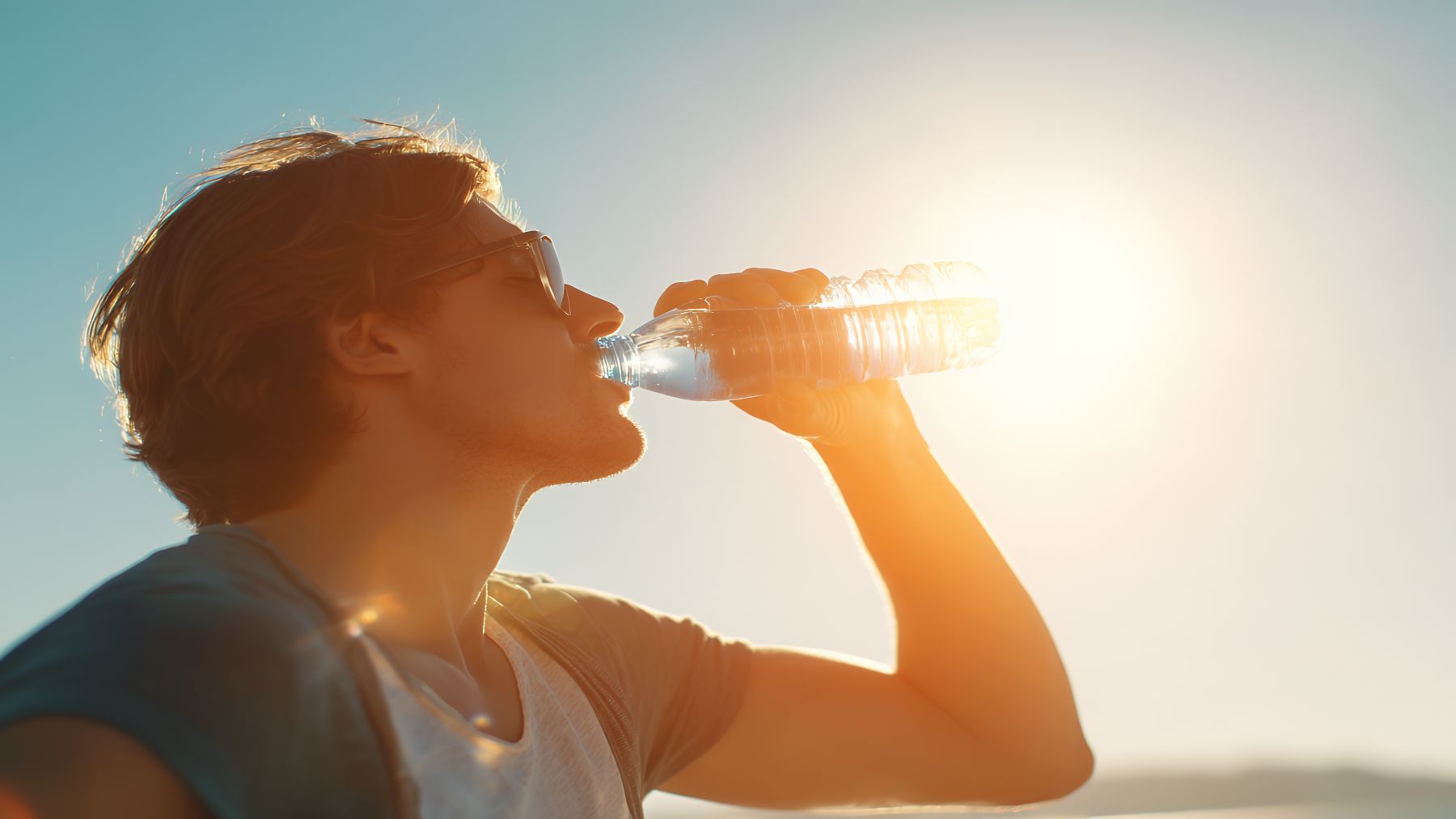
We start from the fact that water is essential for human life. A body can go weeks without food, but without water, you’ll die in just a few days. Based on the data available so far, what everyone agrees on is that you should drink eight ounce cups of water a day. If you’re achieving that, you’re correct. In any case, the National Academies of Science, Engineering, and Medicine recommend an average daily water intake of about 125 ounces for men and about 91 ounces for women. It all depends on weight, body condition, age…
“Water is essential for your body’s survival”
It’s important to understand that determining how much water a person should drink daily is no simple task. Although there’s no one-size-fits-all formula, there is an established estimate that can serve as a guideline for maintaining your health. “Water is essential for your body’s survival,” says Crystal Scott, registered dietitian-nutritionist with Top Nutrition Coaching.
The body constantly loses water through various physiological processes. You lose water when you breathe, sweat, urinate, and metabolize food and drink into energy. If you don’t replace that fluid, your health can go downhill, and fast. To ensure optimal body performance, it is essential to replenish this water supply by consuming beverages and foods that contain this essential liquid.
Water on the body: 83% of your lungs, 64% of your skin, and even 31% of your bones
And the specific amounts are as follows. The average human body is more than 60% water. Water makes up almost two-thirds of your brain and heart, 83% of your lungs, 64% of your skin, and even 31% of your bones. It’s involved in almost every process that keeps you alive. It’s a vital element for survival, as every cell, tissue, and organ depends on it to function optimally.
Water also contributes to maintaining body temperature and provides protection to sensitive tissues. “I like to correlate our bodies with planet Earth,” says Scott. “Our Earth is made up of a large percentage of water. If that amount got too low, what would happen to our food systems? Our forests? Animal life? It’s a domino effect.” Lack of water can lead to dehydration, a condition that arises when the body doesn’t have enough water to perform its normal functions.
Water, therefore, is essential for life and good health. If you have any questions, it is recommended to consult with doctors or experts. Your intake recommendation may vary based on life circumstances too. For example, if you live in a hot and humid climate, engage in a lot of physical activity, are pregnant, or are breastfeeding, you may need more water daily than the average adult.
“You can get a lot of hydration from foods like celery, oranges, strawberries…”
In any case, it’s not necessary to drink only water to stay hydrated; food also plays an important role. It’s not just necessary to get fluids through drinks, but also through food. Fruits and vegetables, such as watermelon and spinach, which contain approximately 100% water, are excellent options for staying hydrated. “You can get a lot of hydration from foods like celery, oranges, strawberries, watermelon, and cucumbers.”
On the other hand, it’s possible to drink a lot of water, something that professional athletes often experience, for example. It’s a condition called hyponatremia, and it occurs when the amount of water in your system overwhelms your kidneys, making them unable to keep up with a normal filtration rate.
And there are some factors that indicate that our body is well hydrated. For example, light yellow urine, not feeling thirsty, urinating four to five times a day, having moisturized and supple skin, not experiencing constipation, feeling energetic, and performing well physically. These factors indicate being well hydrated and in good health.