
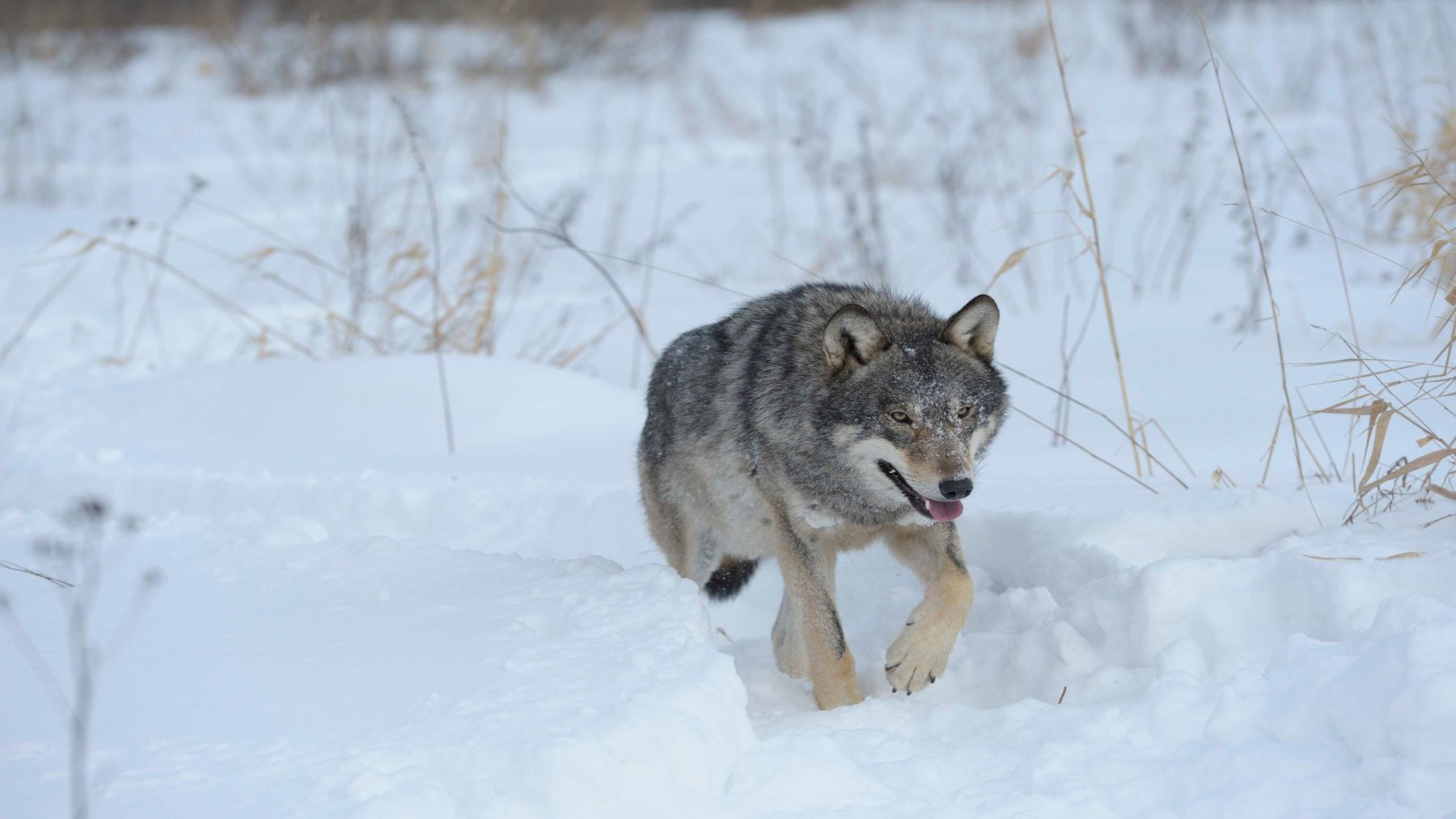
It’s no secret that the Chernobyl nuclear disaster left millions of lives lost to humans, animals, and the ecosystem in the radiation zone. Recently, scientists discovered a mutation in wolves and dogs that lived in the affected area. One of the main consequences of radiation has been the development of cancer cells. What scientists have discovered is that the animals they tested have mutated and become resistant to cancer, as if they were immune.
Cara Love, Princeton University scientist, travel to Chernobyl in 2014 to analyze the wolf population
The explosion of reactor 4 at the Pripyat nuclear power plant was, to date, the world’s largest nuclear disaster. Since 1986, the area has remained a hotspot for radiation, and it is not advisable to approach it unless authorized and aware of the precautions to be taken. With this in mind, Princeton University scientist Cara Love decided to travel to the area in 2014 to analyze the wolf population.
The research began eleven years ago without really knowing what they would find. Biologist Cara Love and her team from Princeton University traveled to the Chernobyl Exclusion Zone to take blood samples from the wolf population and equip some with GPS collars. They also drew blood from the animals to understand their responses to cancer-causing radiation, according to a statement published by the Society for Integrative and Comparative Biology.
With the GPS collars researchers can obtain real-time measurements of the wolves’ location and how much radiation they are exposed to
And this was one of the main questions to consider. The wolves and dogs had not only survived the radiation and the 1986 explosion, but had continued to reproduce and showed no obvious physical signs of radioactive consequences. At the end of the day, even though they are animals, they are still living beings, so the way they had adapted after the nuclear disaster raised many questions.
Thus, the analysis began. The results revealed that the animals not only did not succumb to cancer, but had mutated their genome to become more resistant to the various forms of the disease. With the GPS collars mentioned above, researchers can obtain real-time measurements of the wolves’ location and how much radiation they are exposed to, as Love explained. This makes the findings much more precise.
It’s important to understand that the findings are correct in stating that they don’t mean they’re completely immune to cancer, but they do have a much lower chance of suffering from it, or if they do, of surviving it. What Love and his team have observed is that these changes in the genome have altered the animals’ immune systems in a way similar to the radiation therapy used on cancer patients.
The goal is to identify the mutant genome in the hope that this could aid research into this disease in humans
It’s very interesting that the wolves and wild dogs in Chernobyl, despite living in an environment with a higher risk of infection, don’t seem to suffer from it. In fact, the density of wolves in the exclusion zone is higher than in other areas, even higher than in several natural parks. It’s important to keep in mind that they’re not just exposed to radiation; they’re also eating other animals and plants exposed to radiation, which have grown in that radioactive ecosystem.
The conclusions so far from this study are that wolves and dogs appear to be undergoing a process of accelerated natural selection. Those that survived developed the gene, which they passed on to their descendants, who already had natural protection, and which could therefore have made them stronger from one generation to the next.
Now, the goal is to work to identify the parts of the mutant wolf genome that appear to be linked to this cancer resistance, in the hope that this could aid research into this disease in humans. According to recent information, the research was conducted with samples taken before the start of the COVID-19 pandemic and could not be resumed due to the war with Russia. Therefore, we will have to wait for more details.




