A new discovery in Ancient Egypt has raised new questions. DNA analysis of a skeleton has revealed links to Mesopotamia, now Iraq. The BBC reported the whole study. In addition, the investigation involved professionals such as Pontus Skoglund, Francis Crick Institute, and Adeline Morez Jacobs. This new discovery presents new theories in archaeology. Read on to learn more about this interesting fact.
Progresses still existing nowadays
Scientific explorations go deeply the immediate and the current, assinting humans to get to their past and evolution. Ancient Egypt is one of the most relevant and researched civilizations for centuries. In the same line, some of its progresses are still maintained and enjoyed nowadays. Currently, a millennia-old skeleton holds the clue to rewriting its history.
Thanks to a DNA test executed on a 4,500-year-old skeleton the got new information. They discovered the amazing connection within the Ancient Egypt and Mesopotamia. More over, the results comes from the inner ear bone. Thanks to the revealed date, it might correspond to a man of around 60 years of age who was maybe a potter.
Ancient Egypt’s relation with Mesopotamia
However, the most incredible thing about the discovery is the past of this old man, as his roots expose that he had relations in ancient Egypt, but also in another area of the planet. In specific, DNA testing showed that he had connections to Mesopotamia, in what is currently Iraq, more than 1,500 kilometres away.
Experts believe that this discovery proves, once again, that the combinations of cultures was commonplace and that this permitted the change of innovations, articles and understanding of human personal conduct according to the environment. Thanks to this, Mesopotamia and Egypt could combine their learning and advances.
Link between Egypt and Mesopotamia
Four-fifths of the genome showed links to North Africa and the region around Egypt. But a fifth of the genome showed links to the area in the Middle East between the Tigris and Euphrates Rivers, known as the Fertile Crescent, where Mesopotamian civilization flourished.
“The finding is highly significant” because it “is the first direct evidence of what has been hinted at” in prior work,” said Daniel Antoine, curator of Egypt and Sudan at the British Museum.
Earlier archeological evidence has shown trade links between Egypt and Mesopotamia, as well as similarities in pottery-making techniques and pictorial writing systems. While resemblances in dental structures suggested possible ancestral links, the new study clarifies the genetic ties.
Tehy founded the skeleton in an Egyptian tomb complex at the archaeological site of Nuwayrat, inside a chamber carved out from a rocky hillside. An analysis of wear and tear on the skeleton — and the presence of arthritis in specific joints — indicates the man was likely in his 60s and may have worked as a potter, said co-author and bioarchaeologist Joel Irish of Liverpool John Moores University.
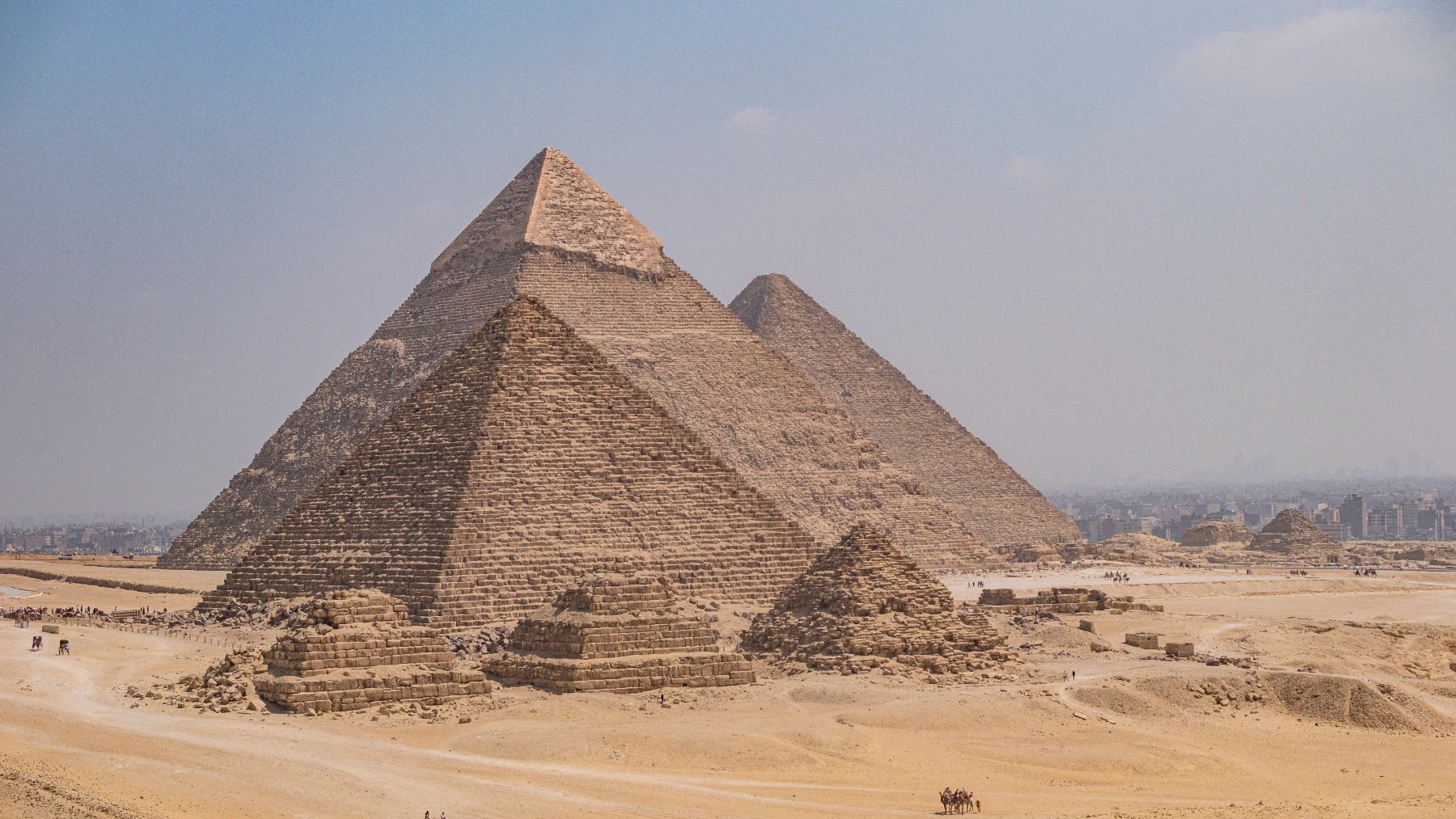
The man lived just before or near the start of ancient Egypt’s Old Kingdom, when Upper and Lower Egypt were unified as one state, leading to a period of relative political stability and cultural innovation — including the construction of the Giza pyramids.
More excitement about more investigation
More progresses are done, by the time they get more information about the DNA. In addition, if they compare it with what they know from the archaeological, cultural and written information we have from the time, it will be very exciting. Pontus Skoglund, in a statement to the BBC., a professor at the Francis Crick Institute in London, presented new ideas related to Egyptian investigation.
“We hope that future ancient Egyptian DNA samples will expand the information on when exactly this movement began from Western Asia and what its extent was,” Adeline Morez Jacobs told the media outlet.