
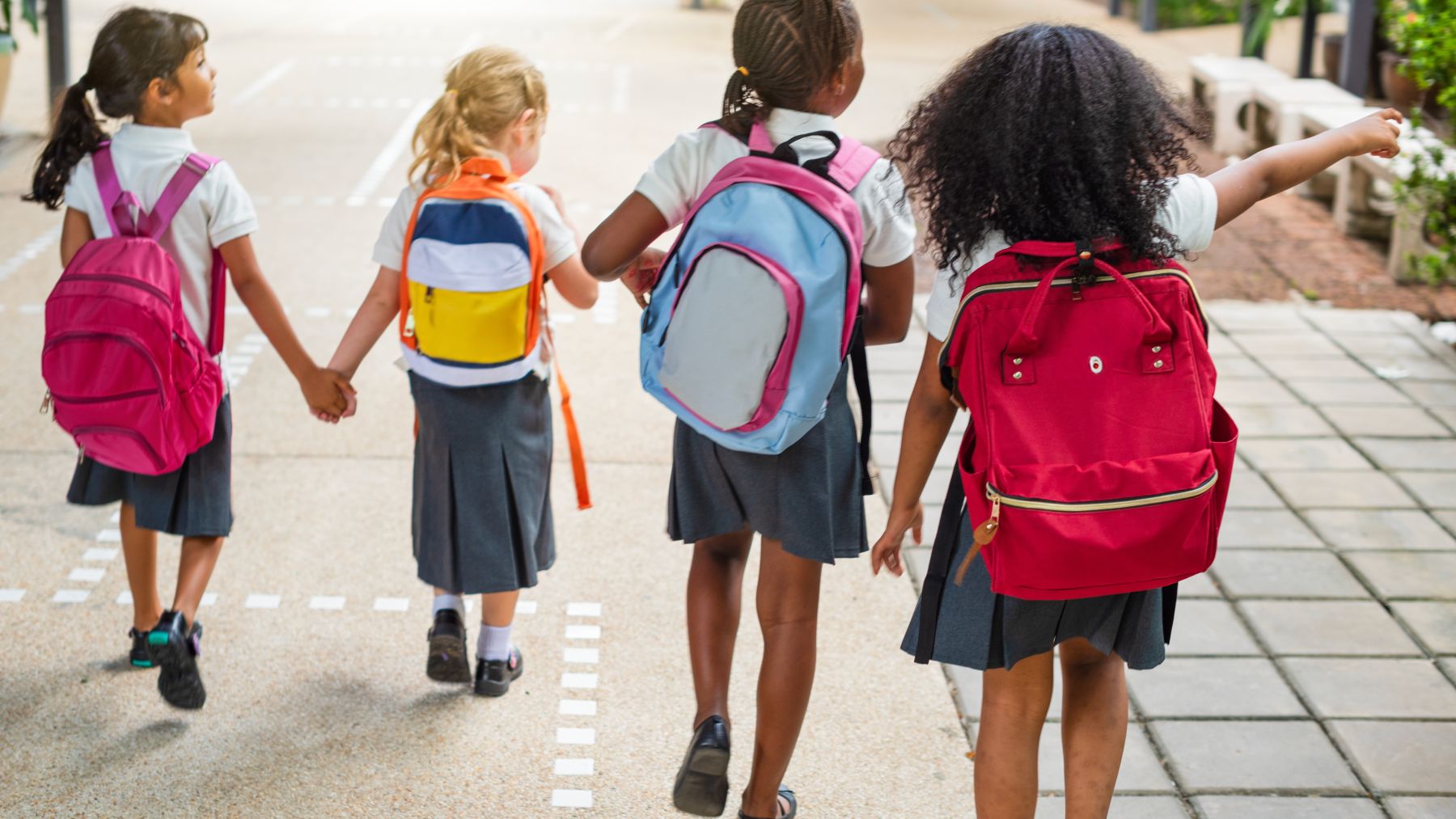
Back to school isn’t just for the little ones; it’s for the whole family. Preparing school supplies, getting back to routines, schedules, alarm clocks, homework… Big ones, small ones, wheels, lively… And one of the things they all have in common, especially teenagers, is the way they carry their backpacks. They usually carry them too low, below their backs, which can lead to problems and pain in the future. Not only that, but experts recommend using backpacks with wheels or backpacks that weigh no more than 10% of body weight.
Parents must make sure to control the weight of the backpack, shouldn’t exceed 10-15% of the child’s body
One of the things children most look forward to each year is their backpacks. According to experts, backpacks should have reinforced seams, belts, wide, adjustable straps, and a padded back. Also, as mentioned earlier, we must make sure to control the weight of the backpack, which should not exceed 10-15 percent of the child’s body weight. This is very important to prevent future injuries.
Continuing along these lines, orthopedic and trauma specialists warn that improper use can cause chronic pain and affect physical development during childhood and adolescence.
“It’s advisable to choose quality backpacks with strong seams and a padded back. They should have two wide, adjustable shoulder straps and a lap belt to keep the backpack snug against the back,” says Dr. Ainhoa Rodríguez Oyaga, a rehabilitation specialist.
Proper distribution of the backpack’s contents also plays an essential role in preventing back problems
Experts even assure that it’s not just about the weight, but also how it’s distributed in the backpack, that is, on the child’s back. Proper distribution of the backpack’s contents also plays an essential role in preventing back problems. The heaviest objects should be placed at the bottom, in the middle, and as close to the child’s back as possible. The Mexican Social Security Institute (IMSS) states that carrying more weight can lead to long-term musculoskeletal injuries.
According to the recommendations of the Infanta Elena Hospital in Madrid, it is advisable for children to include back exercises. “Strengthening the back and muscles is equally important to avoid problems related to using backpacks,” the center states, adding: “For children under 6 years old, daily play is sufficient, while older children should engage in moderate-intensity aerobic exercise (such as running, swimming, skating, or dancing) for at least 60 minutes a day.”
Warning signs: visible marks from shoulder straps or complain of constant back pain
Experts advise parents or legal guardians to monitor changes in their children’s posture in order to mitigate the effects of backpacks that are too heavy or carried incorrectly. During puberty, the problems of carrying backpacks incorrectly can become more pronounced. In girls, postural problems can lead to serious complications such as kyphosis (hunchback) or scoliosis as they grow older. Some warning signs that may arise include, for example, if children begin to show visible marks from shoulder straps, arrive excessively fatigued after walking, complain of constant back, neck, and shoulder pain, and if they have a hunched posture.
Regarding the type of backpack best suited for these ages, there is a divide among experts. On the one hand, some recommend using wheeled backpacks to minimize risks, especially for elementary and secondary school students who carry more books and school supplies. On the other hand, some experts believe it can have consequences just as harmful as improperly positioning the backpack on the back. “Using wheeled backpacks can cause pain or injuries to the shoulder due to traction. Additionally, they have to lift themselves up to climb stairs, which causes greater strain on the arm and neck muscles. If they use a wheeled backpack, it should be pushed forward to avoid straining the arms,” says Dr. Rodríguez Oyaga.




