
The large company ByD is once again attracting the market’s attention with its new U9 Track Edition model, part of its Yangwang brand. The model, driven by Marc Basseg, reached 472.41 km/h in a test on an ATP Germany track. It should be noted that this is a new record after the one set by Aspark Owl SP600. As a result, China is positioning itself at the forefront of the electric car market, in a field that has always been led by Tesla and Ferrari. The major innovation is also linked to its 1,200-volt electrical architecture and its DiSus-X system. Read on to learn more about technological advances and competition between Japan and China.
This is the new Chinese electric car from ByD that broke all speed limits
It is the U9 Track Edition from the Yangwang sub-brand, ByD’s high-performance model, which reached a top speed of 472.41 km/h on the German ATP test track, becoming the fastest electric vehicle ever recorded.
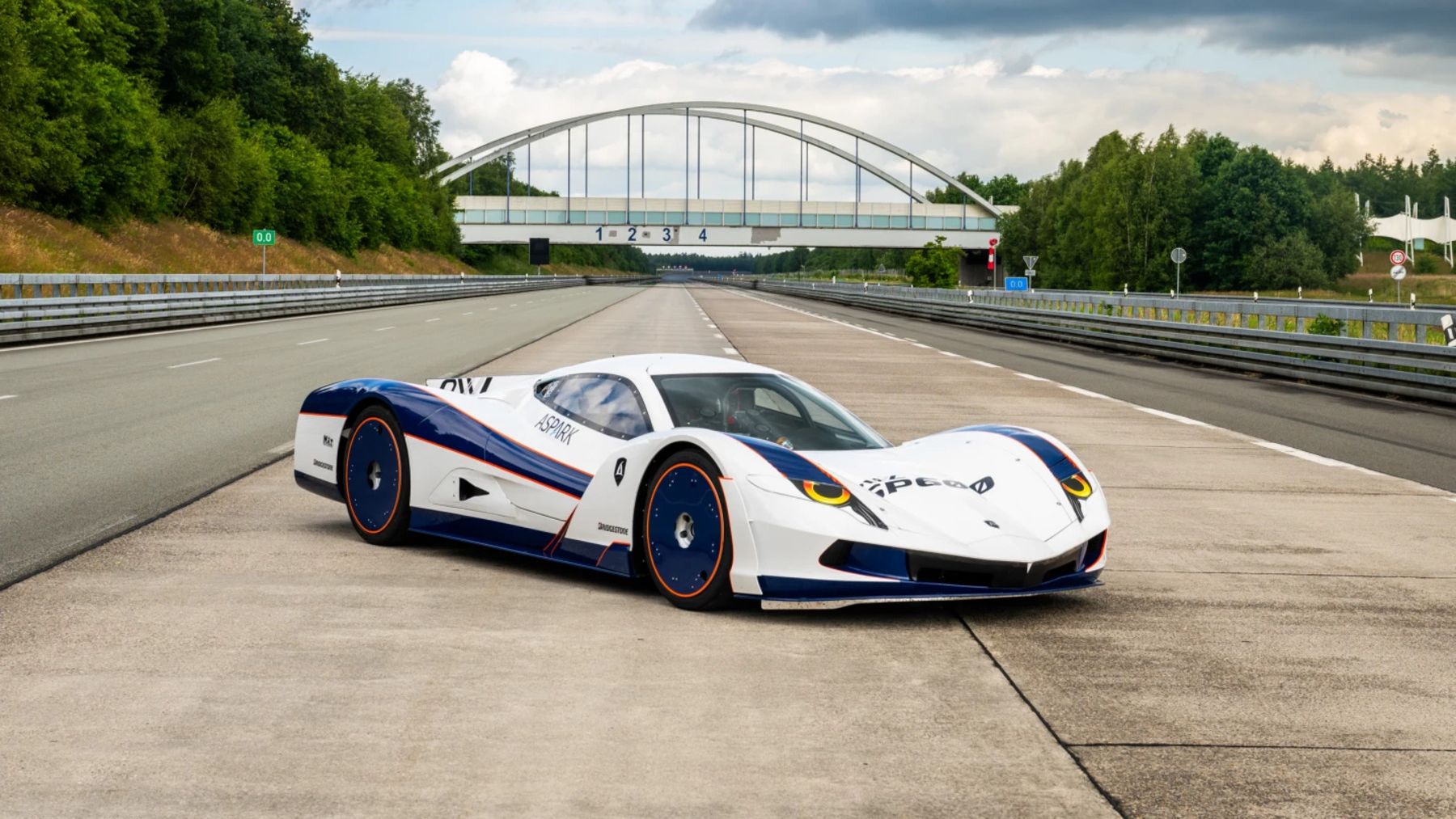
With this recent achievement, the Chinese company’s car surpassed its Japanese counterpart, the Aspark Owl SP600, which had set the previous record of 438 km/h in 2024. The driver behind this feat is German Marc Basseng, who had also driven the Aspark Owl in its previous record. Basseng acknowledged that “I didn’t expect to break my own record so soon” (Source: BYD).
The features of the U9 Track Edition
Although the U9 Track Edition is based on the conventional model sold in China, the track version has notable improvements: four electric motors with 744 horsepower each, which combined exceed 3,000 hp, and a power-to-weight ratio of 1,217 hp per ton, positioning it among the most powerful cars in the industry.
Among its technical innovations are a 1,200-volt electrical architecture, the first to be mass-produced, and an independent torque vectoring system that adjusts the torque of each wheel more than 100 times per second.
In addition, it incorporates a DiSus-X body control system, which quickly and autonomously adjusts the suspension in response to intense acceleration, sharp turns, or uneven terrain.
Know more about the new model
Right now, an 800V system is considered cutting-edge and is enough to see batteries brimmed in under five minutes from the most powerful charging stations. Yangwang didn’t go into any details, but we expect this U9 Track Edition can slurp juice from a MegaWatt charging station at astonishing rates.
There is also no word on what the bespoke Track Edition would cost a private buyer, but the ‘standard car’, complete with some 1,300bhp, went on sale in 2024 priced at 1.68 million Yuan (or around $236,000 / £193,000 / AU$400,000).
To put that into perspective, that is more power than the current Ferrari F80, which cost almost $4 million if you were lucky enough to get invited to buy one.
Shifting perceptions
Despite the impressive feats demonstrated by both Xiaomi and Yangwang, the general sentiment among US and European performance car enthusiasts is that the threat is largely overhyped, that it’s “easy to make electric cars go fast in a straight line” or that nobody is going to spend their hard-earned cash on something badged Yangwang.
While it is true that brand value remains arguably one of the most important factors when it comes to the world of luxury and performance cars (Ferrari’s profits hit $2.67 billion last year), the age of electrification is changing all of that and the Italian marque might not experience the same success when it launches its debut EV this year.
I lost count of the number of times the phrase ‘Temu Ferrari’ was banded around the comments sections
Porsche said this week that it has scrapped its Cellforce high-performance battery division, which was set up to produce the sort of next-generation cells that would power upcoming electric hyper cars, such as the previously-teased Mission X concept.




