
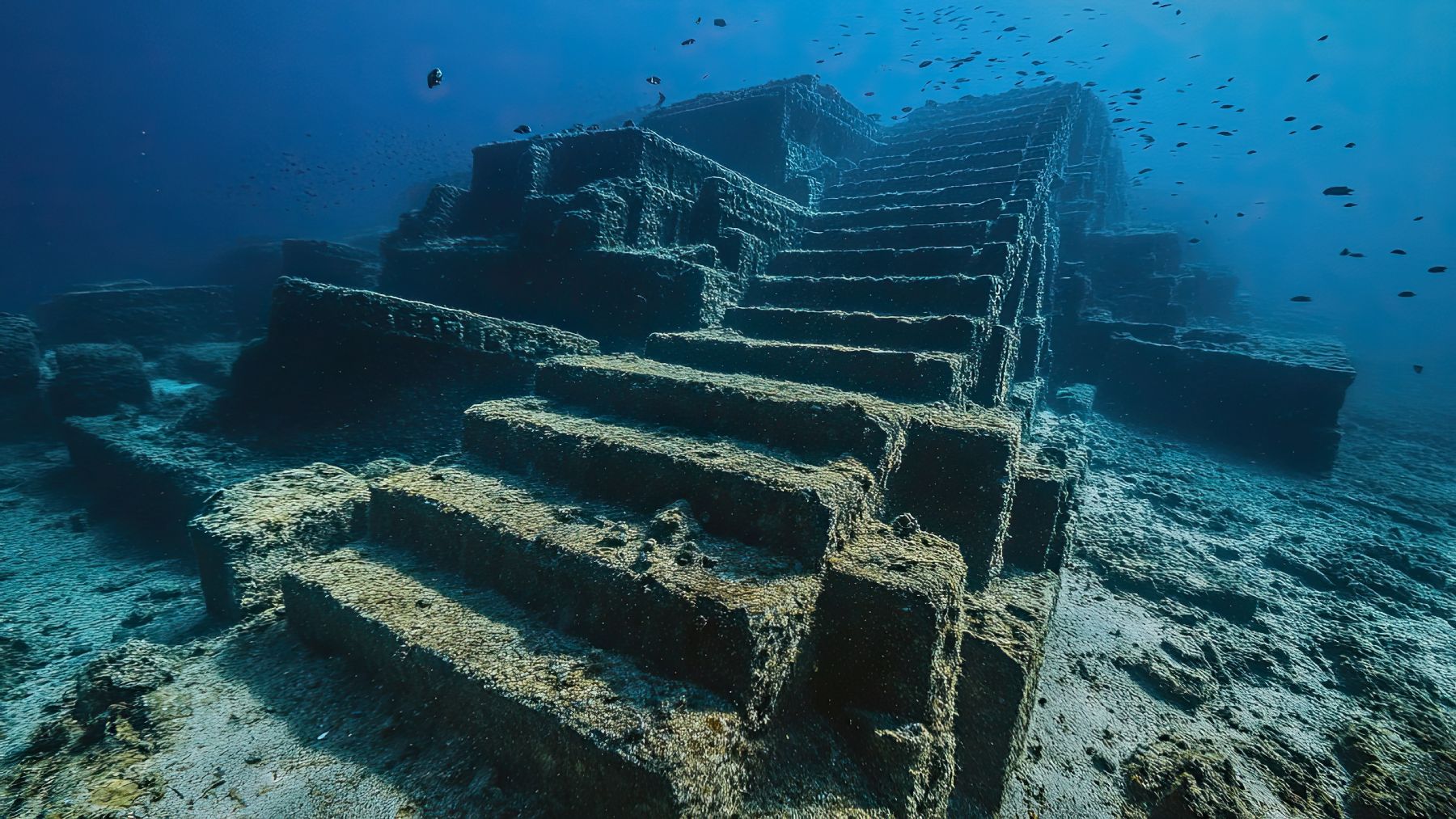
Many studies have led to the determination that certain areas of the planet were truly underwater worlds. Now, in Denmark, researchers are exploring ancient settlements that were overtaken by rising sea levels some 8,500 years ago, at the end of the last Ice Age. Rising sea levels threaten numerous population centers around the world as rising global temperatures melt ice sheets. “We have a settlement that was located directly on the coast,” said Peter Moe Astrup, underwater archaeologist at the Moesgaard Museum.
“What we’re really trying to find out here is what life was like in a coastal settlement 8,500 years ago”
It’s important to keep in mind that this isn’t the first time humanity has faced the problem of rising sea levels, that is, the consequences of global warming. “What we’re really trying to find out here is what life was like in a coastal settlement 8,500 years ago,” said Peter Moe Astrup. Researchers in Europe are investigating these submerged settlements, which have been underwater for the past 8,500 years. Animal bones, stone tools, arrowheads, a seal tooth, and a small piece of carved wood, likely a simple tool, have been discovered.
Archaeologists are currently exploring a site in Aarhus Bay, northern Denmark, as part of a six-year international project
Researchers from the Australian agency CSIRO claim that global sea levels have risen more than 120 meters since the end of the last Ice Age. Archaeologists are currently exploring a site in Aarhus Bay, northern Denmark, as part of a six-year international project, which also includes a site off the German coast in the Baltic Sea and sites in the North Sea. To obtain a picture of this change, Danish researchers are using dendrochronology, the study of tree rings.
A United Nations report last year indicated that global sea level rise is now the fastest in 3,000 years
The goal is to map the seafloor and investigate submerged Stone Age settlements in Northern Europe before offshore wind farms and other underwater infrastructure are built in the area. “When we obtain excellent quality samples with bark included, we can determine very precisely when these trees died on the coasts,” says Jonas Ogdal Jensen, dendrochronologist at the Moesgaard Museum. A United Nations report last year indicated that global sea level rise is now the fastest in 3,000 years. “The research tells us something about how sea level has changed over time,” emphasizes Ogdal Jensen.
“When sea levels rose, everything was preserved in an oxygen-free environment… time just stops”
Researchers hope to understand how Stone Age societies adapted to coastal changes over eight millennia ago. The Mesolithic settlement, located 8 meters underwater, offers researchers an opportunity that similar inland settlements cannot.
“It’s like a time capsule. When sea levels rose, everything was preserved in an oxygen-free environment… time just stops,” said Peter Moe Astrup. This is all part of an EU-funded project, worth some $15.5 million, in the Baltic and North Seas, with researchers in Aarhus, the University of Bradford in the United Kingdom, and the Lower Saxony Institute for Historical Coastal Research in Germany.
With the data we have and the planet’s temperature rising almost every year, this scenario isn’t as far-fetched as one might think
As history has taught us, after the last Ice Age, vast ice sheets melted and global sea levels rose, submerging Stone Age settlements and forcing the hunter-gatherer human population to move inland. This is according to studies and history books, and as they say, those who don’t know their history are bound to repeat it. Not as drastic, but with the data we have and the planet’s temperature rising almost every year, this scenario isn’t as far-fetched as one might think.




