
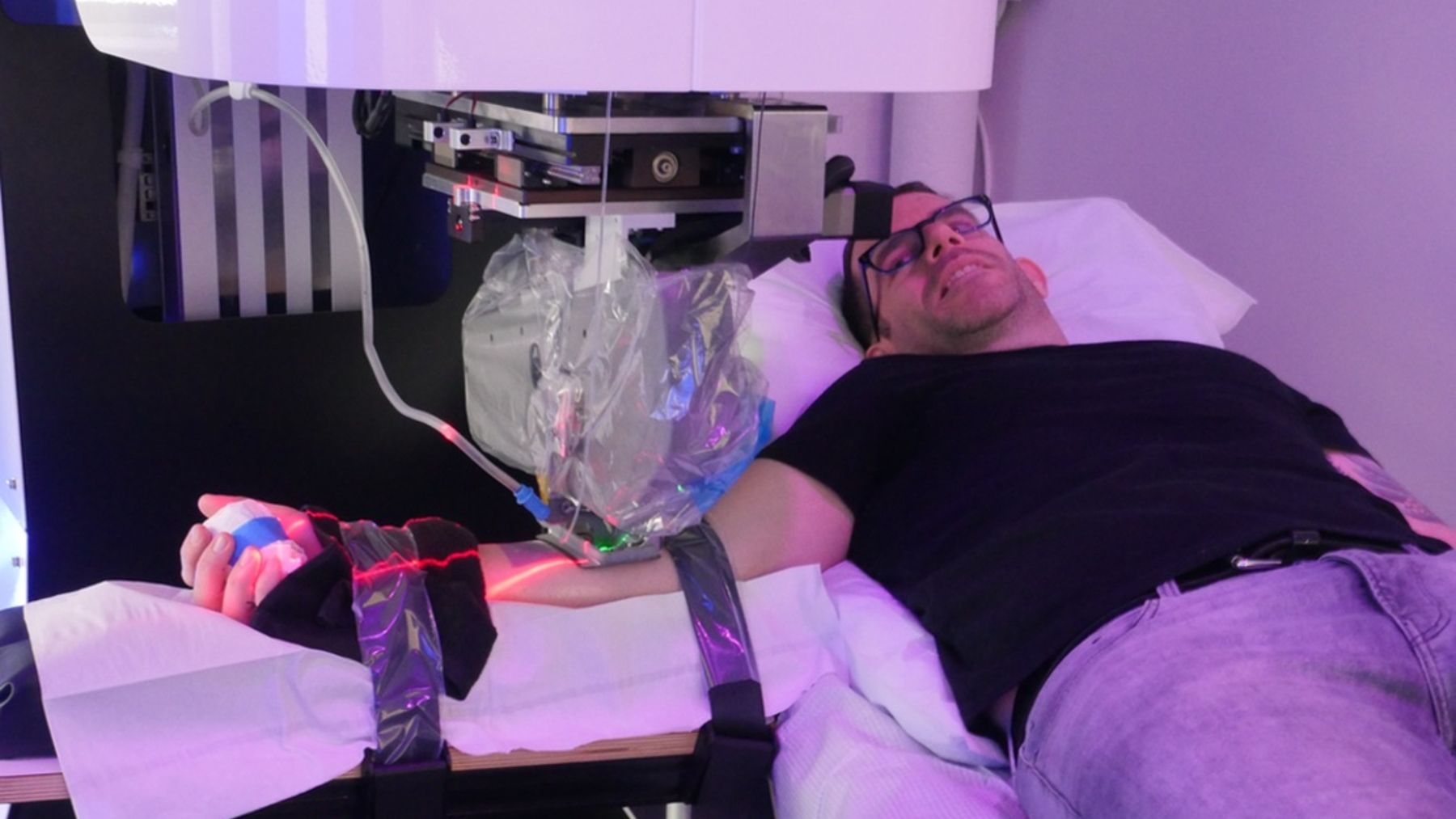
Artificial intelligence is becoming part of our lives and our daily routines. The company Blackdot has unveiled a robot that is sparking debate within the tattoo community. The Wall Street Journal highlighted the precision of tattoo machines and how they have been used by studios such as Bang Bang in New York. The invention bears similarities to the Da Vinci surgical robot, which is used in medical centers such as the Hospital German Trias i Pujol in Spain. Read on to find out more.
Advances in AI in our daily lives
The invention of the printing press and the advent of the internet are some of the recurring comparisons made when discussing the revolution being brought about by artificial intelligence, which promises to go even further when combined with robotics. With the emergence of any technology as disruptive as these, fascination is mixed with criticism and fear that jobs or businesses will be lost.
AI is advancing with the intention of serving as a tool while challenging numerous professions, such as tattoo artists. This community of artists is in the midst of a debate about whether or not to embrace the technology patented by Blackdot, a company that has created a robot capable of tattooing the forearm with precision and care.
The robot uses artificial intelligence and other technologies to work almost autonomously, creating dotwork-style tattoos, i.e., tattoos created by dots. For years, it seemed that art and crafts would be far from being replaced by technology, the last bastion of what is authentically human, but this boundary is becoming increasingly blurred.
Blackdot has raised approximately $7 million from a combination of strategic investors and angels, crowdfunding, and venture capital. They are now looking to integrate their machine into different tattoo and permanent makeup studios.
Painless art
The machine measures 1.5 meters and promises an “unprecedented level of precision.” The company claims that its technology is less painful than the traditional method, which depends on the skill of each tattoo artist. This is achieved, they explain, by piercing the skin at a more superficial level; the needle does not reach the nerve endings found in the deeper layers.
Several technologies converge in this machine: starting with the algorithm that adapts the design to the skin, through the sensors that guide the needle, and ending with the arm that controls the stroke. AI is key in most of the process and components.
The session begins with a human operator; the machine still needs the support of this employee, for example, to place a template on the client’s arm before starting. The robotic arm scans the skin to begin tattooing with a triple-point needle. The laser measures the height of the skin and relies on artificial vision to interpret images.
The device is guided by a system of reference points placed on the skin. Blackdot has designed this algorithm to convert the design into a map of points the diameter of a human hair. The company’s website features an extensive catalog of styles, ranging from basic tattoos such as a word in bold letters and images created using dots that mimic pixels, to more complex works that combine thin and thick lines, even with shading.
Future updates to this system plan to use AI to more accurately determine the distance between the needle and the body. Another improvement of this change would be quieter operation by reducing the mechanical pressure that the arm has to exert when pushing the needle and applying lubricant, according to The Wall Street Journal.
Another improvement that would come with AI is the ability to transform more forms of visual art into tattoos. The software must balance lines and shapes so that they are easy to tattoo and the drawing is represented on the skin as faithfully as possible to the original. This is also where the expertise of a good tattoo artist lies compared to any illustrator.
Doubts among tattoo artists
According to the WSJ, it has performed around 30 tattoos on volunteers. The examples shared by the company are limited to tattoos on the inner arms, and people have to lie down with their arm immobilized for safety reasons.
The community is divided, with some criticizing the simple style of the tattoos that the machine can currently produce and the company’s high prices, although no prices are listed on the website. Meanwhile, others embrace the idea, such as Bang Bang in New York, known for being the tattoo center of numerous artists. A couple of months ago, this company announced its collaboration with the robotics company on social media.
The company sees this innovation not only as a revolution in the tattoo industry, but also in other businesses that can integrate this machine into their services: Blackdot also makes tattoos and incremental revenue streams available to permanent makeup (PMU) studios, body piercing shops, and compatible retailers (e.g., luxury barbershops and salons, fashion houses, contemporary jewelry stores).
Surgeon precision
For years now, machines have been encroaching on areas previously dominated only by humans with remarkable skill and steady hands. Obviously, a robotic tattoo artist cannot be compared to the printers that reproduce works on paper or T-shirts, but it can be compared to surgical robots.
Da Vinci is the best known, having been present in Spain for over a decade. At the Germans Trias i Pujol Hospital, it is just another tool in emergency surgery. Available to operate 24 hours a day, 365 days a year, it can perform stomach perforations, complicated hernias, intestinal obstructions, cholecystitis, or appendicitis; in the short term, the intention is for it to also participate in more complex procedures.
The main advantage of this machine is its millimetric precision and lower risk of post-operative complications, but it still depends on the knowledge and guidance of flesh-and-blood specialists. It is not a replacement for human work, although in the future it could mean that fewer surgeons are needed in the operating room, allowing more operations to be performed with the available staff.
They do not replace surgeons, but they do promise to take surgery to previously unattainable heights, such as the robot developed by Sony that last year managed to create a connection between blood vessels with a diameter of approximately 0.6 mm.




