
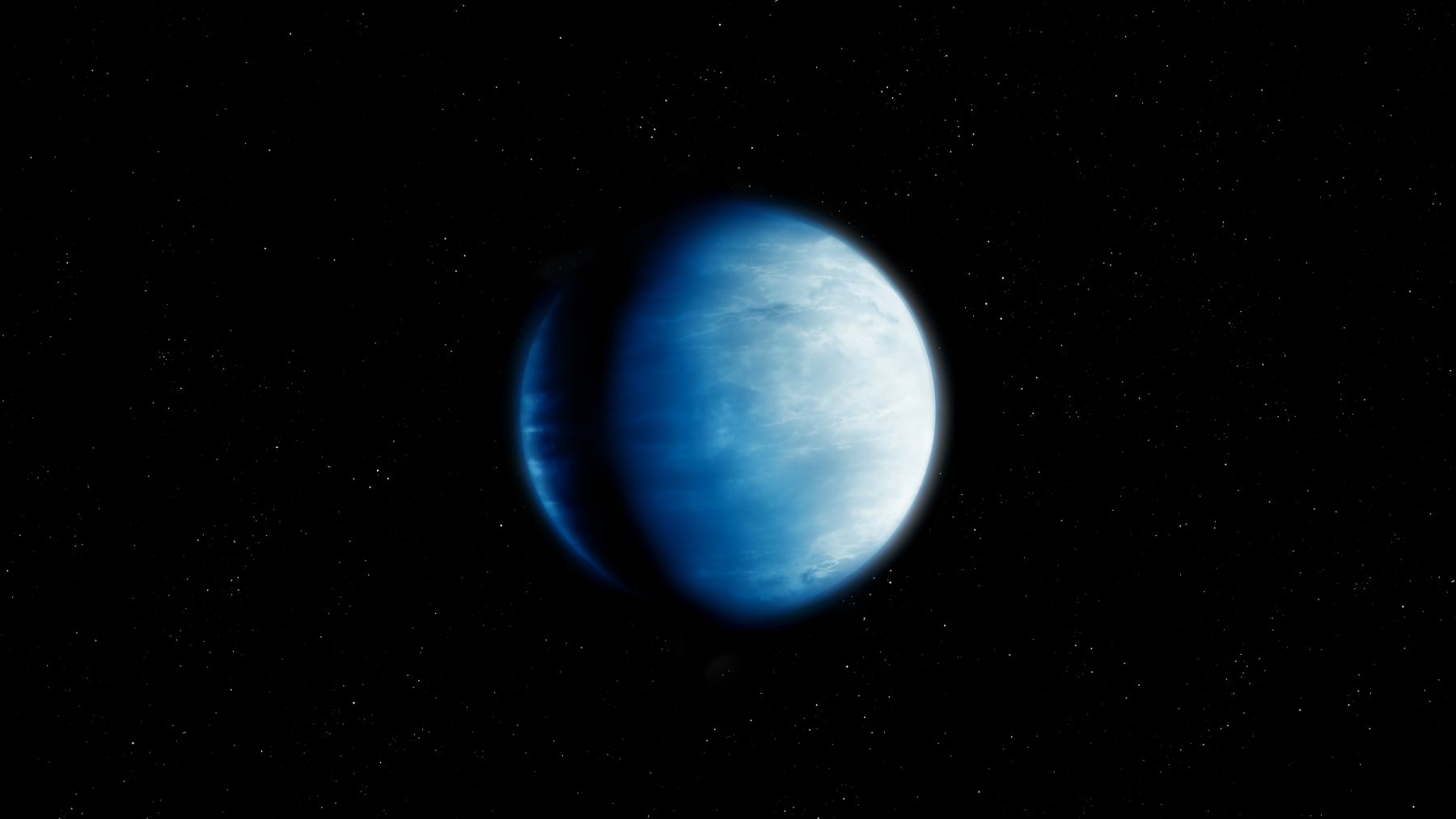
Another major discovery from the James Webb Space Telescope: the twin ocean planets recently discovered by astronomers. The National Aeronautics and Space Administration (NASA) confirmed the detection of water vapor in the atmosphere of exoplanet K2-18b, located about 120 light-years from Earth in the constellation Leo. This was possible thanks to observations by the James Webb Space Telescope, the most advanced instrument in astronomical exploration, which has revealed essential data about what happens in outer space.
The search for life on another planet is a race being waged by major powers
This is an unprecedented discovery, especially given the current state of astronomy and the health of planet Earth. The search for life on another planet is a race being waged by major powers. In fact, to carry out research work, high-tech instruments are needed. That’s why agencies and organizations like NASA and ESA exist: to provide astronomers and researchers with the appropriate tools to make celestial discovery ten times easier. And the latest results, according to the research team, reveal unequivocal signs of water molecules in the atmosphere of the planet mentioned above.
This is the first time since the idea of space exploration became a reality that twin oceanic planets will share similarities
According to experts, although K2-18b is almost nine times larger than Earth, researchers believe it meets the conditions that make it a “habitable sub-Neptunian planet,” that is, a world with a thick atmosphere that could sustain oceans beneath its surface. This is the first time since the idea of space exploration became a reality that twin oceanic planets will share a similar radius, mass, and density. This is exceptional because, ideally, planets tend to exhibit different properties. K2-18b was discovered in 2015 by the Kepler telescope, but until now, it had not been possible to obtain detailed information about its atmosphere.
The discovery is evident in surface temperature, atmospheric vapor, and other distinctive areas
The twin planets appear to be rich in water, but this doesn’t necessarily mean human life is sustainable. This is evident in surface temperature, atmospheric vapor, and other distinctive areas. In fact, according to Nikku Madhusudhan, lead astronomer on the project, there is still no direct evidence of biological activity, so further observations will be necessary. Madhusudhan also explained that the discovery reinforces the hypothesis that this exoplanet could have an active hydrological cycle, increasing the chances of microbial life existing.
Research has established that these characteristics do not indicate the possibility of human proliferation
The discovery represents a significant step in the search for habitable planets beyond the Solar System and strengthens space exploration projects for the next decade. Until now, planetary models had shed no further light on the high water content and the possibility of the existence of water worlds. However, as explained above, research has established that these characteristics do not indicate the possibility of human proliferation.
Work of scientists is essential to increasingly better understanding how “life” functions out there
The recently discovered twin planets have posed serious challenges to how we view other planets from a human, Earth-bound perspective. NASA’s recent discovery may challenge our preconceived perceptions of planetary models. In any case, NASA has indicated that new observations will be planned in the coming months to delve deeper into K2-18b’s atmospheric composition and evaluate the feasibility of detecting clear biomarkers of life. In any case, what is clear is that the work of scientists is essential to increasingly better understanding how “life” functions out there. And, of course, even if we think we know and have a lot of information, it is never enough.




