
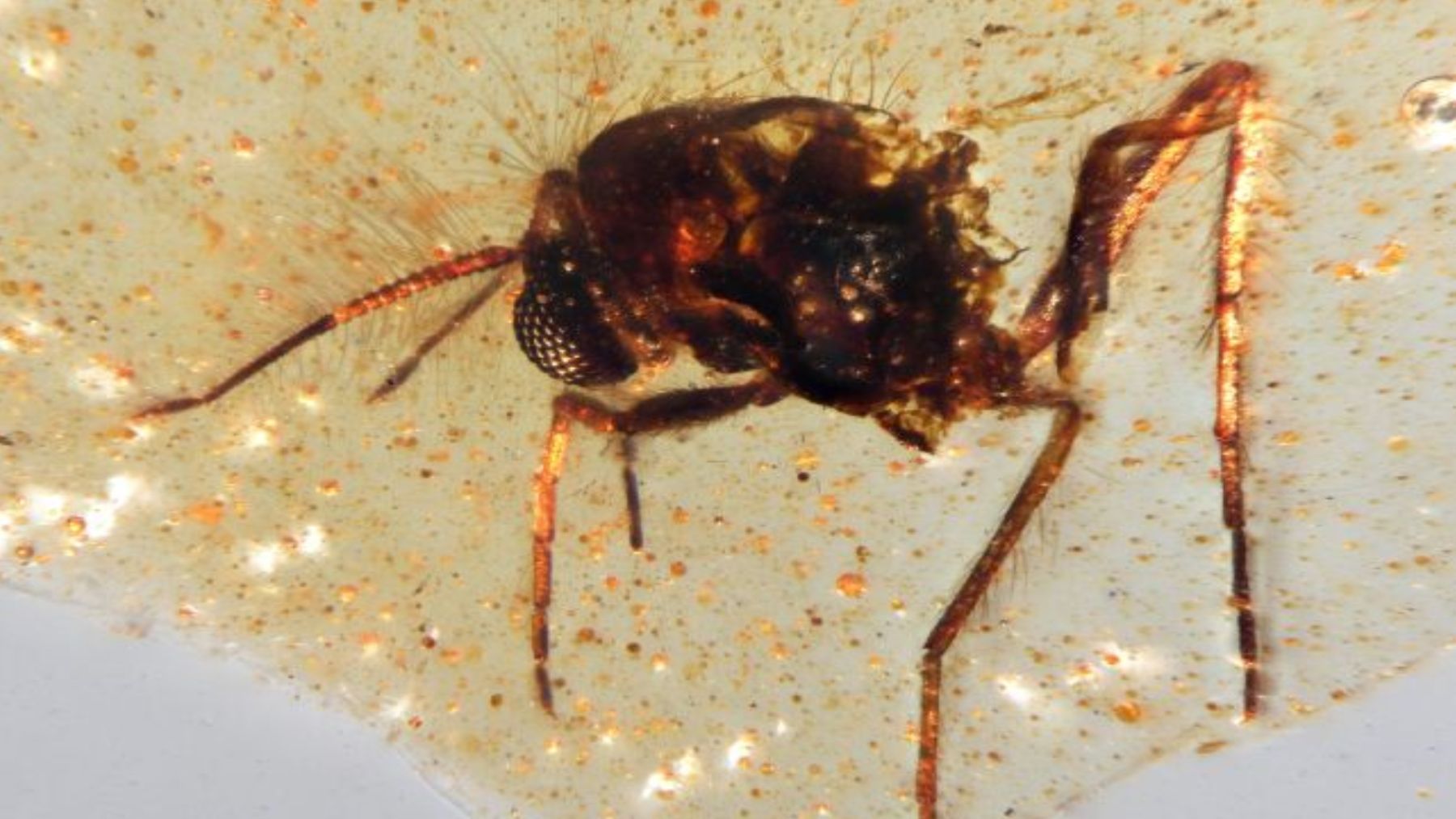
Discoveries are usually the most important part of an investigation. In this case, the protagonist is a region of Ecuador. An excavation led by the University of Barcelona has unearthed the first Mesozoic amber deposit in all of South America. Frozen in time 112 million years ago, an entire ecosystem preserved in amber has been unearthed in a quarry in Ecuador. The scene contains insects, pollen, and even spider web threads. According to the journal Nature, the excavation has located the first Mesozoic amber deposit in all of South America.
“The amber found contains previously unseen information, including perfectly preserved remains of insects”
This discovery provides an unprecedented glimpse into Cretaceous life in the Southern Hemisphere and opens a window on a period when the continents were still breaking up and dinosaurs ruled the Earth. The amber, found in the Genoveva quarry in Ecuador, has preserved at least five orders of insects, including a variety of flies, a fungus gnat, wasps, and a caddisfly. Xavier Delclòs, professor at the University of Barcelona’s Biodiversity Research Institute (IRBio) and first author of the paper describing the discovery, said: “The amber found contains previously unseen information, including perfectly preserved remains of insects, terrestrial arthropods, and even spider webs.”
Going into detail, the find consists of a total of 60 amber samples formed from the dripping resin of ancient trees, which, unintentionally, drop by drop, encapsulated tiny creatures. Evidence of arachnid activity was also found in the form of a fragment of spider web. Remains of pollen, spores, fossil leaves, and tiny fungi have also been found, revealing what life was like in these tropical forests in the past. The orientation of the woven threads suggests that the web could have been constructed in the style of modern orb-weaving spiders, although it lacks the sticky droplets typical of this type of web. Up to twenty specimens of flies, beetles, primitive ants, and now-extinct wasps have also been found.
Scientists have been able to confirm that more than 100 million years ago the Amazon was already home to a dense and extraordinarily diverse tropical ecosystem
The discovery answers many questions and leaves a few more unanswered. Thanks to the treasure trove of amber discovered in this excavation, scientists have been able to confirm that more than 100 million years ago, the Amazon was already home to a dense, humid, and extraordinarily diverse tropical ecosystem. This amber was formed by araucariacean trees, which, though widespread during the Jurassic and Cretaceous periods, are represented by only a few species in the Southern Hemisphere today.
During the Barremian period, some 122 million years ago, coniferous trees around the world produced massive amounts of resin
Scientists have also concluded why the discovery is so well preserved. This site was “protected” from major forest fires, probably thanks to the high ambient humidity and the existence of lush, green, and, above all, diverse landscapes. The data is clear: during the Barremian period, some 122 million years ago, coniferous trees around the world produced massive amounts of resin, which dominated all plants until about 70 million years ago. Therefore, being able to access these remains today, with the technology we have, is essential to learn more about life at that time.
Scientists claim that these amber fossils paint a unique portrait of an equatorial ecosystem where the biodiversity that millions of years later would give rise to the Amazon rainforest as we know it began to develop. In fact, the study’s authors say: “This discovery, and the associated plant remains in the rocks containing amber, improve our understanding of the Gondwanan arthropod fauna and flora that inhabited the forests along its western margin during a period of significant ecosystem transformation.”




