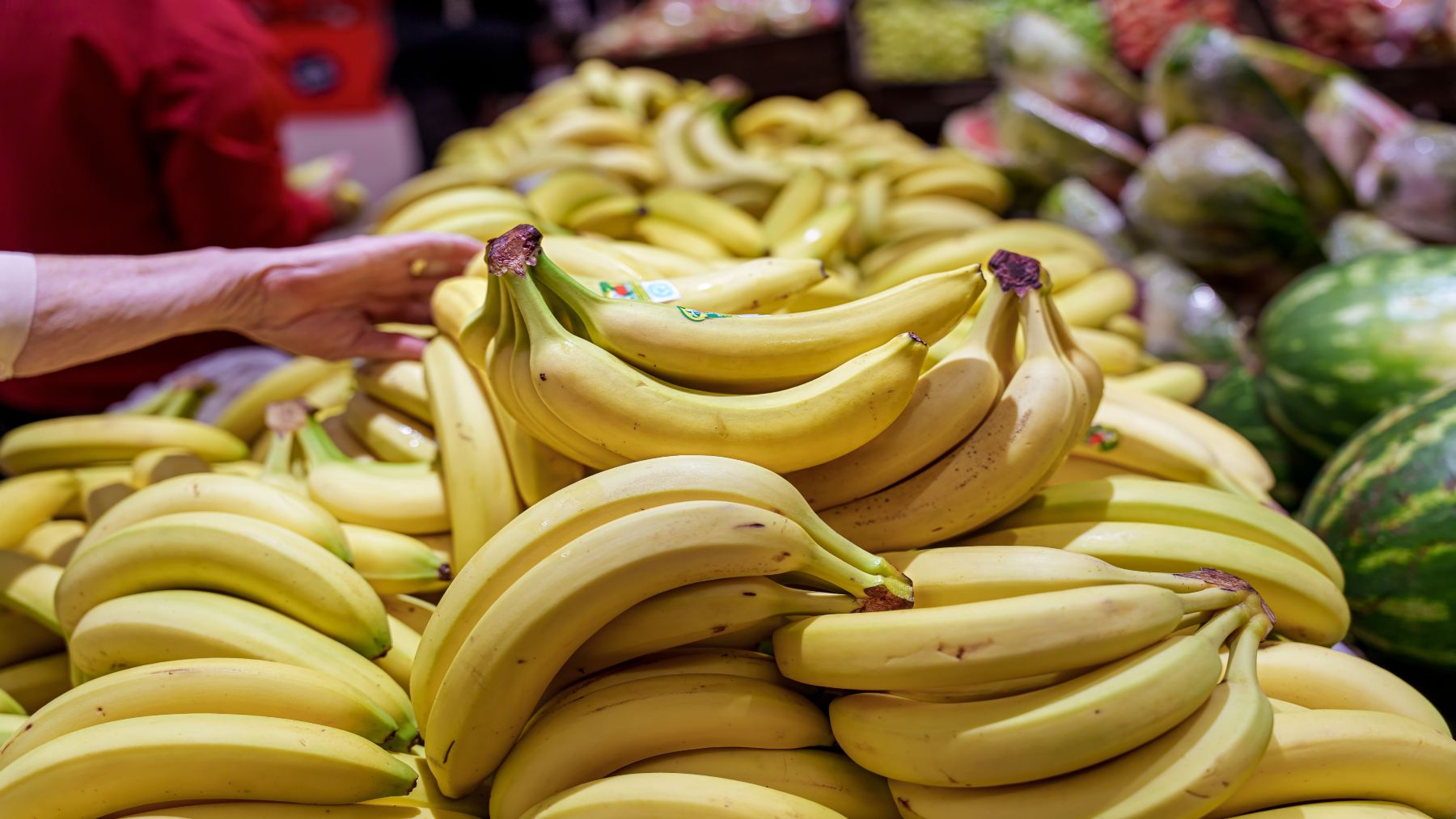
Fruit is a type of food that can be difficult to store. Due to its perishability, it’s common to often wonder whether it’s better to keep it in the refrigerator for longer storage or leave it out. This is especially true with bananas. A widely consumed fruit, people often refrigerate it for better preservation, although experts say this isn’t the best way to store it. A useful option is to separate the bananas from the main bunch by dividing them into smaller bunches and wrapping the stem in a piece of plastic wrap.
Bananas are a fruit that requires shade, good ventilation, and a warm temperature. So, although at first glance it may seem like storing them in the refrigerator is the best option, this isn’t entirely the case. We’ve been taught that refrigeration preserves everything better and slows the ripening of most fruits. However, this reasoning doesn’t apply well to bananas. The key is ethylene, a natural gas released by the stems that accelerates ripening. Covering them with plastic limits its spread to the fruit, slowing the process and keeping the bananas fresher for longer.
If the banana ripens too quickly despite taking these measures, experts recommend not throwing them away. It’s normal for fruit to ripen faster than we’d like during summer or high temperatures. A very ripe banana is still perfect for making smoothies, cakes, pancakes, or even homemade ice cream. Its sweetness is enhanced, and its texture, although soft, is ideal for these types of preparations, where it’s a good substitute for sugar. Therefore, before throwing away bananas, let’s look for recipes that might help.
As for what happens to bananas in the refrigerator, the reasoning is as follows. Bananas are a tropical fruit that begin to suffer from what is known as chilling damage when exposed to temperatures below 12°C. This change manifests itself first in their skin, which rapidly turns black. Its cell walls deteriorate, and the skin turns dark brown within a few days. The inside is still safe to eat, but its appearance is unappetizing. Internally, the process of converting starch into sugars is interrupted. The result is a less sweet banana, with a floury and unappetizing texture. If you have no other option but to leave them in the refrigerator, it is advisable to try not to let too much time pass before eating them.
Fruit, in general, is a food that should be bought with the goal of being consumed quickly, hence the abundance of fruit stores in neighborhoods. They can’t be preserved; although the cold can be a good ally when storing them to extend their shelf life, we shouldn’t overuse it. It’s important to note that the refrigerator is only useful when the banana has reached its optimal ripeness and we want to keep it for another day or two. In any case, it’s best to buy what we’re going to consume and, if possible, buy fruits and vegetables that are in season.
Some tips experts give include, for example, not leaving bananas near apples and avocados. Apparently, these fruits also release ethylene, so keeping them away from each other would be better. As mentioned above, it’s advisable to separate bananas from the bunch, precisely to delay their ripening. Finally, use a fruit hanger, for example, to avoid knocks that could bruise the fruit. And to conclude the topic of banana storage, we can add that fruit bowls aren’t the best option, especially in the summer. Furthermore, in many kitchens, fruit bowls are placed near sunny windows, stovetops, or ovens, and this doesn’t help their preservation at all. The banana is exposed to high temperatures, which considerably accelerates its ripening, so this option may not be a bad idea for the winter months. In the summer, the fruit bowl should be in the shade and withstand as little heat as possible.