
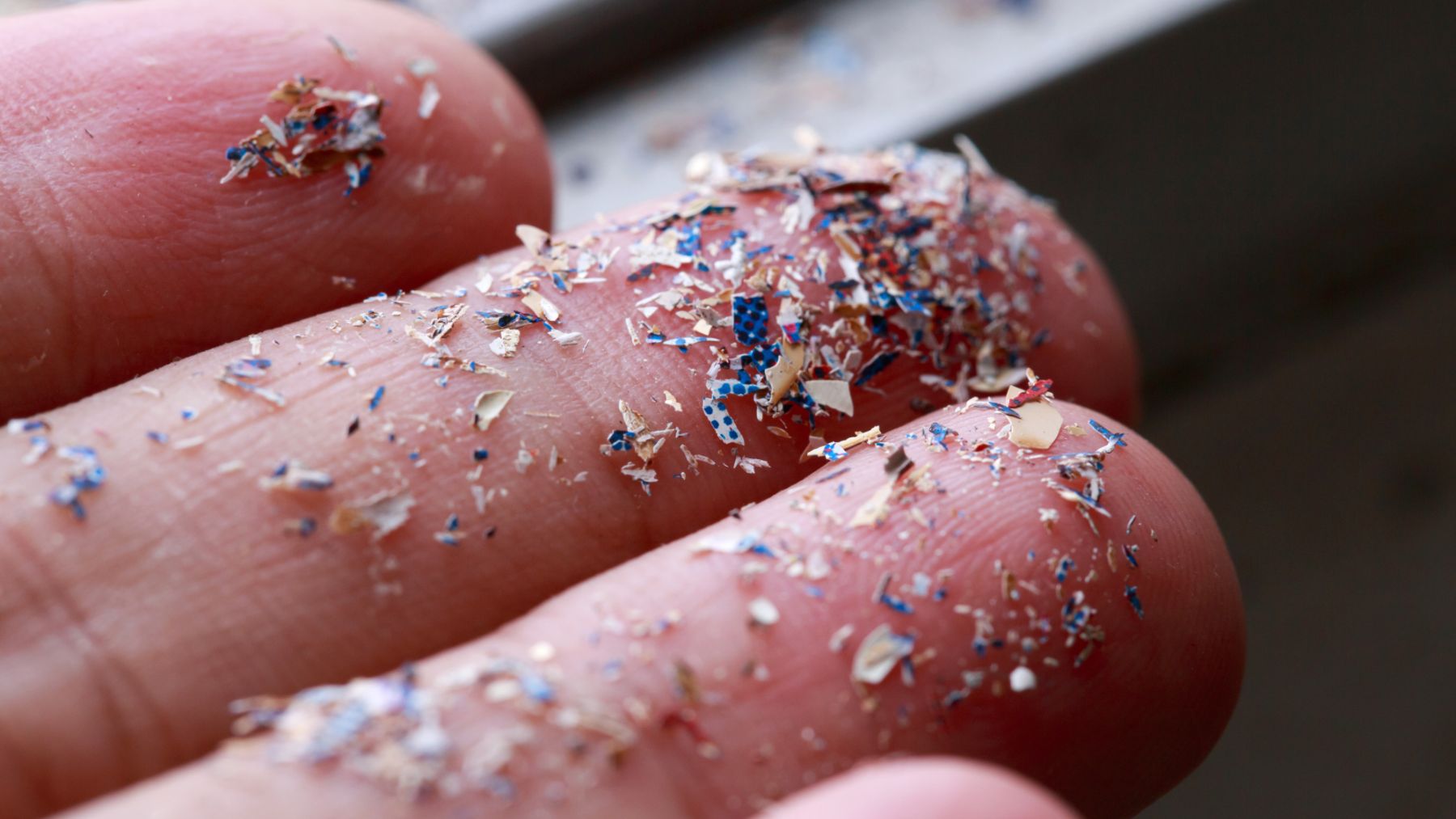
Nanoplastics and microplastics are plastics derived from fossil fuels that pose a great danger. Recent research led by Rodrigo Bueno de Oliviera, from the University of Campina in the state of Sao Paulo (Brazil), shows that bone cells and bone marrow are endangered by nanoplastics and microplastics, which also alter how osteoclasts function. This finding also represents a major contribution to studies on osteoporosis. Unfortunately, plastic pollution continues, and greenhouse gases do not help prevent the impact of nanoplastics and microplastics.
What is happening with microplastics
Microplastics are currently so omnipresent we’re drinking, eating, and inhaling them. As a result, they’re showing up in our poop, placentas, reproductive organs, and brains. We definitely can’t escape them. At this moment, these fossil-fuel-derived particles, less than 5 mm in size, have been found at the interior of our bones.
A recent review of 62 studies suggests microplastics and smaller nanoplastics are affecting our skeletal health in several ways.
“A significant body of research suggests that microplastics can reach deep into bone tissue, such as bone marrow, and potentially cause disturbances in its metabolism,” says medical scientist Rodrigo Bueno de Oliveira at the State University of Campinas in Brazil.
The studies are already informing about the situation
Many of the investigation humans found these plastic leftovers accumulating in bone tissues via the blood, following ingestion. There, animal studies prove they can reduce bone growth.
What’s more, disruptions in osteoclasts – cells that support bone growth and repair – can lead to weakened bone structures, making these compromised bones more susceptible to deformities and fractures.
“In vitro studies with bone tissue cells have shown that microplastics impair cell viability, accelerate cell aging, and alter cell differentiation, in addition to promoting inflammation,” explains Bueno de Oliveira.
“The adverse effects observed culminated, worryingly, in the interruption of the animals’ skeletal growth.”
Why this matters for aging
Age and hormonal changes already push the skeleton toward loss. Added cellular stress from microplastics could make a small problem bigger, especially in people with other risks.
The International Osteoporosis Foundation (IOF) reports that hip fractures are projected to almost double by 2050 compared to 2018.
That projection underscores how even modest new risk factors can matter at the population level.
“While this may not translate to human bones”
At the same time this may not translate to human bones, there is an growing global prevalence of osteoporosis, a condition where bones become more brittle and prone to fractures. Investigators suspect that microplastics may be a contributing factor, along with other confirmed risks such as drinking and an aging population.
Yet still, profesional warn, we’re growing this “underrecognized danger,” producing at least 400 million metric tons (441 million US tons) of plastic each year, a process contributing 1.8 billion metric tons of greenhouse gases annualy.
Researchers need more resources in order to investigate more
For years now, investigators have been calling for more resources to keep investigating the impacts these problematic petrochemical pollutants are having on our bodies.
In the meantime, we can somewhat decrease our exposure to microplastics by filtering our drinking water and limiting plastic products, from synthetic clothing to plastic drink bottles.
Future research needs
Human studies that track exposure and bone outcomes are still rare. Standardized measurement methods will help make results easier to compare.
The review highlights several testable ideas. These include whether microplastics accelerate cell aging in bone tissue and whether certain polymer types are more active than others.
There is credible evidence that microplastics interact with bone related cells in ways that could weaken the skeleton over time. There is also direct evidence that these particles can be present in human skeletal tissues.




