
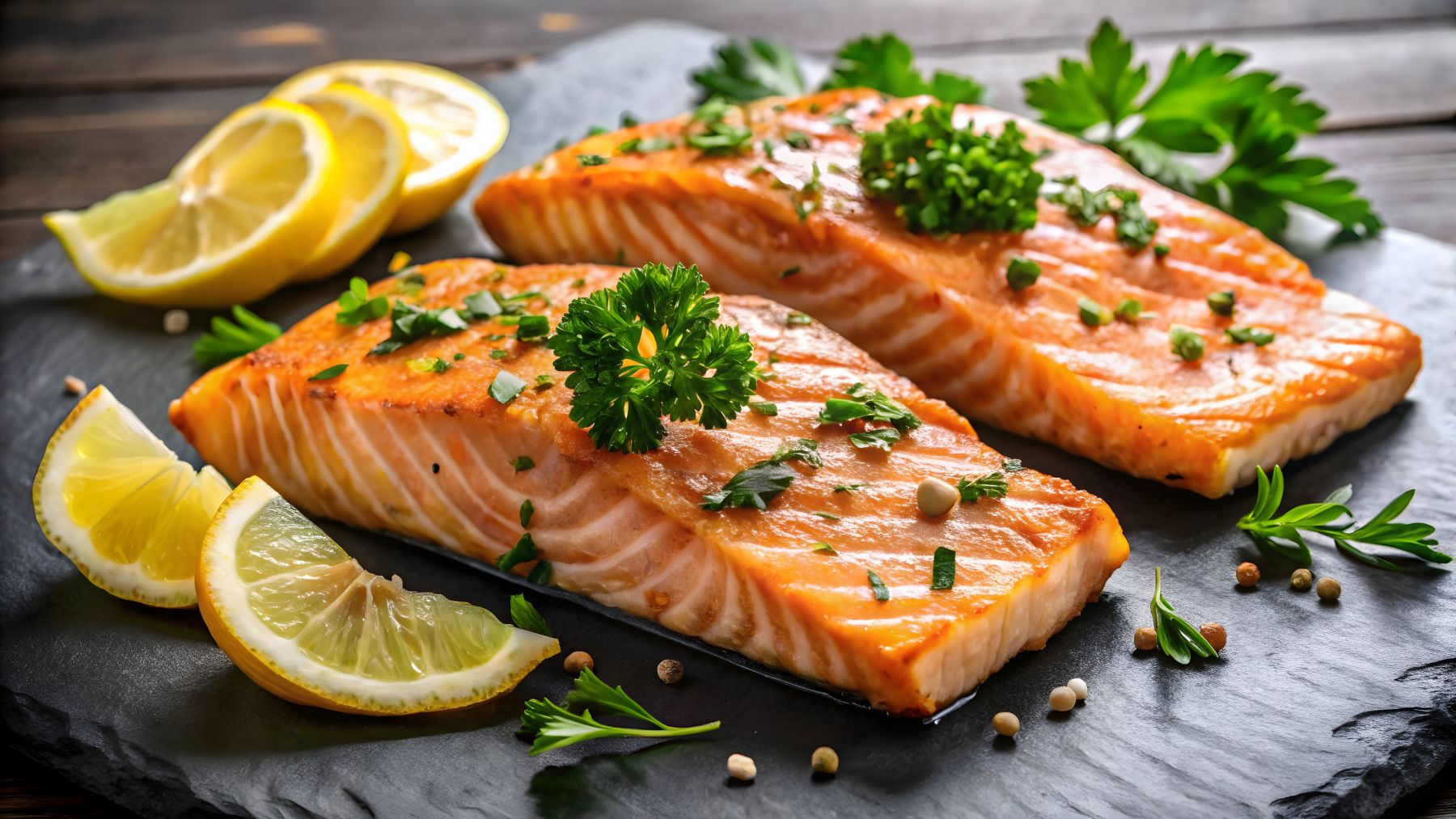
Salmon is one of the fish most recommended by nutrition experts due to its high nutrient content. Although it is valued for its Omega 3 and protein content, experts warn that both its farming conditions and the presence of parasites and chemicals could pose health risks. In farms, fish are often exposed to chemicals that can pose health risks to consumers. And let’s remember that salmon is one of the most common products in home kitchens. The reason salmon harbors so many parasites is related to its life cycle—that is, to the way it is preserved.
It’s important to keep in mind that in fish farms, they are fed processed feed that includes fishmeal and additives
In detail, when young, these fish tend to stay near coastal areas, where they come into close contact with marine mammals that perpetuate the parasites’ life cycle. And as we mentioned before, salmon is one of the most popular fish in the world, but it naturally contains more than 70 parasites. It’s important to keep in mind that in fish farms, where most of the salmon that reaches the market is raised, the fish are fed processed feed that includes fishmeal and additives.
Although the goal is to protect the salmon, some of the aforementioned products end up accumulating in the fish’s body or on its surface
Let’s keep in mind that even workers at these facilities must wear protective equipment and special suits, as the water is treated with toxic compounds to maintain its health. Beyond the microorganisms carried by salmon, the conditions under which they are raised in aquaculture systems can be equally concerning. Although the goal is to protect the salmon, some of the aforementioned products end up accumulating in the fish’s body or on its surface and may ultimately end up for human consumption.
The wild salmon: are raised differently and fed naturally, have a more balanced nutritional profile, and are less polluted
There’s a difference worth knowing. Not all salmon is the same; salmon considered or called “wild” is fed differently. These animals are raised differently and fed naturally, have a more balanced nutritional profile, and are less polluted. In fact, speaking of data, the salmon most commonly found in homes (usually farm-raised) contains around 212 calories per 100 grams, compared to only 115 calories in the same amount of wild salmon. The difference, therefore, is evident, and that’s why many people opt for wild salmon. And in general, consumers continue to buy salmon for its high content of healthy fats, although nutritionists advise opting for alternatives such as sardines, equally rich in Omega 3. Knowing the market and where the products we consume come from is essential for making informed decisions about what we eat.
The United States is heavily dependent on seafood imports, so faced with Donald Trump’s threats of international tariffs, is generating great uncertainty for the US fishing industry
Today, even salmon is not exempt from tariffs. The United States is heavily dependent on seafood imports; in fact, Canada alone accounts for more than 90% of US salmon imports. In this sense, the tense situation between Donald Trump and countries that disagree with his policies is generating great uncertainty for the US fishing industry. Faced with Donald Trump’s threats, both Canada and China intend to take measures that threaten to disrupt crucial trade flows and increase costs for both US fishing companies and consumers.
Therefore, much attention is focused on the United States economy, its alliances with other countries, and now also on the future of salmon and its consumption in the country’s homes.




