
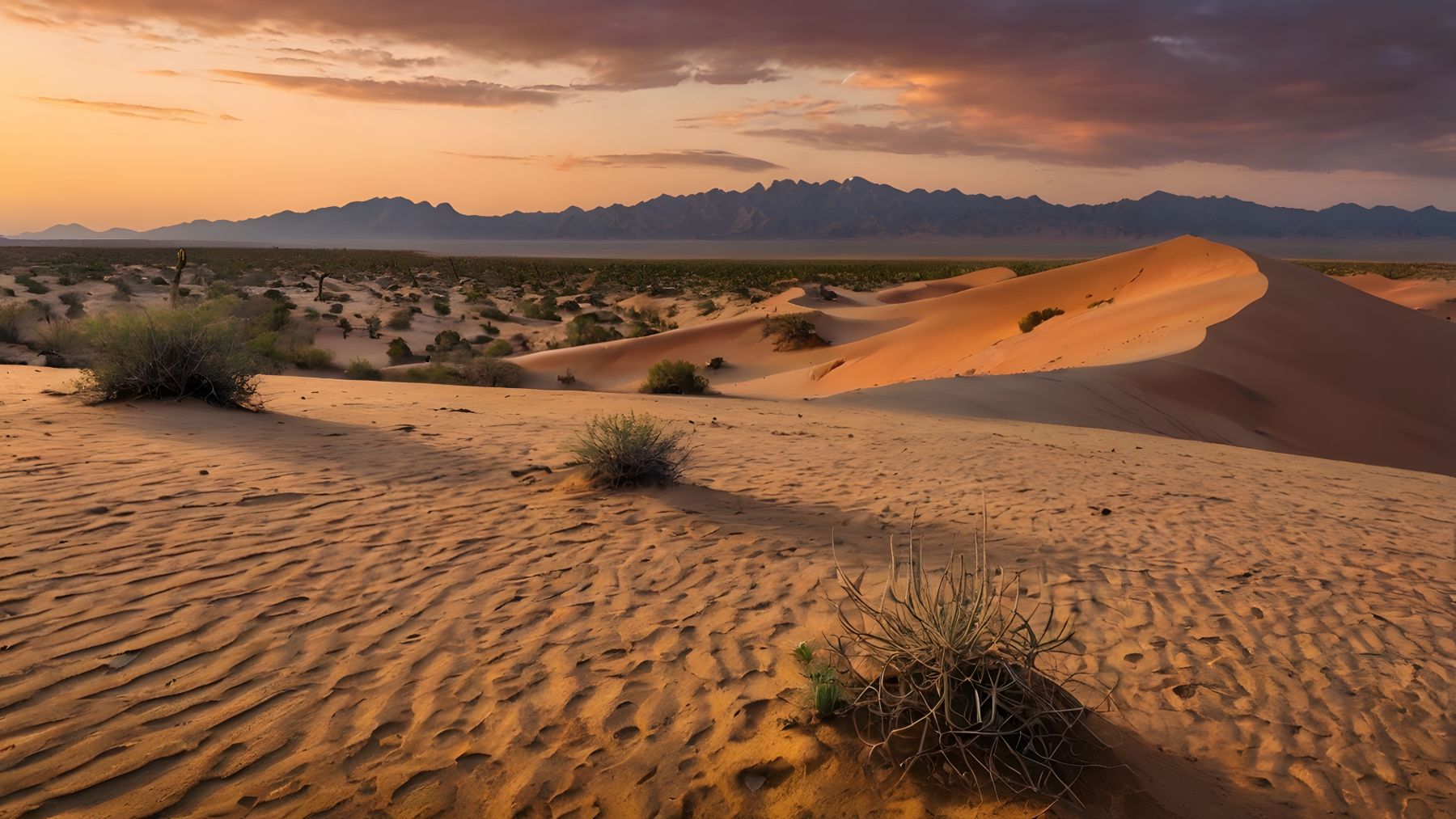
Mojave isn’t just another Apple operating system; it’s the desert in which the United States has pinned its hopes to break its dependence on China. At least, that’s the plan. It turns out that China possesses rare earths, which are essential in the production of electric cars, electronic devices, and weapons. The fact is that the Mojave Desert in California has become the leading producer of rare earth oxides, with 45,000 tons by 2024, a milestone for a country like the United States.
Analysts say China is using its dominance as a key bargaining chip in trade talks with Washington
That said, rare earth elements aren’t just particularly rare; they’re difficult to find, extract, and adapt. Domestic production of rare earths (REEs) would allow the United States to achieve independence, promote economic stability, and strengthen its national security. Analysts say China is using its dominance as a key bargaining chip in trade talks with Washington, as it’s no secret that, until now, the United States has been 100 percent dependent on China in this regard. Now, the US produces a record amount of rare earths for its technology and defense, as neodymium and praseodymium magnets (part of those rare elements) are used to power electric cars and wind turbines, as well as fighter jets.
The names mentioned above, which are part of the rare earth group, are probably not heard of on a daily basis, but the products that use these minerals are. Rare earths are a group of 17 chemically similar elements, crucial for the manufacture of numerous high-tech products. Thus, the production of 45,000 tons covered by the mine indicates that there may be a domestic demand that can be met with domestic production, and where American innovations can be unleashed in a market that has been dominated by China.
Rare earths are also critical for the production of medical technology, such as laser surgery and MRI scans
The fact is that most rare earths are abundant in nature, but they are considered rare because they are rarely found in their pure form, and their extraction is very dangerous. Thus, we can say that at the Mojave Desert mine, plans are being drawn up to expand production capacity, using sustainable methods and new technologies to increase production without harming the environment. Let’s also remember that rare earths are also critical for the production of medical technology, such as laser surgery and MRI scans, as well as for key defense technologies. So if the United States is able to acquire the quantity of these materials it needs, it would be a major milestone for the country.
The predictions, therefore, are favorable, even though China practically has a monopoly on the extraction and refining of rare earths—the process explained above, of separating minerals and obtaining the optimal form for using them for the desired purposes. For example, tritium and europium are used to make television and computer screens because of their color rendering. The International Energy Agency (IEA) estimates that China accounts for approximately 61% of rare earth production and 92% of their processing.
Trump’s interest in Greenland to a possible alliance with Ukraine, both enclaves with rare earth sources
So, on the one hand, the United States is doing a good job in Mojave, although it still has to overcome a series of obstacles such as global competition and limited local refining capacity. Furthermore, the US has one operational rare earth mine, but it lacks the capacity to separate heavy rare earths and has to send its ore to China for processing. Recall that Beijing’s response to Trump’s tariffs was to order restrictions on the export of seven rare earth minerals, most of which are known as “heavy” rare earths, which are crucial for the defense sector. Therefore, the race for rare earths includes many factors, from Trump’s interest in Greenland to a possible alliance with Ukraine, both enclaves with rare earth sources. All because the data is clear: between 2020 and 2023, the US relied on China for 70% of its imports of all rare earth compounds and metals.




