
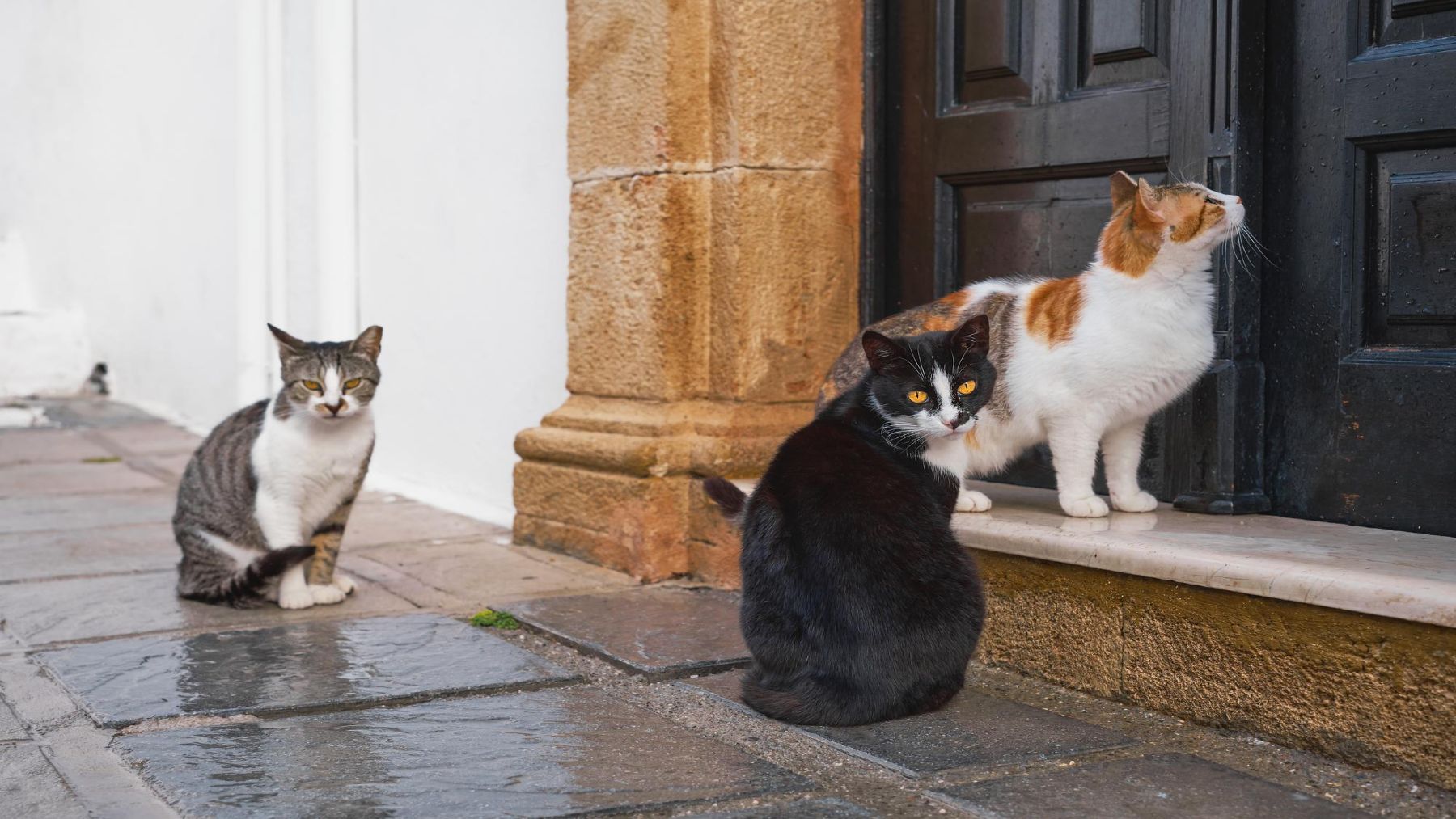
Cyprus is widely known for the number of cats found on the streets. Well cared for, fed, but many. Cyprus has a long history as a cat-loving nation, where food dispensers and clusters of small cat houses are a common sight on popular walking trails. The fact is that it is currently experiencing an overexploitation of cats, which is causing concern due to the potential impact on the island’s ecosystem.
The feral cat population has skyrocketed to the point where there is now at least one for every human inhabitant
According to data, they estimate there is approximately one feral cat for every one of its inhabitants, although activists maintain that the actual population is hundreds of thousands more. The feral cat population has skyrocketed to the point where there is now at least one for every human inhabitant—around one million, and perhaps hundreds of thousands more. In late September, the island’s parliamentary environment committee was informed that the existing sterilization program is too limited to contain the growing population of these animals.
Antonia Theodosiou: “It’s a good program, but it needs to be expanded”
The fact is, if anyone has ever traveled to Cyprus, they’ll know this is no exaggeration. The island’s cat population is staggering. Therefore, authorities have implemented a sterilization plan, which is predicted to fall far short of the needs of the cat population. “It’s a good program, but it needs to be expanded,” said Environment Commissioner Antonia Theodosiou, noting that the program only performs about 2,000 sterilizations per year, with a budget of just €100,000 ($117,000). In other words, the problem is real, not only for the health of the felines, but also for how the growing number of cats could affect the island’s ecosystem.
The government would increase funding for cat sterilization to €300,000 annually
The growing population is also due to the care provided by citizens, as more kittens are able to survive thanks to the food and shelter offered throughout the island. The president of the Veterinary Association, Demetris Epaminondas, told the media that the population increase is due to uncontrolled reproduction, especially in densely populated urban areas. In response to calls for increased funding in this area, Environment Minister Maria Panayiotou announced in early October that the government would increase funding for cat sterilization to €300,000 annually. A decision that was very well received.
Concern is growing among experts that cats could cause unnecessary suffering to wild cats that roam the streets of cities
The ecosystem is one of the most obvious consequences, since even though they are domesticated, cats are felines, they are hunters, it’s their instinct. Therefore, concern is growing among experts that cats could cause unnecessary suffering to wild cats that roam the streets of cities. In this sense, the public is also urged to sterilize their female cats to prevent further uncontrolled reproduction.
Cats have been domesticated so humans live with them
One of the main challenges in carrying out sterilizations is resources. The country’s state Veterinary Services, which is in charge of sterilizations, admitted that the program’s capacity is “lower than the actual need.” This is a problem given the island’s high cat population density. Eleni Loizidou, head of Cat Alert, a volunteer organization that cares for stray cats in Nicosia, said that her organization’s recent efforts to round up 397 feral cats from the city center were just a drop in the ocean, and that very few females are being sterilized. Cats, as we explained before, have been domesticated and humans live with them, but catering to their instincts, coupled with the high number of cats, makes this a major problem for any country, and Cyprus in particular.




