
I don’t know if you’re familiar with the town of Teba, but after reading what we’re about to tell you, you won’t be able to forget it. Teba is a town in the province of Malaga, in Andalusia, which has been making headlines in the world of archaeology. Recently, a group of archaeologists from the University of Cádiz has discovered new information about Iberian prehistory as a result of a dolmen. Eduardo Viande and Serafín Becerra, members of the Thalassa Research Group, are the main archaeologists who made the discovery. The importance of the Thalassa Research Group and its work in disseminating all the information should be emphasized. As for the find itself, objects made of ivory, amber, and seashells were discovered, reflecting the society of the time. Juan Jesús Castillo highlights the relationship between megalithism and life in Neolithic Europe. Keep reading to learn more.
Archeologists bring us the past to the present
Every so often, archaeology is able to present us a window into the distant past, and ca be a challenge sometimes – pieces of history that aid us better comprehend the evolution of human civilization. The latest such discovery comes from Teba, a town in the Spanish province of Málaga, where a group from the University of Cádiz (UCA) has revelaed what experts are naming “one of the most monumental and best-preserved funerary structures in Andalusia”.
What has been exactly found: “stone tomb”
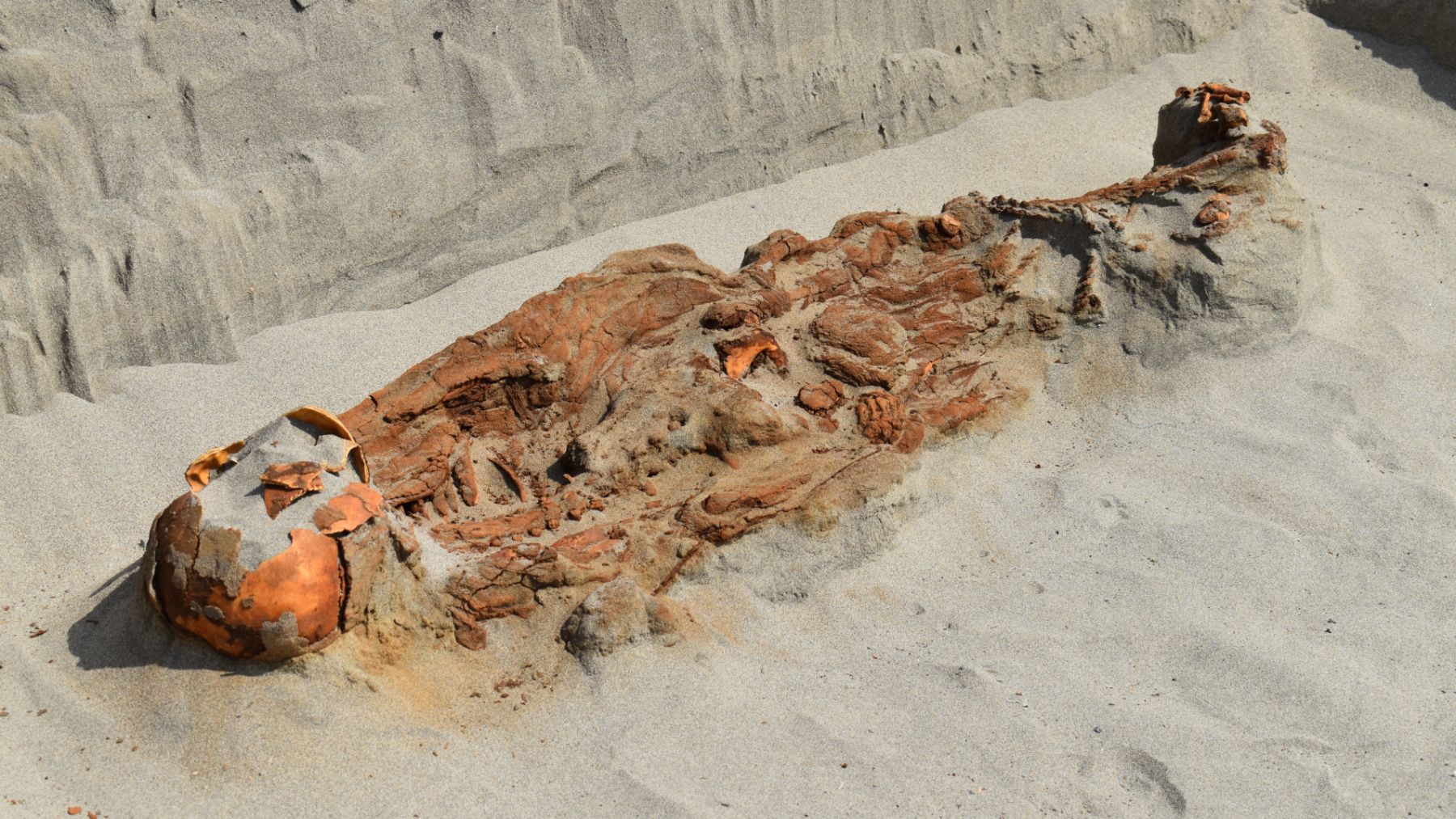
The achievement, a stone tomb known as a dolmen, is a burial site dating back more than 5,000 years. At its interior, archaeologists have recognized multiple human remains and a wealth of grave goods, including weapons – an exceptional glimpse into the funerary customs of prehistoric Iberia. These megalithic stone monuments, at the same time rare, are also found in other parts of Europe, like France and the United Kingdom. Reado on to know all information about this dolmen that is a new pathway in the historic andalusian investigation.
Features about the dolmen
Measuring 13 meters (about 43 feet) in length, the dolmen is built with vertical stone slabs standing over two meters tall (roughly 6.5 feet). Its exceptional state of preservation presents invaluable perspective into the burial practices of ancient communities in southern Spain. The excavation has been led by Drs. Eduardo Vijande and Serafín Becerra, members that are vinculated to the Thalassa Research Group at UCA.
What happened over the course of excavations
Dr. Vijande told Live Science that the entire dolmen was also covered by horizontal large stone slabs, and on top of this covering, there was a tumulus [a human-made mound] of sand and small stones. In addition, over the course of four excavation campaigns, the team precisely documented the tomb, uncovering ossuaries and high-status grave goods created from ivory, amber, and seashells, as well as large flint tools and arrowheads. Right now, we will present more information abput which achievement is the most intriguin.
“The seashells were a particularly intriguing find”
The seashells were a in particular intriguing achievement – an unpredicted discovery in an inland area. Their presence, actually, is the reflection of the sea’s relevance as an element of prestige and the existence of long-range exchange networks,” said Juan Jesús Cantillo, a UCA prehistory professor, in a statement on the university’s website.
Dr. Becerra believes this could be one of the most monumental and complete dolmens in all of Andalusia, because it has many features that is not related to other that they have already investigated. For his part, Dr. Vijande underlines that the fact that the site’s exceptional preservation, which permits investigators to delve deeply into “the lifestyles and belief systems of these ancient communities”.




