
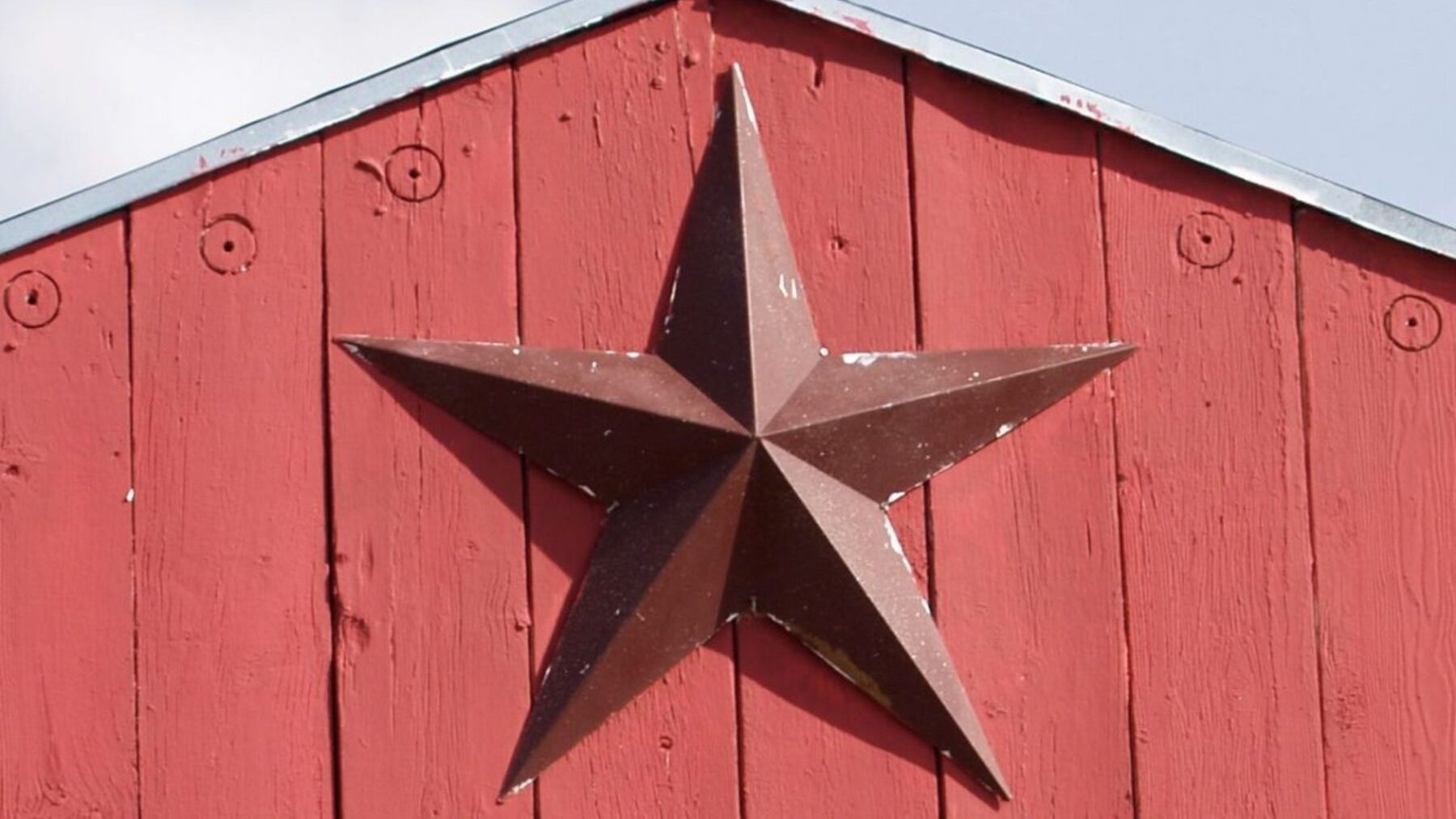
Barns have become a tourist attraction in themselves, as well as a symbol of the country’s rural areas. The red color of these barns and the stars on some have led to countless theories, from conspiracies to witchcraft. The fact is that the stars placed or painted on some barns are nothing more than simple decorative tools, but they have a story behind them, like almost everything around us today.
At that time, stars weren’t just pretty decorations, but talismans meant to protect these valuable structures
The stars-on-barns trend has exploded over just the last decade, thanks in part to television series that have popularized rural areas across the vast country. According to Chip Carter, producer of ‘Where the Food Comes From’, the tradition of stars on barns dates back to a fragment of history when Dutch and German settlers brought this decorative iconography with them when they immigrated to the United States. These populations settled primarily in Pennsylvania in the 18th and 19th centuries. It’s important to note that, specifically at that time, stars weren’t just pretty decorations, but talismans meant to protect these valuable structures.
The red comes from red ochre, which comes from iron oxide
And it doesn’t stop there, as the red color of barns, for the most part, also has an explanation. The red comes from red ochre, which comes from iron oxide, an element that farmers began adding to paint because it has fungicidal properties, making it a great friend of wood against fungus, especially in humid climates. This therefore serves as protection on one hand, while also protecting the harvest. Therefore, as we see, nothing is random.
The location of the European migrants could explain why these stars are less common in the West
In any case, the story also tells us that these stars have a tradition of bringing good fortune, something far removed from all the other negative connotations. The Pennsylvania German Cultural Heritage Center, which organizes the Barn Star Art Tour, notes that they combined “practical craftsmanship with symbolic meaning.” Incidentally, the location of the European migrants could explain why these stars are less common in the West and why the Johnson brothers don’t have one.
It’s worth to remember that granaries were often considered more valuable than houses
Granaries, then, often featured geometric patterns such as stars, rosettes, and other folk art designs that have been passed down from generation to generation. Keep in mind that granaries were often considered more valuable than houses, as the livestock, equipment, and crops stored inside represented their livelihood. Hence the interest in protecting them using any shape known to them.
The important thing is to value farm work, which is often poorly paid and undervalued
In short, we can say there are no hidden messages or political statements; the stars “simply represent country life: faith, family, the farm, and, above all, hope; hence their good luck charm,” explains Carter. And you’d typically find these stars almost exclusively in Pennsylvania Dutch country, due to the historical connotations we explained earlier.
Ultimately, this shows that although practically everything around us is politicized, in this case, this isn’t the case. Stars on barns mean, at most, good luck and prosperity, and the choice of the color red is purely practical. Country life, in this sense, is the simple life of farmers. The work itself is so hard and requires so much effort that thinking that putting a star on it means one thing or another isn’t important. The important thing is to value farm work, which is often poorly paid and undervalued, when historically it has been a fundamental part of human livelihood. From the countryside, to towns and big cities.




