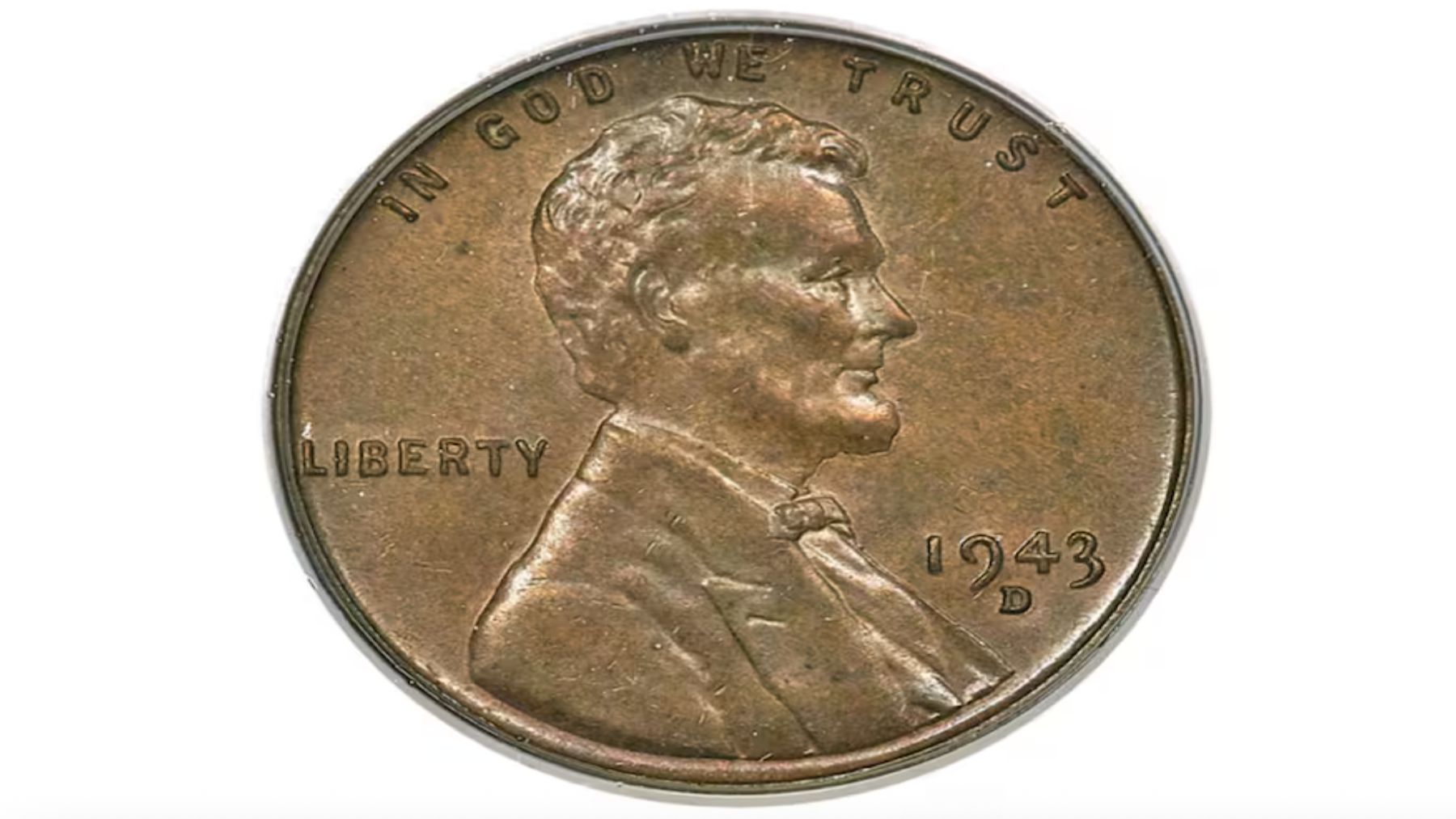
The world of collecting is tremendously vast. There are all kinds of collections, although coin collections are one of the most popular among both hobbyists and amateurs. Within the world of coins, some hold a special place—the most unique, due to their age or significance. The 1943-D Lincoln Bronze Wheat Penny holds a unique place in American history, as it is the only bronze coin known to collectors, minted at the Denver Mint during the material transition imposed by World War II.
The ‘problem’ caused a small number of coins from this era to take on that coppery color in 1943
This world is often of great interest due to the impressive value some coins can have, with some examples reaching multi-million dollar values on the market. In this regard, a few years ago, a man became famous for owning a penny with these characteristics. It is a 1943 Lincoln bronze penny notable for its reddish color, an unusual but significant feature. It turns out that some bronze sheets from 1942 got stuck in the containers that fed the minting presses and accidentally mixed with the new steel sheets when production began the following year. This fact caused a small number of coins from this era to take on that coppery color in 1943. This was recorded at the Philadelphia and San Francisco Mints.
Between 15 and 20 bronze Lincoln cents have been discovered, the most expensive, sold for $1.7 million
These types of coins are very rare today. Many citizens search for them among old objects, but given the limited number of copies and the passage of time, the task is complicated. The first penny of this type sold fetched a very high sum, both because it was the first time one had been found and, evidently, because of its rarity. To date, between 15 and 20 bronze Lincoln cents have been discovered, and the most expensive sold for $1.7 million. These high sums reflect the importance of the collection in the United States.
The Denver coin is exceptional, only one known example minted in this material
For further context, during World War II, copper was declared a strategic material by the U.S. government. Therefore, in 1943, the Treasury Department ordered these coins to be made of zinc-coated steel, to allocate the reddish metal to the military industry, according to Heritage Auctions. Ultimately, these coins are so special because they were a mistake during a time of conflict in world history. The Denver coin is exceptional, as according to Heritage Auctions, only one known example minted in this material, from that mint and in that same year. According to PCGS CoinFacts, the 1943-D Lincoln Bronze Wheat Penny is the only one of its kind in the world.
Fraud and counterfeits: Experts recommend performing the magnet test to verify its authenticity
On the other hand, experts also warn that, due to the conditions we’ve been explaining about this penny, several counterfeits are circulating among collectors. Experts recommend performing the magnet test to verify its authenticity. Through this test, if the coin sticks, it’s counterfeit, since the authentic coin is made of bronze, which is non-magnetic. It’s also worth remembering that according to USA Coin Book records, should new examples be discovered, the estimated value of a bronze 1943-D penny in uncirculated (MS) condition could range from US$961,140 to US$2,441,838. Until then, counterfeit coins will likely continue to circulate.