Current events in the United States have driven many citizens to despair due to both rampant inflation and the government shutdown that has paralyzed much of the system for over 40 days. Consequently, Donald Trump has promised to issue a “tariff dividend” of at least $2,000 per person, excluding those with high incomes. This news has resonated throughout the country, but neither the Internal Revenue Service (IRS) nor Congress has confirmed the existence of a plan to distribute stimulus checks. The Treasury Department has also stated that there will be no stimulus checks as such, which would instead result in tax reductions.
These statements claimed that the country was raising trillions of dollars thanks to the new tariffs
The announcement was made via Donald Trump’s social media account, Truth, and just hours later, the administration itself clarified the US President’s statements. These statements claimed that the country was raising trillions of dollars thanks to the new tariffs and that this money would be used to reduce the national debt, which currently exceeds $37 trillion. The reality is that the fiscal mechanism that would finance such a large measure in a country with the size and millions of citizens of the United States has not been properly explained.
For such a measure to be approved, Congress would have to debate and vote on a formal proposal
It appears that the issue isn’t simply that the country might be in a position to do something like this; for such a measure to be approved, Congress would have to debate and vote on a formal proposal. This is all due to the President’s effort to appease a society that has endured a difficult few weeks with the government shutdown, which has left many without SNAP benefits, with workers on the job without pay, and with jobs at a standstill. In fact, Trump claimed that his administration’s policies have made the United States “the richest and most respected country in the world,” attributing this supposed success to the tariffs imposed on foreign goods.
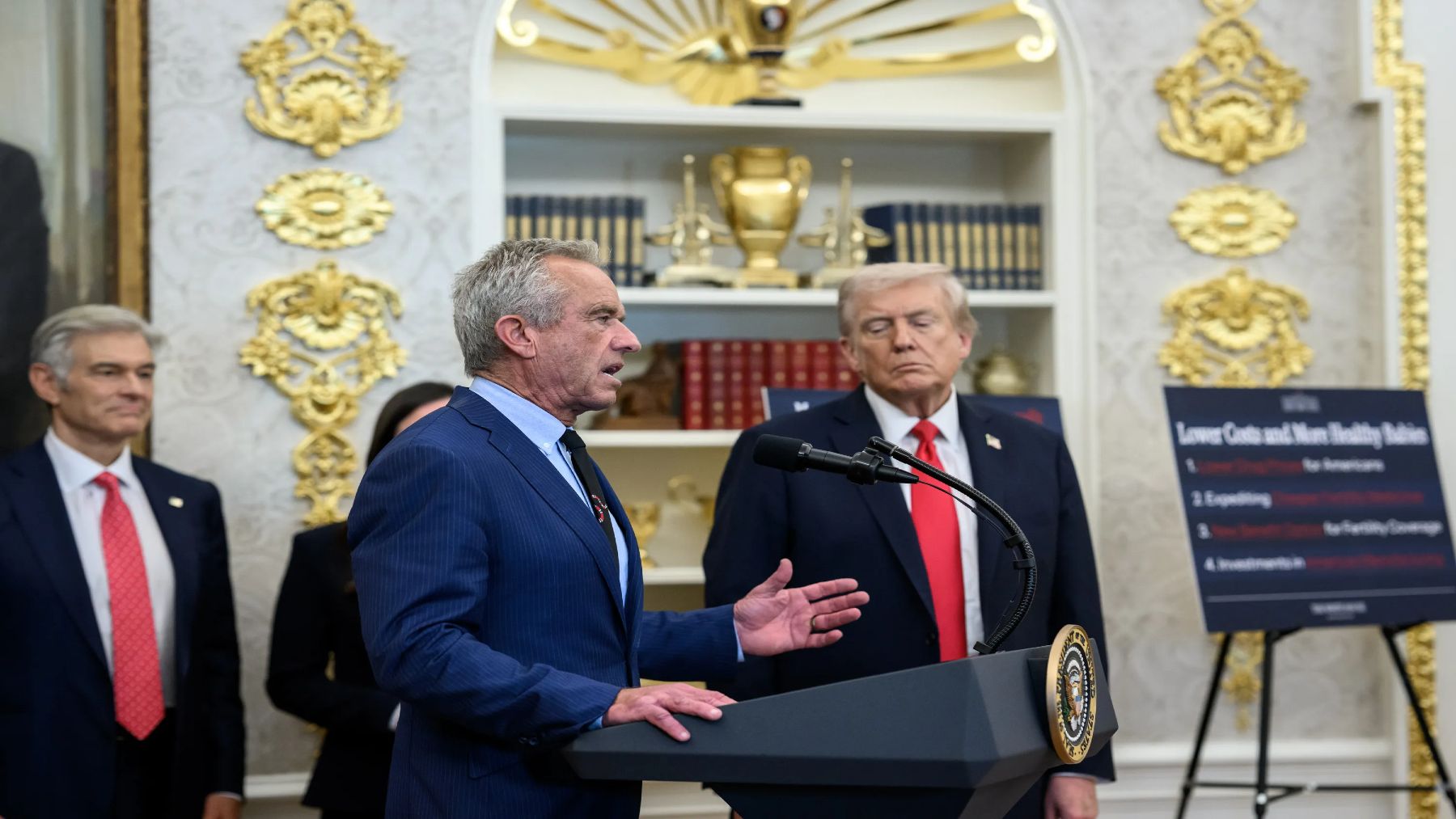
This is a complex situation, as everything hinges on tariffs and Donald Trump’s “new” policies. Treasury Secretary Scott Bessent stated that he has not had formal discussions with the president about this plan. And recently, a Goldman Sachs study estimated that US households will absorb approximately 55% of the cost of the tariffs implemented by Donald Trump, while importing and exporting companies will bear the remainder. According to Donald Trump, the revenue generated by these tariffs would be sufficient to fund direct payments to the population, making this a difficult concept to explain and understand.
If Trump’s promise regarding these checks materializes, the benefit could come in the form of tax reductions
This isn’t the first time the Trump administration has discussed this type of aid for families. Earlier this year, there was talk of $5,000 checks proposed by the Department of Government Efficiency (DOGE), an agency spearheaded by Elon Musk that claimed to have recovered $214 billion in misused funds. This proposal ultimately failed to pass because, among other things, it required a vote for approval.
Ultimately, what citizens need to understand is that, at this time, the promise of delivering cash or stimulus checks of this kind could be offset by an increase in the cost of goods, thus limiting the real benefit citizens would receive from these checks. A recent analysis by Bank of America estimates that tariffs have added between 0.30 and 0.50 percentage points to PCE inflation and that consumers have absorbed between 50 and 70% of the increased costs. Therefore, as mentioned above, if Trump’s promise regarding these checks materializes, the benefit could come in the form of tax reductions (such as the elimination of taxes on tips, overtime, or loans) rather than through direct cash payments.