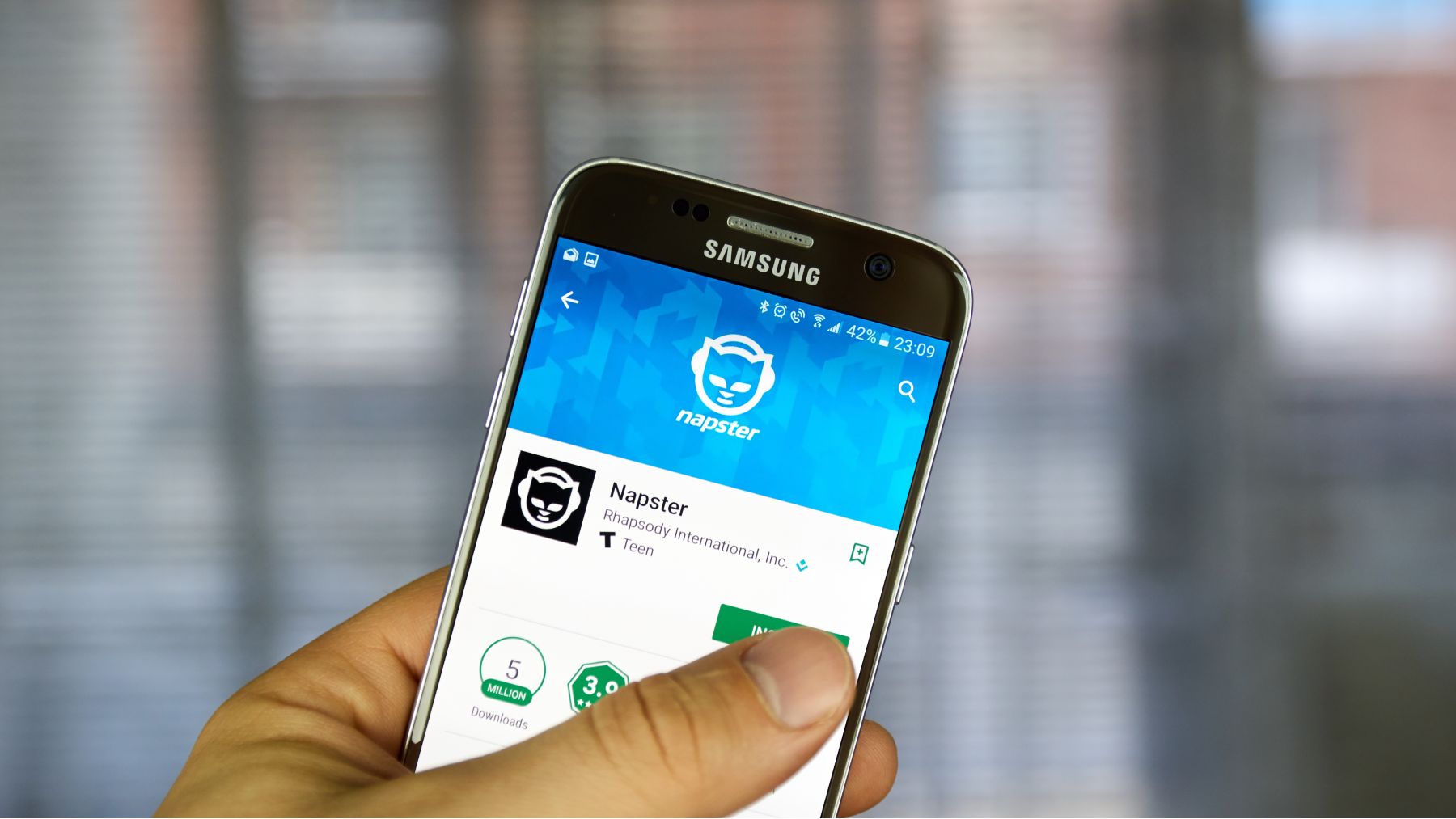
After spending $207 million to acquire Napster, the immersive technology company Infinite Reality has struck gold. Additionally, it has big aspirations to compete with other streaming platforms by introducing virtual 3D concerts, one of its strongest points. Those who grew up with Napster, Soulseek, and other early P2P networks will recall those times. Being blamed for the early Internet’s growing popularity and taking on a music business that hadn’t yet figured out how to make money from digital media made Napster particularly problematic. In 2000, Napster was sued by Metallica, Madonna, and Dr. Dre; the company was forced to file for bankruptcy in 2002.
Former Roblox CEO Jon Vlassopulos will continue to head Napster, stating that he sees a next-generation platform that would allow fans to engage with artists in 3D virtual environments, enhancing the social and immersive nature of music consumption. The main offering from Infinite Reality, which was founded in 2019, is iR Studio, an engine for creating immersive websites complete with avatars and social virtual environments. Although the hosted iR Studio tool does not presently have WebXR enabled, the business claims that iR Engine supports WebXR. However, there is a chance that Napster will eventually support WebXR, which would work with any VR headset that has a WebXR browser; however, this is still only conjecture.
Napster is back with an ambitious plan that will revolutionize the 3D music industry
In recent years, Napster has developed into a legal streaming service, similar to Spotify, with a catalog of 110 million songs and a presence in 34 countries. The Napster brand has gone through multiple reincarnations and various ownership changes. Still, perhaps the most well-known is the technology store chain Best Buy, which sold it to Rhapsody, another streaming platform searching for an established name to grow its business, in 2011. Through the acquisition of this immersive technology company, Napster hopes to transform into a social music platform that values fans’ active engagement over passive listening and has a stronger social network vibe than rivals like Spotify.
This will enable artists to interact with their fans and to take advantage of and profit from their relationship with them. Among the concepts of Infinite Reality are the development of official 3D virtual venues for virtual concerts, release parties, ticket sales and merchandise, and general artificial intelligence-based customer support. Infinite Reality’s foray into the Napster market raises several questions, chief among them being how it intends to integrate all of these advances into the platform and whether it makes sense. While some users (and especially some investors) may find the development of virtual worlds appealing, others may find it unfamiliar and complicated.
Recall that the business’s current CEO, Jon Vlassopulos, managed Roblox’s music division before joining the company in 2022. Roblox is a multimillion-dollar company, but its efforts to build a vast cultural metaverse have failed. Even more doubts exist about the operation, but they are less practical. The project’s economic feasibility, for instance, Infinite Reality has raised $3 million in an investment round, although it has not disclosed the source of the funds. Furthermore, the music industry’s adoption of AI and augmented reality is highly ambitious and may encounter issues due to its rapid 180-degree economic turnaround (the finest example of this is Napster’s early history in 2000).
What should people expect from Napster’s acquisition?
Infinite Reality rejected the notion that it is attempting to just plop yesterday’s unsuccessful metaverse technology onto a music streaming company that is having trouble. Instead, Infinite Reality informed us that it thinks the world is about to enter a phase of rapid internet evolution. This is a very standard statement made by companies in the Web3 field, with some extra hype about artificial intelligence to go along with it, of course.