
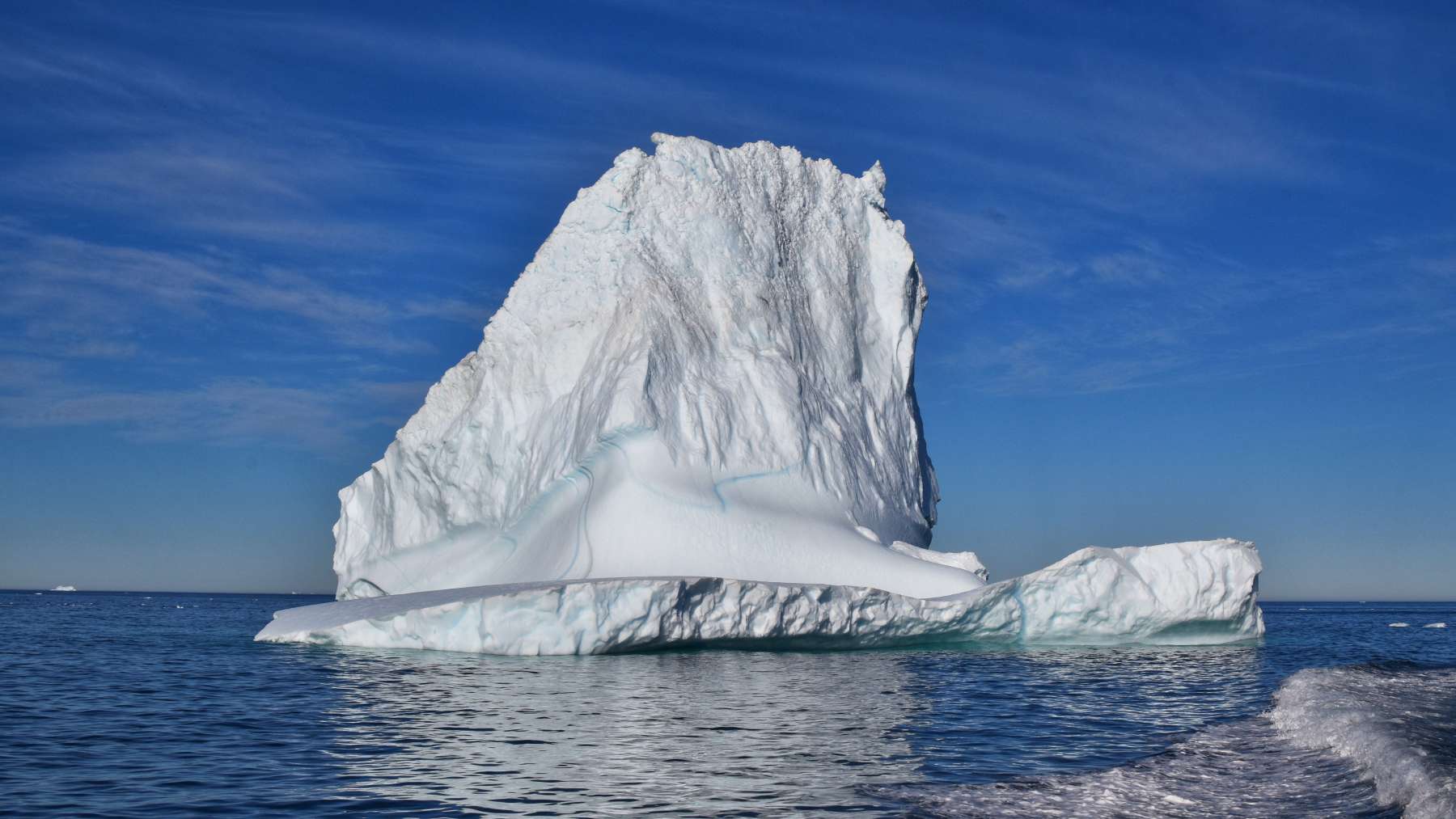
Recently a group of scientists discovered a monumental event in the farthest reaches of Antarctica, which turned the mundane scientific process into an almost beautiful revelation. A white wound was created in the northern crust on January 13 when an iceberg the size of the municipality of Madrid broke away from the ice shelf in the Bellingshausen Sea. Scientists from the Schmidt Ocean Institute’s research vessel Falkor turned what appeared to be a disruption in their schedule into a once-in-a-lifetime opportunity: exploring the recently freed seafloor, a region concealed beneath centuries of ice, was like lifting a stone in the forest and finding an entire universe pulsing in the dark.
Scientists just confirmed a new ecosystem hidden beneath a giant iceberg in Antarctica
In place of a biological desert, the scientists discovered a thriving world full of species that had evolved to constant aggression. Not only did they exist, but they also lived a long time—creatures that not only resisted but also flourished in environments that seemed to be off limits to life itself. Together with sea spiders, ice fish, octopuses, and unidentified species, the expedition’s descent into the depths, aided by the underwater robot SuBastian, revealed a surreal biological aesthetic: anemones that resembled Truffula trees from fairy tales. It is possible that some of them are native to these uncharted waters.
The Antarctic Circumpolar Current has kept Antarctica geographically isolated for millions of years, enclosing it like a castle with a moat around it. Unique lineages that have witnessed time in its purest form have evolved as a result of this isolation. Therefore, a large number of new species are anticipated to be discovered because the Bellingshausen Sea’s biodiversity has not been well investigated. Furthermore, according to scientists, the discovery of huge sponges, whose size suggests ages that could span centuries, was one of the most remarkable discoveries. Scientists’ results contrast with earlier research that depicted a far more sterile world, whether drilling through the ice or getting there years after comparable incidents.
Diverse and established ecosystems can be found beneath the ice shelves, at least within the first 15 kilometers. That begs the question, what will happen to this fragile underwater garden if its frozen ceiling suddenly disappears? The ambiguity is significant. Because they are frequently acclimated to unchangeable circumstances, deep-sea life can suffer greatly from even little adjustments. The disappearance of the iceberg that once protected the species found in the Bellingshausen Sea may be as life-changing as the discovery of a long-kept secret. The retreat of ice is a part of an unsettling pattern. Only a small portion of the ice shelf, which has receded more than 40 kilometers in the past 50 years, was the iceberg that liberated this secret environment.
One of the main causes of the rise in sea level worldwide is the melting of Antarctic ice. Additionally, this study offers the background information required to comprehend these current developments and enhance our future estimates. It should come as no surprise that understanding what is beneath the ice is also a means of conserving the planet’s memory during periods of rapid climatic change. Perhaps one of the most pressing ways for us to look to the future as stewards of a changing world is to look to the bottom.
Scientists might have miscalculated how many humans are on earth
Homo sapiens is the most successful mammalian species on Earth, thriving on nearly every continent and outnumbering rats by at least a billion to one. But a new study suggests that the impressive nature of humanity’s expansion may have been under-reported. Josias Láng-Ritter, a postdoctoral researcher at Aalto University in Finland, claims that the Earth’s human population is around 8.2 billion, but these estimates may significantly underrepresent rural areas. According to scientists, the lack of resources for accurate data collection in many countries is likely a contributing factor to this disparity, and the challenge of traveling to remote rural areas only exacerbates census errors.
Rural communities may be significantly impacted by a global underrepresentation of rural populations, since census data is essential for allocating resources. Scientists such as Stuart Gietel-Basten of the Hong Kong University of Science and Technology argue that, while increasing investment in rural population data collection would be useful, the possibility of Earth having a few billion more human residents is exceedingly doubtful. He considers this a major news item that contradicts thousands of other datasets.




