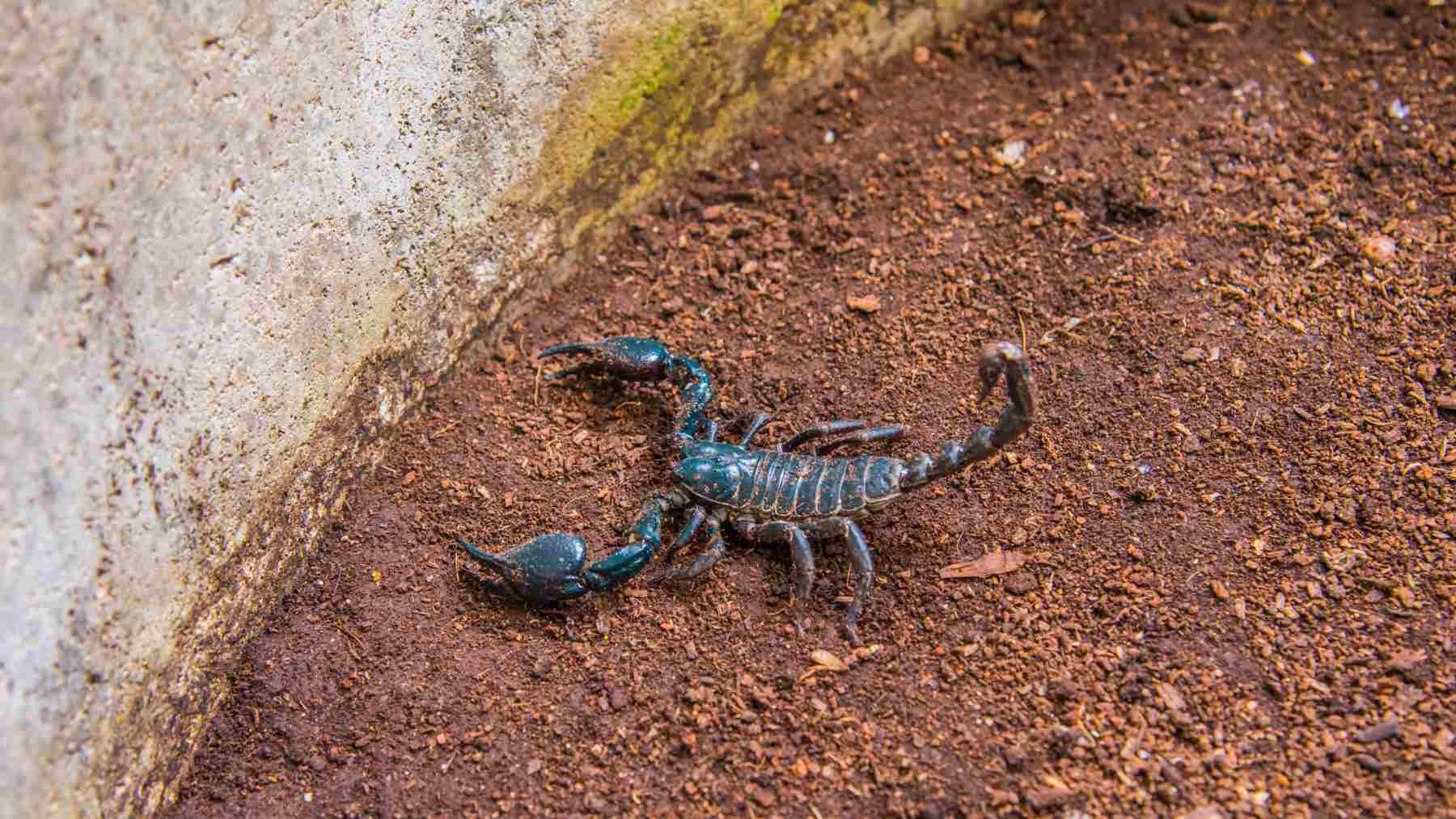
According to recent news, it seems that insect farms are here to stay; the European Union wants them to be a part of our diet, and countries like Spain are taking action. One example is the Tebrio plant in Salamanca, which will be the largest mealworm farm. However, in addition to producing food, we also breed other unusual animals, such as scorpions. In nations like China, Mexico, and Egypt, scorpions are now a commercial commodity. Additionally, they milk them in addition to breeding them.
Scorpion’s farms are revolutionizing the pharmaceutical industry
They have remarkable traits, are found worldwide (except for Antarctica), and number over 2,000 species. Although they have a robust exoskeleton, superb night vision, remarkable metabolic control, the ability to hold their breath for nearly a week, and the ability to manage the quantity of venom they inject, their stingers and pincers are startling. They have been around for 400 million years and are older than the dinosaurs, so they have had to forcibly adapt to everything that has preceded them.
However, much less than we might think, they are dangerous to humans. Their venom is designed for hunting their prey, and of those 2,000 species, only between 25 and 50 would put us in danger (and the stings of many of them would not be lethal). As a species, we are particularly interested in this venom. We need spaces to host thousands of these arachnids because a few hundred individuals would not be enough to contain the venom. And it’s thousands when I say that. Nigeria is a leader in the breeding of scorpions, along with China, Thailand, Mexico, and Egypt. There are facilities with 80,000 specimens in this nation. To say that there are 80,000 scorpions would be an understatement.
Specific breeding conditions are needed on these farms, including regions tailored to the species in which they specialize and a variety of specimens depending on the goal. As a result, we can use the farms to have samples released to aid with pest control. They can work directly on a farm where we milk them or in a research center that studies antivenom. Milking animals is nothing new, but milking scorpions is a unique experience. Their venom is intriguing, and farmers like Metin Orenler provide ABS Science with the secret to extracting it: perseverance, bravery, patience, and a pair of tweezers.
The problem behind scorpion farms that no one knows
Their scorpions (Androctonus turkiyensis, in their case) only create two milligrams of venom every day, which is the issue. Tens of thousands of specimens are found on these farms because of this extremely small amount. Orenler had twenty thousand scorpions. This Turkish farm exports the powdered scorpion venom to Europe for medical research after it has been milked and frozen in liquid nitrogen. However, other nations, particularly in Asia, are also highly interested in this product. The worst part is that the most costly liquid in the world is scorpion venom. What is the amount? Ten million per liter, according to Orender.
Naturally, it takes a lot of milking to reach those figures, so why does it pay so much? In fact, for a variety of reasons. The research has already been discussed, and Volker Herzig, a professor at the University of the Sunshine Coast, said on ABC that the proteins and peptides found in scorpion venom, which are quite abundant, may be separated and examined to produce something useful for humans. Examples include the biological management of insects and parasites in veterinary care and agriculture, as well as the treatment of human illnesses.
These are strong, highly specialized molecules that can be quite miraculous if combined properly, according to Herzig. If a toxin from scorpion venom can inhibit a protein that is overactive in an illness, for example, you can develop a strategy to counteract it, he says. According to the researcher, they have discovered substances that may be used to treat strokes, irritable bowel syndrome, and epilepsy. At the Monash Institute of Pharmaceutical Sciences, Dorothy Wai conducts research on the venom’s potential medical applications, and because of a protein called Kv1.3 that is found in this material, her study focuses on treating autoimmune disorders like multiple sclerosis.