
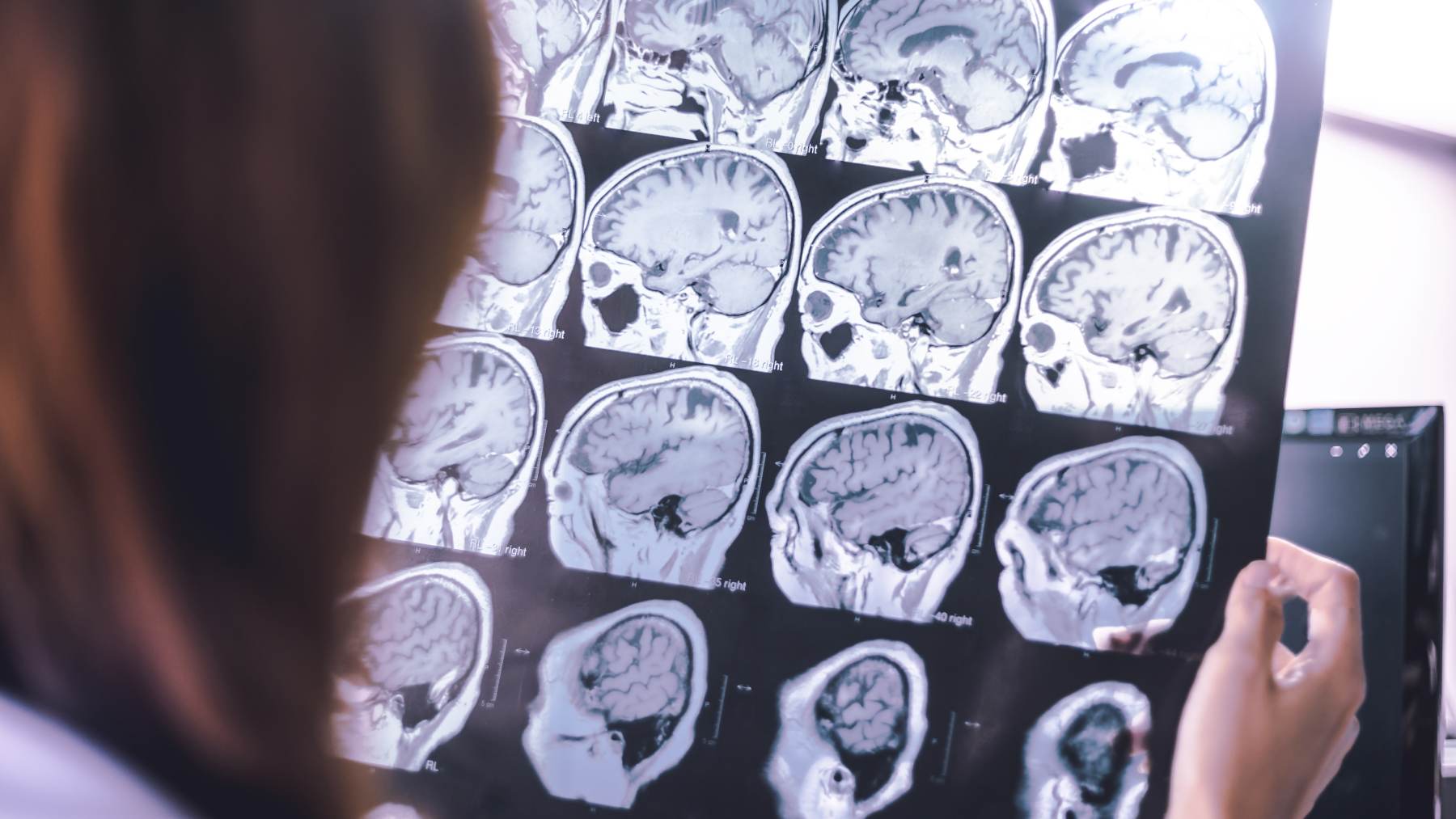
Scientists have revealed a new study that demonstrates how the brain reimagines the past to forecast the future, merging earlier mental fragments to build new and adaptable representations rather than simply recalling them. A key component of the brain involved in memory, the hippocampus, has long been associated with recalling prior experiences. Nonetheless, a March 2025 study that was published in Nature Neuroscience suggests a more creative and active role. The hippocampus can also combine previously learned information to create new mental representations.
Scientists reveal the critical role of the hippocampus in memory formation
With the help of computational models and neural recordings in rodents, researchers from Oxford University and other institutions led the study and discovered that the hippocampus can put together “blocks” of existing knowledge to create new scenarios without requiring further learning, enabling animals to infer future situations without having encountered them before. According to the authors, the hippocampus makes use of mental components known as “compositional elements” or primitives.
These blocks are fundamental informational units, such as an object’s location, a sound, or an action. The brain can create intricate mental state spaces by flexibly combining these components. An animal can see a path between a barrier and a reward without actually traveling it, for instance, if it is aware of their locations. It has adaptive benefits from its compositional capacity, which enables it to plan, adjust to environmental changes, and react swiftly to novel circumstances.
Mental repetitions consolidate imagined scenarios
A crucial part is also played by the process known as replay, which is the mental repetition of experiences. After detecting a new ingredient in the environment, the researchers noticed that the hippocampus produced remote activation patterns that mirrored their findings. At rest, these patterns were replicated, strengthening the newly created composite representation. It’s interesting to note that the brain patterns are modified to preserve the spatial link even if the landmark moves. This suggests that the brain uses focused internal repeats to update its mental maps in addition to responding to external stimuli.
Moreover, the ability of the animals to initiate place sequences toward an invisible objective based solely on a novel landmark was one of the study’s main findings. This implies that even in the absence of firsthand experience in those particular circumstances, the hippocampus is capable of projecting potential future paths. In computational models, this flexible composition also allows fast inferences without the need for complex networks or deep learning. The reuse of previous mental blocks offers an efficient solution to planning and prediction problems, both in animals and potentially in humans.
Hippocampus: From memory to future-oriented imagination
According to the authors’ theory, the hippocampus is now an active generator of potential futures rather than only an archive of the past. This paradigm holds that memory is a dynamic construct that supports prediction and adaptive action rather than a replica of the past. This discovery has wide-ranging effects for learning psychology, artificial intelligence, and cognitive neuroscience. New types of effective information processing may be inspired by compositional and repetition concepts if they can be reproduced in artificial systems.
Rats participated in spatial navigation exercises as part of the study, and dorsal hippocampus activity was recorded. While the observed patterns lend credence to the theoretical concept, they also raise unanswered problems. Are these processes the same in humans? Which more brain regions are involved in this construct? Despite the consistency of the animal evidence, it will be required to examine whether the same principles hold for human abstract planning, problem-solving, or social decision-making. Replay and composition may be activities shared by several sophisticated cognitive processes.




