
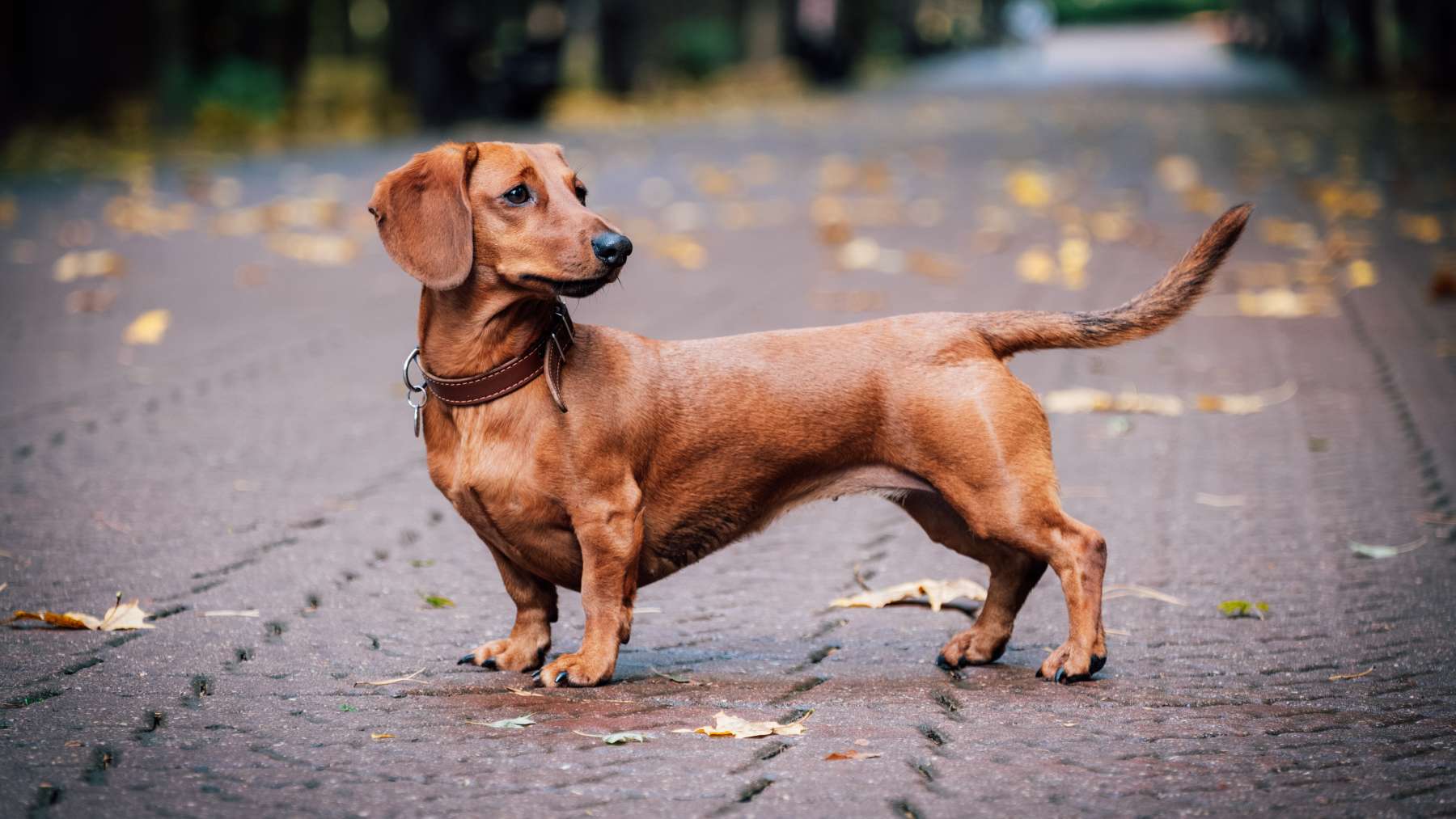
In recent days, a dachshund has caught the attention of millions of Americans as the animal was able to survive alone on an Australian island. While on a family trip in November 2023, Valerie, the dachshund, vanished. What started as a peaceful outdoor retreat quickly evolved into a desperate hunt and, eventually, a case that caught the community’s attention. However, this story is noteworthy not only because of how long the dog was lost but also because of how she survived in a dangerous environment and how her experience may provide fresh insights into how domestic dogs behave in the wild.
This dachshund has survived alone on this inaccessible Australian island for 16 months
Kangaroo Island isn’t a park in the city. We are discussing a severe habitat, a minimum human density, and an island that is almost 4,400 square kilometers in size. It is home to venomous snakes like Austrelaps labialis, huge birds of prey, and other natural predators. The people who live there are accustomed to a hard lifestyle. Valerie wasn’t, though. According to a Washington Post article, she was a “princess,” as her owners describe her: she slept in bed, wore a sweater in cold weather, and could not stand being outside by herself.
However, he started an unexpected adventure that would test not just his instincts but also our knowledge of animal adaptability when he became scared and fled from his makeshift play area when his owners were taking him for a stroll. The most fascinating theory is that domestic dogs might still have survival skills from their wild forebears, albeit dormant. Certain breeds, like the Dachshund, which was once bred to hunt badgers, may still be able to forage instinctively, avoid predators, and create safe paths even after decades of domestication, according to some studies. Attempts to rescue the dachshund have not been few and far between. Local volunteers and members of a wildlife rescue organization began setting up camera traps, scent clothing from their owners, and all sorts of scented baits.
The most effective food to lure her in turned out to be roasted chicken. The cameras captured blurry images of a small, fast, and frightened figure, which always managed to escape human contact. One of the most remarkable things was that the dachshund had kept her pink necklace on despite the passing of time. She had no obvious symptoms of disease and was not malnourished. Her self-sufficiency theory was supported by this, but it also begs the question of how well she has adapted to her surroundings and how well she can identify and steer clear of risks, even human ones.
How should people view this dachshund case?
Although anecdotes like Valerie’s are frequently considered intriguing tales, they may conceal more intricate phenomena. Behavioral biologists are starting to recognize that situations such as these offer important insights into the relationship between instinctual biology and domestication. This particular scenario may even stimulate research on the return of domesticated species to the wild: how long does it take an animal to become acclimated to a harsh environment? In the process, what talents are developed?
In addition, the case has prompted ethologists to question whether emotional attachment to humans can influence a stray animal’s decision-making. Valerie deliberately avoided human contact – was this a learned strategy for survival or a sign of trauma? Could she be waiting to see her owners before approaching anyone? In addition to the scientific, Valerie’s account describes an emotional connection that endured. During the most difficult months, her owners remained hopeful and kept looking, reaching out to the neighborhood, exchanging memories, and requesting assistance.
The sensation was overwhelming as the first pictures of a dog with a pink collar started to circulate. Valerie’s example exemplifies the unpredictable nature of animal behavior and contradicts conventional conceptions about being a “pet dog.” It causes us to reconsider our relationship with animals and the extent to which we genuinely comprehend them. Valerie has evolved from a joyful plush animal to a seasoned survivalist in 16 months, rewriting our understanding of domestic dogs and defying our preconceived beliefs about their nature.




