
Humanoid robots are coming to Amazon. The delivery company has been boasting for some time about the robots it will have at its headquarters. Amazon Robotics has already deployed a staggering one million robots equipped with artificial intelligence in Japan. It has officially announced Deep Fleet, a type of AI that helps manage and coordinate its robots.
Hercules can lift and move inventory weighing up to 570 kilos
Jeff Bezos’ company has approximately two million employees worldwide, 28,000 of whom are in Spain. Some examples of robots in Amazon’s fleets include the Hercules robot, which can lift and move inventory weighing up to 570 kilos, and the Pegasus robot, which handles pre-packaged products on conveyor belts.
The primary goal of incorporating robots into warehouses is to streamline and improve workflow within the facility. This type of automation streamlines work, generates lower costs, and reduces human risk—this is how the bigwigs who opt for this change in companies, factories, and other jobs that involve physical labor see it. However, as the company itself explains, the goal is not to replace people with robots, but rather to use them as a complement, to assist with the most complex tasks.
Deep Fleet could reduce the time it takes for robots to move by 10%
Amazon has unveiled Deep Fleet, an artificial intelligence model designed to coordinate the internal traffic of its robots. This technology acts as an intelligent navigation system that determines the fastest and safest routes for robots to travel within fulfillment centers. It is anticipated that Deep Fleet could reduce the time it takes for robots to move by 10%.
Amazon unveiled its millionth robot, which has been deployed in a component factory in Japan. According to an exclusive Wall Street Journal report, 75% of Amazon’s global deliveries are now handled by robots.
Since 2012 the company has expanded its robotics team
Automation at Amazon began in 2012, following the acquisition of Kiva Systems, a pioneer in logistics robotics. Since then, the company has expanded its robotics team, building an ecosystem of highly specialized machines. Some employees at the shipping giant have stated that robots are now handling tasks that require greater physical strength.
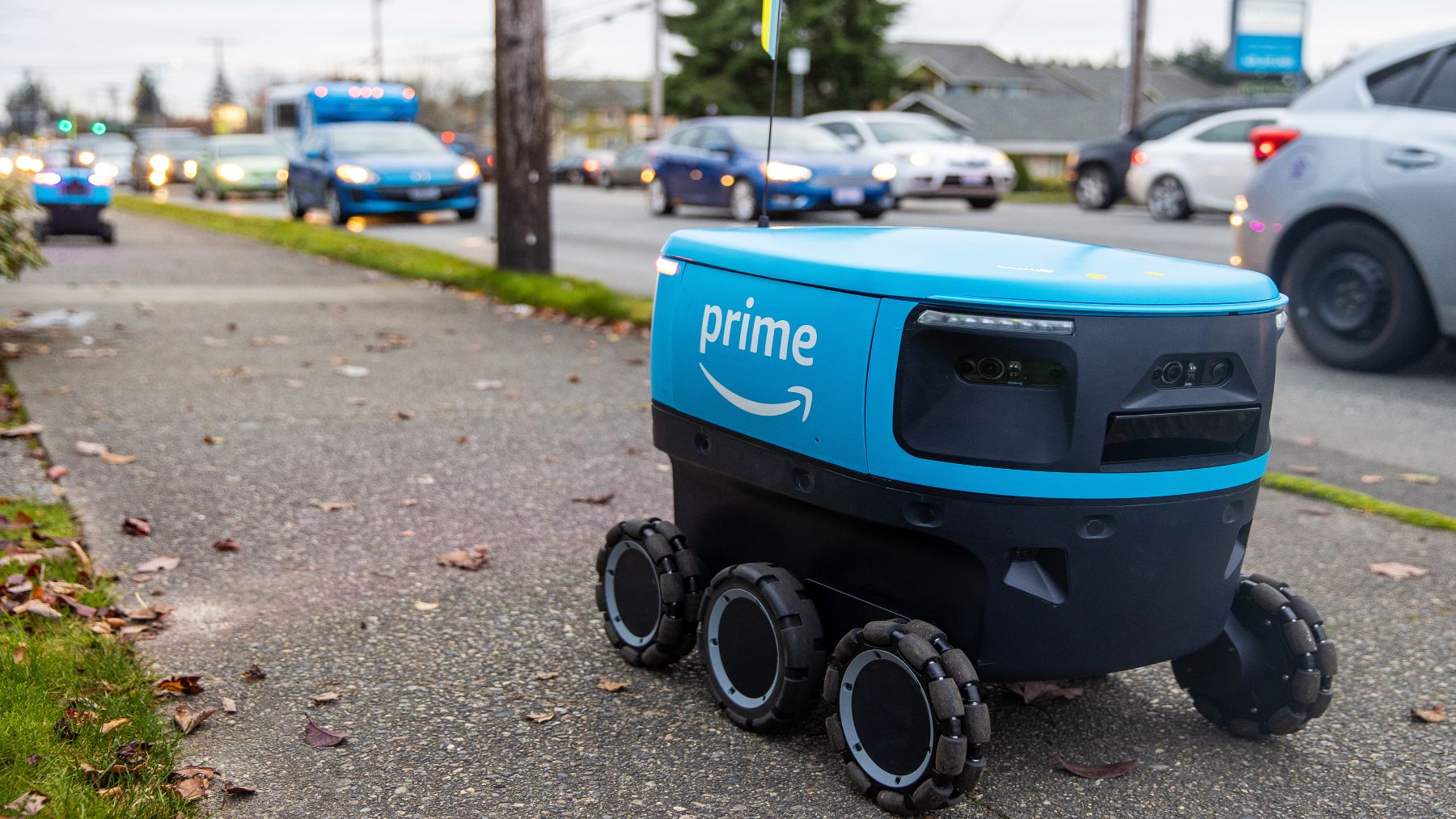
On the other hand, the combination of a million robots and DeepFleet points to a very interesting future. With the connection between robotics and artificial intelligence, we can envision countless possibilities, for example, that in the not-too-distant future, instead of a delivery person, a robot will knock on our doors. Deliveries are the next step, or so the company of one of the richest and most influential men in the world suggests.
Elon Musk: robots will be in production for internal use by the end of 2025
Jeff Bezos has managed to find a niche and turn it into one of the highest-performing companies in the world. He’s even created a culture, that of online shopping, that has already shaped an entire generation. The future is limitless for AI, which, combined with Bezos’s empire and the world of robotics, will clearly be a hot topic. By the way, Elon Musk hasn’t been left behind. The Tesla CEO predicts his company’s Optimus robots will be in production for internal use by the end of 2025, and for other companies the following year. “When Elon Musk says he’s going to create a new industry, people pay attention,” Chris Atkeson, Carnegie Mellon University Robotics Institute professor tells Fortune.




