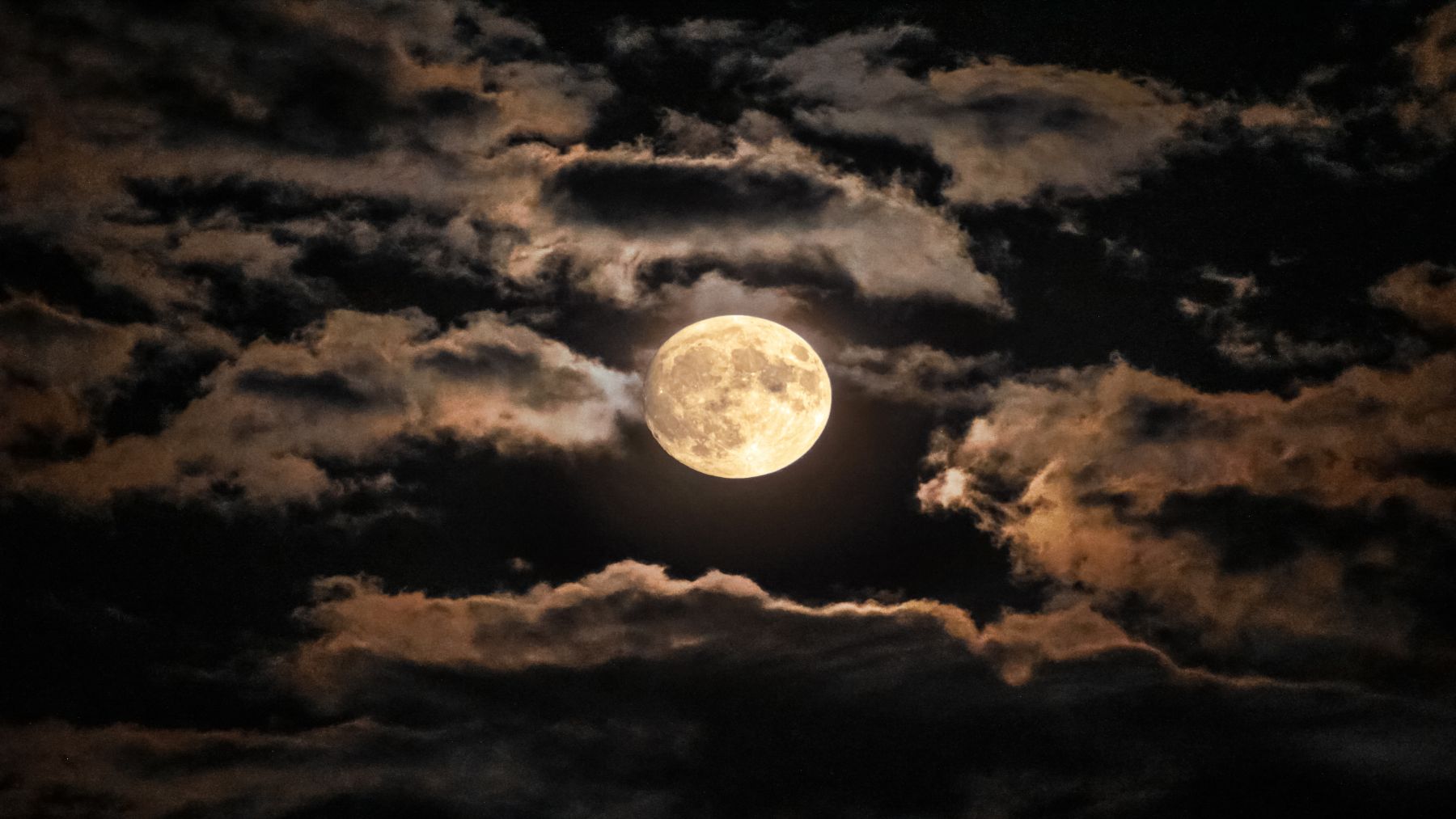
Statistics and scientific research are warning. The probability of asteroid 2024 YR4 impacting the Moon on December 22, 2032, is now approximately 4%, and this probability continued to slowly increase as the asteroid moved out of sight. Although the danger was moving away from Earth, its satellite, the Moon, doesn’t seem to be so lucky. However, this means there is a 96% chance that the asteroid will not impact the Moon.
The final observations of the asteroid failed to rule out another intriguing possibility: a lunar impact
According to the European space agency, by March 2025, astronomers had ruled out an Earth impact in 2032. However, the final observations of the asteroid failed to rule out another intriguing possibility: a lunar impact. According to new estimates from NASA, thanks to data collected by the James Webb Space Telescope, in the event of an impact, new lunar material would be generated that could reach our planet, even causing a meteor shower on Earth. This is thanks to data collected by the James Webb Space Telescope.
Therefore, what we know for sure is that the asteroid is more likely to not collide with the moon than to impact the satellite. As the asteroid is now too far away to study any further, this probability will remain unchanged until it returns into view in June 2028. When it returns into view, new observations will be made and it will not take long for astronomers to confidently determine whether the asteroid will, or much more likely, will not, hit the Moon on December 22, 2032.
The impact would likely be visible from Earth
“It is a very rare event for an asteroid this large to impact the Moon – and it is rarer still that we know about it in advance. The impact would likely be visible from Earth, and so scientists will be very excited by the prospect of observing and analyzing it. I am sure that detailed computational simulations will be done over the next few years,” says Richard Moissl head of the European Space Agency’s Planetary Defense Office.
On the other hand, a team of astronomers led by Andrew Rivkin, a scientist at Johns Hopkins University in Maryland, United States, said that the chances of the asteroid hitting the Moon “have always existed.” “If it impacts the Moon in 2032, it will be the largest impact in approximately 5,000 years,” says NASA about the scenario of the collision could alter the lunar orbit. The answer is no.
Space surveillance to detect objects that could impact Earth’s natural satellite will become increasingly important
It’s important to understand that small objects burn up in Earth’s atmosphere as meteors, but the Moon lacks this shield. Objects just a few dozen centimeters in size could pose a significant danger to astronauts and lunar infrastructure. This is explained by the European Space Agency, which offers arguments on its website that any curious reader can understand.
Furthermore, as humanity seeks to establish a long-term presence on the Moon, space surveillance to detect objects that could impact Earth’s natural satellite will become increasingly important. This means that it will be easier to find these types of objects that could endanger the integrity of the Earth. Thus, the sooner they are detected, the sooner an option can be found to avoid collisions with the planet.
These kinds of conclusions are reached after a tremendous amount of effort by researchers and experts who dedicate valuable time to collecting samples from outer space. Advances in this field are essential for the development of technology that can help humans address future problems. A future that is increasingly becoming the present, as global warming reminds us that we are already experiencing the consequences of the poor decisions of past decades.