
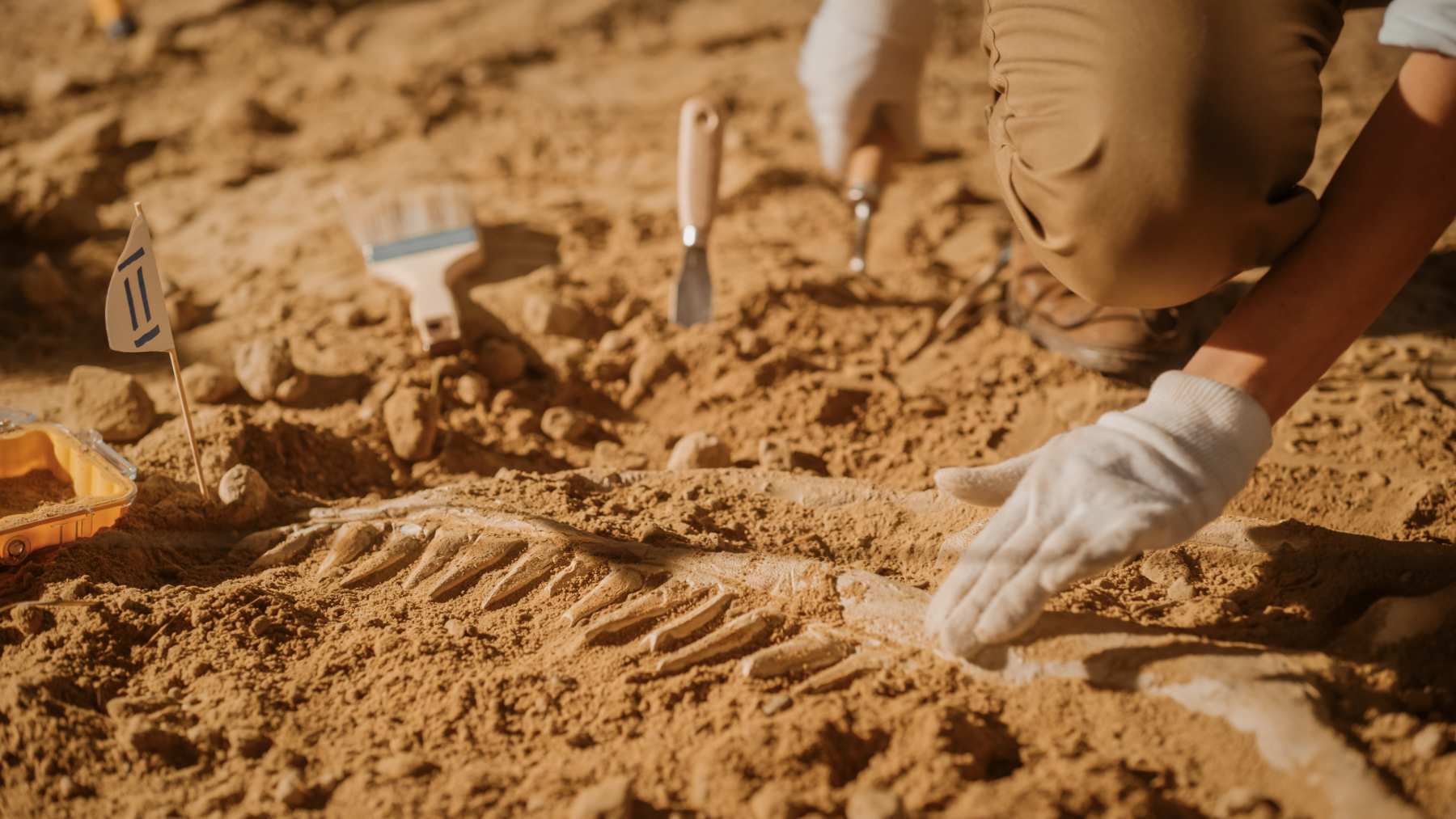
A Roman tomb from the year 0 has been found in the Dutch city of Heerlen by a group of archaeologists from the Netherlands. The remains have been discovered alongside several objects, including plates, bowls, and even a metal strigil (Roman skin scraper). Members of the archaeological research firm ADC ArcheoProjecten estimated that the tomb was the oldest burial site in the area, having been opened between 0 and 20 B.C. An archaeologist discovered a bowl engraved with the word “Flac” among the numerous artifacts, leading specialists to christen the Roman man Flaccus.
Archaeologists have found a grave in Heerlen with a mysterious word engraved on it
Historians who have discovered the artifact speculate that Flaccus might have been a member of the Roman army that was based in the Heerlen district, which was then called Coriovallum. This military community stood at the meeting point of the Via Belgica and the Via Traiana, two crucial thoroughfares that linked France and modern-day Germany. According to archeologists, they have never discovered a Roman tomb from this era with a name, said Jordy Clemens, council member for culture and heritage, who publicly praised the finding. Jordy called it a singular discovery that not only helps us better understand our history but also demonstrates how special Roman Heerlen’s history is to the Netherlands.
One of the most significant sites in the Netherlands, based on archaeologists’ research, is known as Coriovallum, where the Roman army military outpost began before becoming a civilian settlement in the middle of the first century AD. Constructed between 50 and 70 AD, the public baths of Coriovallum are the biggest Roman remains in the nation and have been designated as a national heritage site. They are made of brick and stone.
Other archaeologists have found evidence of Armageddon
For the first time, a group of Israeli archaeologists has discovered ancient artifacts at the “Armageddon” location in northern Israel that may provide evidence of a famous conflict between an Egyptian pharaoh and a Judah king that is described in the books of Kings II and Chronicles. This year, two scholarly articles described how a record-breaking quantity of Egyptian pottery from the 7th century BCE was discovered during recent excavations at Megiddo, indicating that Egyptian soldiers were, in fact, in the right biblical location at what may have been the right biblical time.
Prof. Israel Finkelstein, the head of the University of Haifa’s School of Archaeology and Maritime Cultures and a longtime director of the Megiddo Expedition, stated that Megiddo is the only location in Israel and the surrounding nations that is mentioned in the Bible and all of the great records of the Ancient Near East. In addition to the enormous amount of Egyptian pottery, the excavation also found a large number of vessels from eastern Greece that must have arrived in Megiddo between 630 and 610 BCE based on typological parallels with well-dated contexts in other archaeological sites (the Josiah-Necho battle is said to have taken place in 609 BCE).
According to archaeologists Finkelstein and Kleiman, these discoveries could suggest the existence of Greek mercenaries who would have accompanied the Egyptians in their conflict with Josiah. The lengthy history of damaging excavations, many of which were carried out using what are now regarded as archaic techniques, adds to the excitement of the fresh discoveries. Archaeologists discovered the remnants of a building from the 7th century CE, when the conflict between Josiah and Necho would have taken place, during excavations in what they called “Area X.”
The building displayed a remarkable collection of ceramics and included multiple rooms as well as an open patio. Parts of vessels that might be classified as Assyrian based on their typology were found among the local pottery, along with a piece that was part of a Judaic cooking pot (based on typology and examination of the origin of the clay used, which came from Moza near Jerusalem).




