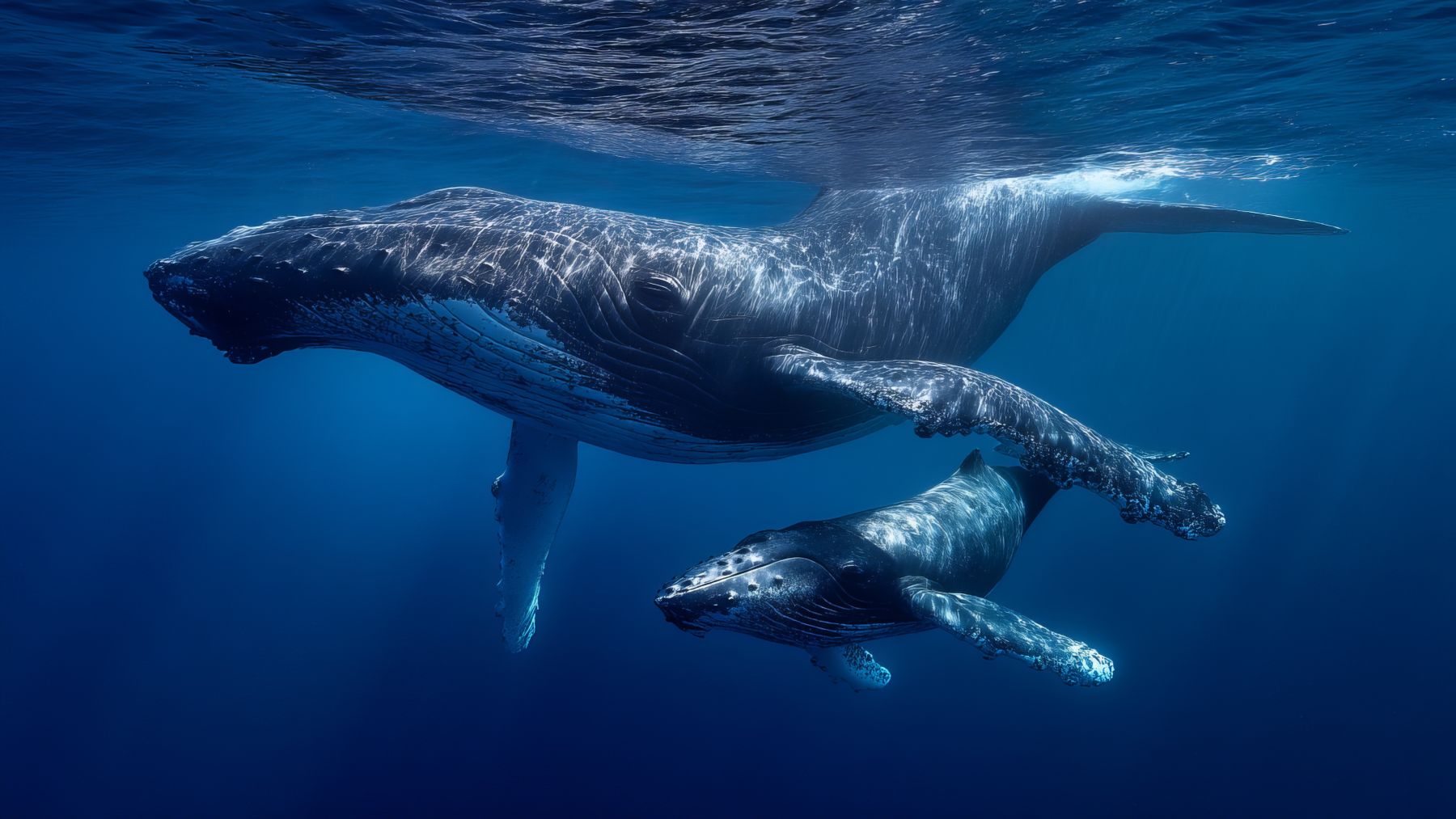
Research confirms that blue whales (Balaenoptera musculus) from the Atlantic Ocean mated with other species. The recently studied genomes of these whales from the Atlantic Ocean contain high levels of fin whale DNA. This data indicates that the two species have been mating for longer than previously thought.
Findings suggest that whale hybrids are much more reproductively viable than previously thought
Whales are one of the world’s most impressive animals. Their size—they can reach an astonishing length of 34 meters (110 feet)—and their history on the planet, as well as the scientific discoveries that continue to astonish the world. Now, these findings suggest that whale hybrids are much more reproductively viable than previously thought.
Investigation: created from scratch by joining together DNA fragments from different individuals
These data come from a study published in January in the journal Conservation Genetics, in which researchers analyzed the genomes of B. m. musculus in the North Atlantic for signs of inbreeding, which could impede the recovery of this group. They created a “de novo” genome for this population, meaning it was created from scratch by joining together DNA fragments from different individuals. The team then used this new genetic map as a template to further analyze the full or partial genomes of 31 individuals from across the population’s distribution. This way, they were able to obtain a fairly accurate sample for the study.
Until now it was thought that these hybrids were infertile and unable to produce offspring
After analyzing the samples, the researchers discovered that each of the whales participating in the study contained fin whale (Balaenoptera physalus) DNA hidden in their genome. On average, about 3.5% of the group’s DNA came from fin whales. Until now, it was thought that these hybrids were infertile and unable to produce offspring, like most other hybrid animals. However, a 2018 study revealed that at least some of these hybrids could successfully reproduce with blue whales.
Hunting: blue whales are currently classified as endangered by the International Union for Conservation of Nature (IUCN) Red List of Threatened Species
It’s important to note that the number of free-swimming whales in the oceans plummeted in the early 20th century due to extreme levels of commercial whaling. Recall that at the beginning of the last century, whaling and hunting for the great marine mammal became very popular.
As a result, blue whales are currently classified as endangered by the International Union for Conservation of Nature (IUCN) Red List of Threatened Species, although their population is beginning to recover globally.
Hawaii: a photography shows two humpback whales male (Megaptera novaeangliae) mating
Whales in general continue to arouse a great deal of interest. In fact, a photography of two humpback whales mating was recently captured near Hawaii. What was interesting about this discovery was that the humpback whales (Megaptera novaeangliae) mating were both males. A study published in the journal Marine Mammal Science has revealed the first confirmed observation of penetration during sexual intercourse between humpback whales.
The discovery was made thanks to the photographers Lyle Krannichfeld and Brandi Romano
Observing their sexual behavior, which lasted less than two minutes each time, provides valuable information about the social and reproductive dynamics of these whales. The discovery was made thanks to the timely presence of two scientific photographers, Lyle Krannichfeld and Brandi Romano, who captured the crucial moment while aboard a boat near Maui.
Finally, it’s important to remember the importance of protecting all species on the planet. Ecosystems are essential for the preservation of animals, as is ending indiscriminate hunting. Of the four subspecies of blue whale, B. musculus musculus, found in the North Atlantic and North Pacific, is one of the most endangered.