
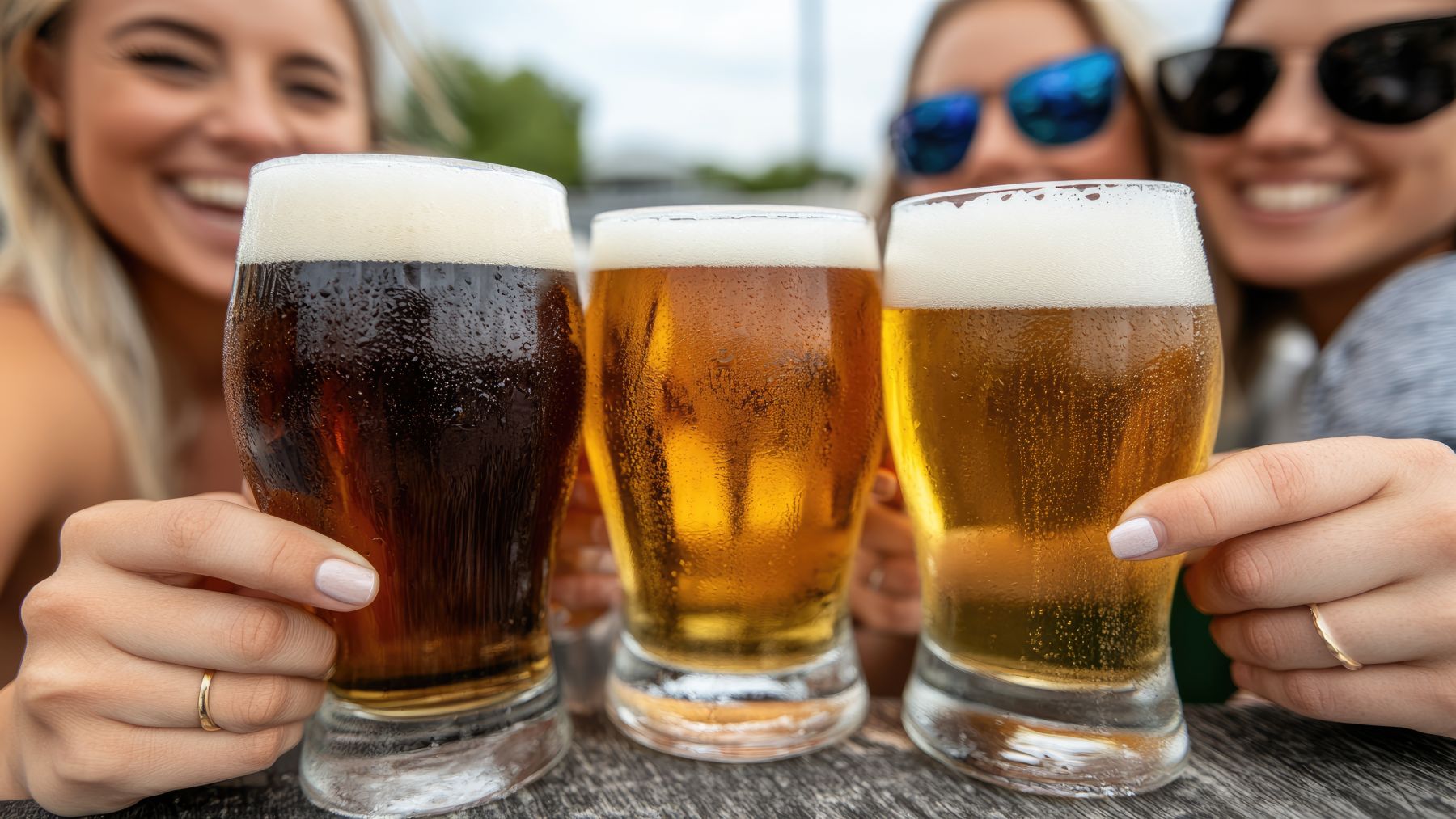
Beer is the most consumed alcoholic beverage in the world. Different countries offer different types of beer: stronger, milder, fruitier, more traditional… There are so many types of beer that in many places, depending on the type of beer, it’s recommended to drink it in a glass, a mug, or a bottle. Because yes, the flavor of beer varies.
Green or amber glass became the packaging format par excellence for beer
If we go back in history, we find that beer packaging has changed due to various factors. One of them is the weight of the bottles and the way they are transported. Initially, we probably associate the green color of glass with the age of pirates and those famous stories about what they drank: wine and alcohol. But the truth is that green or amber glass became the packaging format par excellence for beer, as it served to protect it from heat, light, and oxygen, elements capable of altering the flavor and properties of the beverage.
And if we stop and think about it, humans leave few things to chance. Everything has a meaning and a significance. For this very reason, other types of containers began to be developed to transport beer more easily. They weren’t so heavy and there was no constant danger of breaking an entire container of glass bottles. Companies like American Can began experimenting with alternatives to glass in 1900, but it wasn’t until 1935 that the first beer can went on sale in Richmond, Virginia (USA), marketed by the Gottfried Krueger Brewing Company.
For many consumers, the can is a component that affects the flavor of the beer
It’s important to understand that the container used to hold any beverage, in this case beer, must be chosen with knowledge, since whether it’s a can, glass, cardboard, or plastic—any element can and does affect the flavor of the alcoholic beverage. This is also true for other effects, such as exposure to light, which degrades hop compounds and causes the characteristic unpleasant taste that comes with leaving a beer bottle in the sun.
In favor of cans, we can say that by achieving a hermetic seal and being completely opaque, they completely block out light, something that glass cannot fully achieve. In any case, for many consumers of this alcoholic beverage, the can is a component that affects the flavor of the beer. Many consider it to give the beverage a metallic taste. However, experts assure us that this metallic taste is a thing of the past, as today’s cans have a special film attached to them that prevents metal contact with the liquid, thus eliminating flavor transfer.
Amber pale ale did exhibit degradation in the can that did not occur in the bottle
As we can see, this is a controversial topic. It’s not an area where consumers can agree. Whether due to tradition, taste, or convenience (and even economy), consumers will prefer one shape or another. And regarding bottles, by the way, it’s important to note that not all bottles offer the same protection. While brown bottles block much of the ultraviolet rays, clear and green bottles allow light to pass through, which accelerates the degradation of the hops and can generate undesirable aromas if kept outside for a long time. So the issue remains complex.
Several studies analyze this topic. In fact, one of the most recent was published in 2023 in the journal ACS Food Science & Technology. It analyzed the stability of two types of beer, amber pale ale (AA) and Indian pale ale (IPA), packaged in bottles and cans for six months. As we can see, it’s a topic that continues to arouse curiosity. After measuring its metabolites and organoleptic stability, the conclusions indicate that amber pale ale did exhibit degradation in the can that did not occur in the bottle and that could lead to some change in flavor. In Indian pale ale, however, no significant changes were detected.
Ultimately, the important thing is that each person drinks according to their taste. And even more important, if you’re going to drink alcohol, do so responsibly. Although it’s more socially accepted, it’s still a drug that alters the human psyche.




